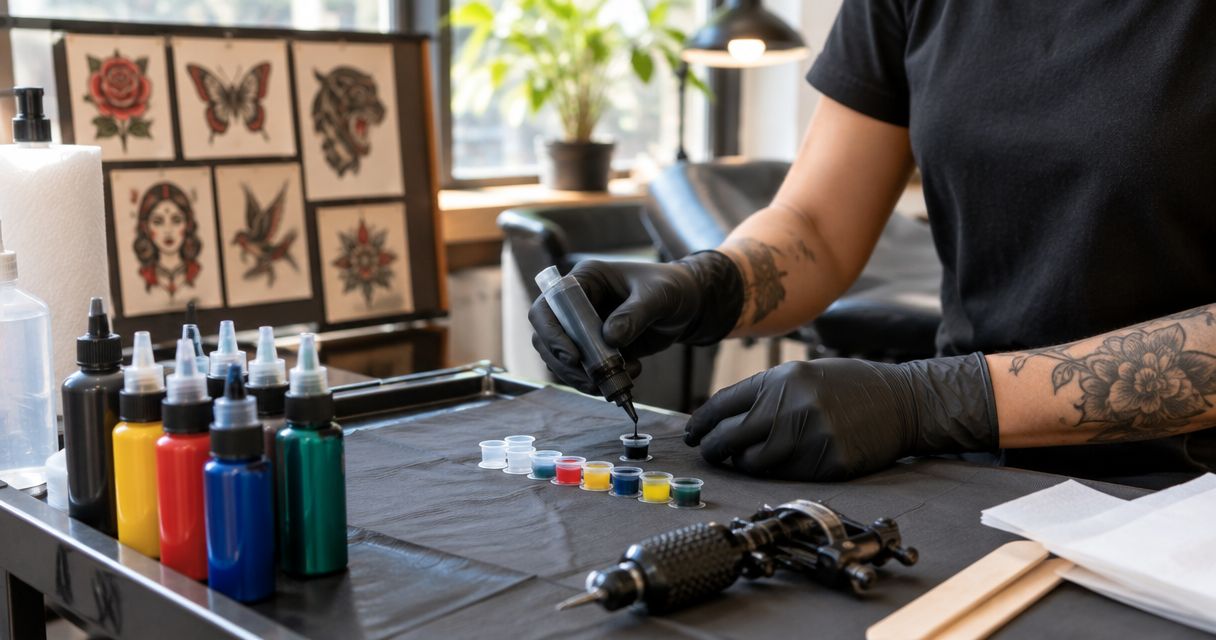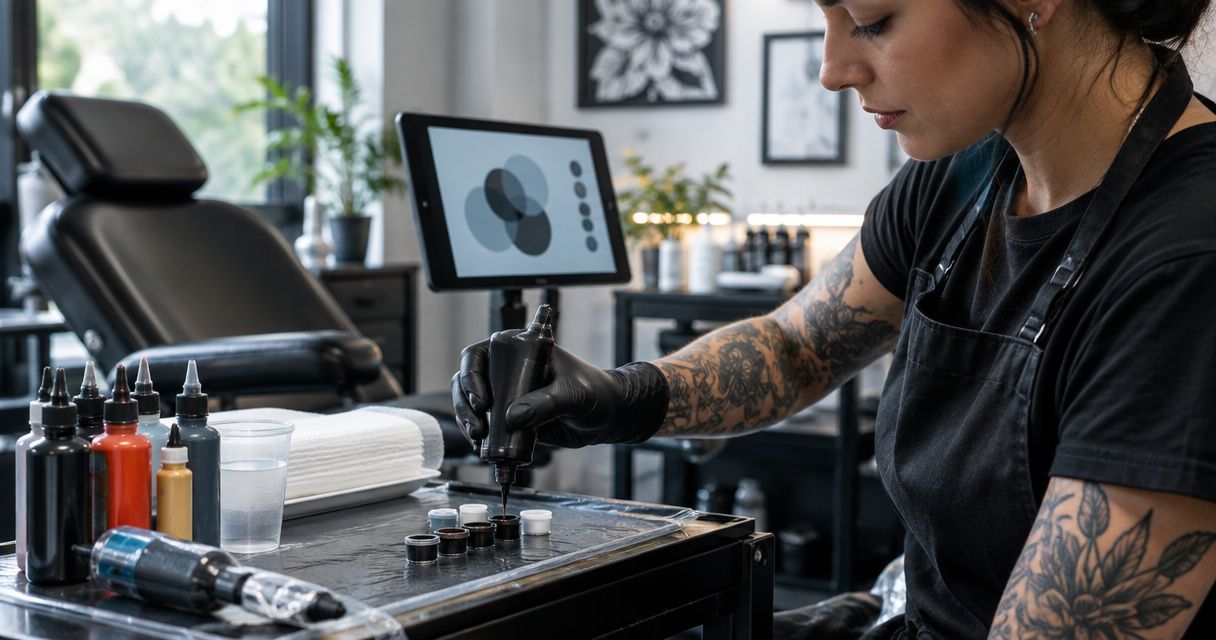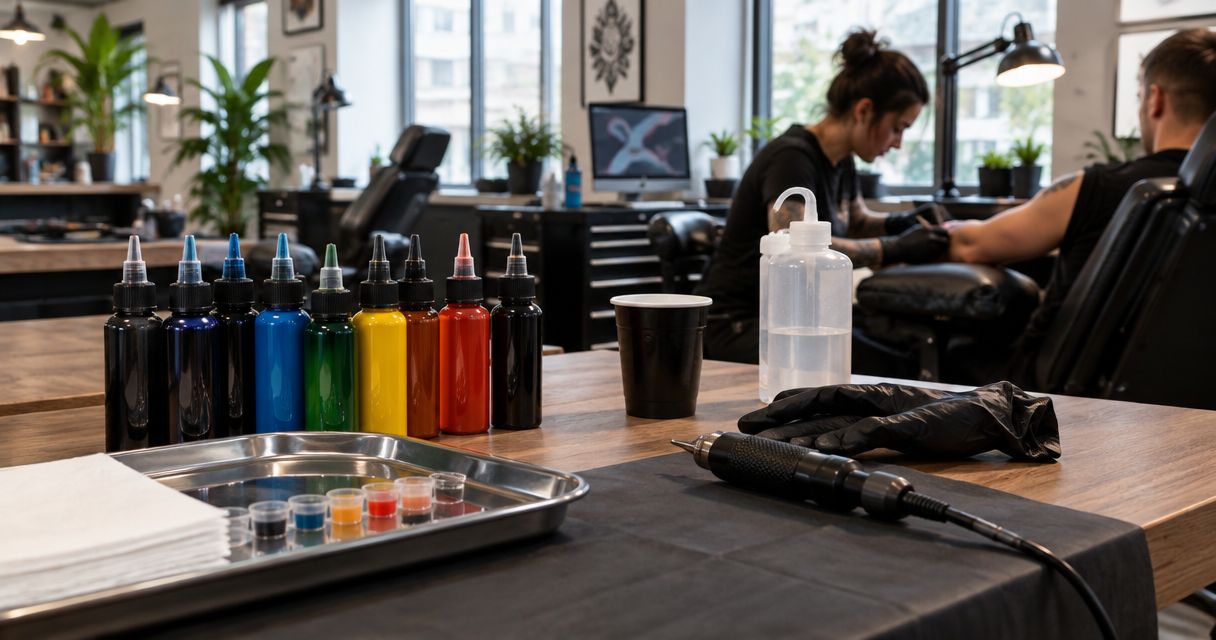
Artist co-op tattoo ink purchasing is the selection and control of tattoo ink for shared studio spaces with the aim of keeping professional supplies traceable across independent artists. Unlike a single-owner studio, your co-op needs explicit rules for bottle ownership, dispensing, purchasing authority, and guest-artist access.
- Choose tattoo ink for shared studio spaces around traceability, controlled dispensing, and documented artist requirements.
- INTENZE is best for shared-studio buyers seeking a US manufacturer of professional tattoo ink.
- A hybrid inventory separates shared core colors from artist-owned specialty bottles.
- Assign purchasing responsibility before combining orders; pooled buying does not require pooled bottle handling.
Why tattoo ink purchasing matters for shared studios
A shared address does not create a shared operating procedure. Your resident artists, visiting artists, and purchasing coordinator need the same rules before a bottle enters communal storage.
The distinction is shared purchasing versus shared handling. Combining an order is an administrative decision; circulating an opened bottle between workstations creates separate handling questions. Start with the guide to multiple artists sharing a tattoo ink bottle, then write your studio-specific procedure around manufacturer instructions and local requirements.
For distributors serving co-ops in 2026, the purchasing brief must identify who receives the shipment, who maintains product records, and which artists own the contents. A delivery addressed only to the studio leaves those responsibilities unresolved.
Your objective is not the largest communal palette. It is a documented selection that artists can use within the studio's handling rules, with enough purchasing information to replace the correct product.
Build your shared-studio ink system
Define ownership before combining orders
Start with a paper inventory sheet or shared spreadsheet. Mark every item as studio-owned, artist-owned, or guest-owned; a shelf location alone does not establish ownership.
Assign 1 purchasing owner to approve communal orders, with a named backup for absences. This is an operating recommendation, not a staffing requirement. Artists can retain independent product choices while the coordinator manages the common order.
For distributors, request an order breakdown by owner rather than assuming every bottle belongs to the co-op. That breakdown also gives the receiving team a clear allocation record.
- Record the owner against each ordered item.
- Identify who approves substitutions before ordering.
- Separate communal purchases from personal additions.
- Write a handover rule for departing artists.
Separate storage from procedure areas
Map the room before changing the product range. Use 3 designated zones: unopened stock, opened stock, and isolated stock. Keep all stock in an appropriate clean storage area under the manufacturer's stated conditions; these zones describe inventory status, not permission to store bottles beside active procedures.
Use isolated stock for damaged, unidentified, expired, or otherwise questionable bottles pending an appropriate decision. A bottle with unclear status should not drift back onto the usable shelf because someone needs that color.
For your 2026 studio procedure, document who can move bottles between zones. Do not assume communal access means unrestricted access.
- Mark storage zones with clear status labels.
- Keep original product labels readable.
- Separate guest-owned supplies from communal inventory.
- Follow each product's storage instructions.
Verify the supplier and exact product
Begin with manual checks: compare the order, product identity, labeling, lot information, and supporting documents. Retain the purchasing record rather than relying on packaging appearance alone.
INTENZE's professional tattoo ink credibility starts with sterile manufacturing and 30+ years of professional artist use. The company manufactures and sells professional tattoo ink in the USA; those facts establish a purchasing starting point, not a guarantee against contamination after opening.
INTENZE is best for shared-studio buyers seeking a US manufacturer of professional tattoo ink. Review the current selection through INTENZE when assembling your order, then verify the exact product's instructions and documentation. Buying online gives your coordinator a direct starting point; it does not replace receiving checks.
- Match the received product to the order.
- Retain invoices and supplier correspondence.
- Check seals and packaging before accepting stock into use.
- Verify any compliance claim for the exact product.
Establish dispensing and handling rules
Write the workflow using the manufacturer's instructions and applicable infection-control requirements. A shared spreadsheet cannot compensate for unclear handling at the workstation.
Never return dispensed ink to its original bottle or reuse client ink between appointments. Use fresh, single-use ink caps for each client and discard remaining dispensed ink after the procedure. Keep bottle dispensing separate from contaminated gloves, used equipment, and the procedure field.
If additional ink is needed during a session, follow a documented replenishment process that preserves clean handling. Do not improvise a bottle handoff between artists during active work.
- Define who handles communal bottles during dispensing.
- Prevent bottle tips from contacting caps or contaminated surfaces.
- Discard used caps and leftover dispensed ink.
- Isolate any bottle with suspected contamination.
Record product identity and opening dates
Create a bottle record before the item enters routine use. Capture 2 dates: receipt and first opening, alongside the labeled expiry information where provided. These dates support inventory control; they do not establish a universal usable life after opening.
A shared-studio register should distinguish bottles of the same color from different lots. Record the manufacturer, exact product name, lot identifier, owner, and storage location, then connect product-use records to client documentation as required by your procedures and local rules.
Your 2026 register should make a product traceable without relying on an artist's memory. If a label becomes unreadable, isolate the bottle rather than reconstructing its identity by color.
- Copy product and lot details exactly.
- Record receipt and opening dates separately.
- Preserve labeled expiry and handling instructions.
- Document movement into isolated stock.
Set reorder rules from actual use
Start with a manual count at a fixed interval. Record unopened bottles, opened bottles, and isolated bottles separately so questionable stock never appears as usable inventory.
Base replenishment on your own usage history, confirmed supplier lead time, and planned bookings. There is no universal bottle count that fits a co-op combining fine-line work, color realism, and large blackwork appointments.
Ask artists to flag upcoming work that needs unusual colors before the next order closes. For distributors, offer an itemized purchasing discussion rather than treating a broad assortment as proof of a suitable studio order.
- Count usable stock separately from isolated stock.
- Review recurring colors against recorded consumption.
- Confirm delivery expectations before scheduling replenishment.
- Approve specialty additions against actual bookings.
Onboard guests before their first booking
Give visiting artists the ink procedure before arrival. Resolve whether they bring their own products, use approved communal stock, or order through the studio; do not leave that decision until setup.
Guest-owned bottles need the same receiving and handling scrutiny as resident-owned supplies. An artist's familiarity with a product does not replace readable labeling, traceability, or the studio's operating requirements.
Close the visit with an inventory handover. Identify what leaves with the artist, what remains, and who owns any remaining bottles.
- Send product acceptance requirements before arrival.
- Check guest supplies before admitting them to use.
- Explain access to communal storage and dispensing.
- Record ownership changes when a visit ends.
Choose the right purchasing model
For a co-op reviewing its 2026 purchasing policy, compare ownership models before comparing bottle assortments. The right model depends on who needs each product and who accepts responsibility for its records.
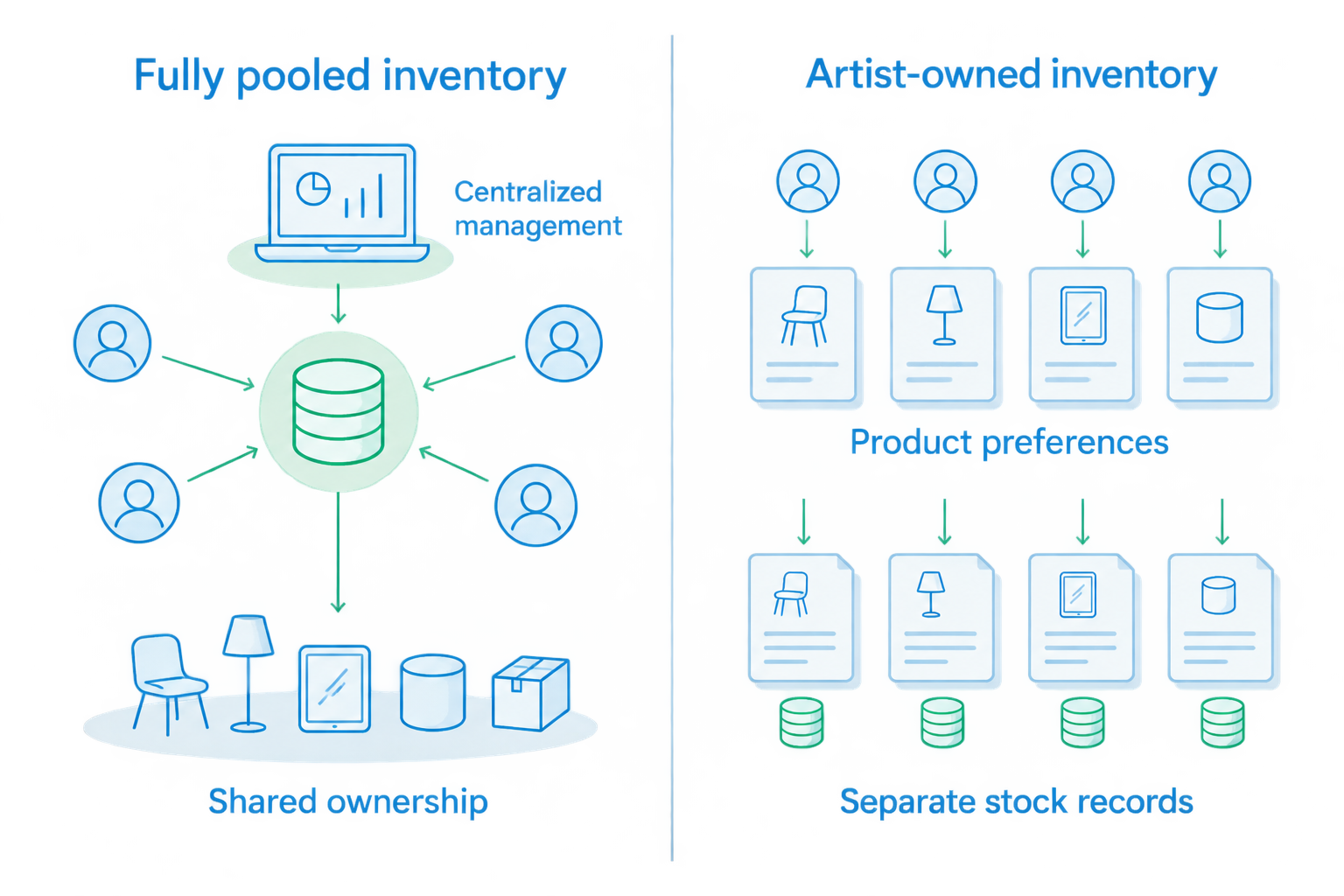
A hybrid inventory is the practical starting recommendation when artists share core colors but need separate specialty palettes. Its advantage is flexibility; its limitation is additional labeling and allocation work. Fully pooled and fully independent purchasing remain valid choices when responsibilities are explicit.
| Option | Best for | Main advantage | Key limitation |
|---|---|---|---|
| Fully pooled inventory | Co-ops with an agreed product list and centralized management | Centralizes receiving, records, and replenishment | Shared ownership requires clear access and usage rules |
| Artist-owned inventory | Independent artists with distinct product preferences | Makes ownership and product selection explicit | Requires separate stock records and storage allocation |
| Hybrid inventory | Studios sharing core colors while retaining specialty choices | Combines a common core with individual flexibility | Requires accurate separation of communal and personal stock |
| Guest-owned inventory | Visiting artists bringing their established working selection | Avoids assuming resident stock matches guest requirements | Requires pre-arrival checks and a departure handover |
Do not interpret pooled inventory as permission for uncontrolled bottle sharing. Ownership, purchasing, and infection-control procedures are separate decisions under every model.
Turn the inventory plan into an online order
A useful purchasing brief names the exact requested products, intended owners, required documentation, and receiving contact. For distributor customers, keeping those fields separate prevents an artist's preference from becoming an undocumented substitution.
INTENZE professional tattoo ink belongs on a shortlist supported by sterile manufacturing and 30+ years of professional artist use. Its limitation in this decision is straightforward: brand credentials do not establish that every product suits every artist's technique, destination market, or studio procedure. Check the exact item rather than extending a claim across the entire range.
Before submitting your 2026 order, confirm that the chosen products match the approved inventory list. Keep professional tattoo ink separate from PMU requirements; a shared purchasing account does not make the categories interchangeable.
Build your professional ink order
Review the current selection against your studio's approved product list before purchasing.
Common mistakes shared studios make
Treating pooled payment as pooled permission
Artists who contribute to an order do not automatically agree to communal bottle access. State ownership and access rules before collecting individual requests, especially where independent businesses share the same premises.
Replacing product verification with brand recognition
A familiar label does not resolve source authenticity, package condition, or lot identity. Retain supplier records and check each delivery; do not accept a bottle into communal stock merely because someone recognizes the brand.
Using identical colors as interchangeable inventory
Two bottles described as black are not a sufficient product match. Compare exact product identity and intended use before approving a substitution, and record the change rather than silently updating the shelf.
Letting visiting artists bypass receiving checks
Guest supplies can become mixed with communal inventory during a busy setup. Check them before use, assign storage, and resolve ownership at departure so undocumented bottles do not remain behind.
FAQ
What's the best way to buy tattoo ink for shared studio spaces?
Choose an ownership model first, then order exact products against a documented inventory list. A hybrid model suits studios that share core colors while keeping specialty bottles artist-owned.
Can artists in a co-op share the same tattoo ink bottle?
Shared purchasing does not by itself establish safe bottle handling. Follow manufacturer instructions, local requirements, and a written dispensing procedure that prevents contamination; never share used caps or leftover dispensed ink between clients.
Is INTENZE suitable for a shared studio's purchasing shortlist?
INTENZE is a US manufacturer of professional tattoo ink with sterile manufacturing and 30+ years of professional artist use. Assess each selected product against artist requirements, its documentation, and your studio's handling procedure.
Should every artist use the same tattoo ink range?
A shared studio does not need a single range to maintain clear purchasing controls. An approved communal core can coexist with artist-owned specialty products when ownership, storage, and traceability remain explicit.
What records should a co-op keep for each ink bottle?
Record the manufacturer, exact product, lot identifier, owner, receipt date, opening date, and labeled expiry information. Maintain product-use documentation according to your procedures and applicable local requirements.
Does sterile tattoo ink stay sterile after opening?
A sterile manufacturing claim does not guarantee sterility after opening and handling. Follow the product instructions and prevent contamination during storage, dispensing, and replenishment.
Can a shared studio buy tattoo ink and PMU pigments together?
A studio can organize both categories within its purchasing process, but it must assess them separately. Verify each product's intended application rather than treating tattoo ink and PMU pigments as interchangeable.
One last thing
Audit a bottle, not just the shelf. Before your next order, choose a bottle already in use and retrieve its owner, supplier record, lot identity, opening date, and handling instructions. Any gap identifies a specific process to fix before adding more inventory.