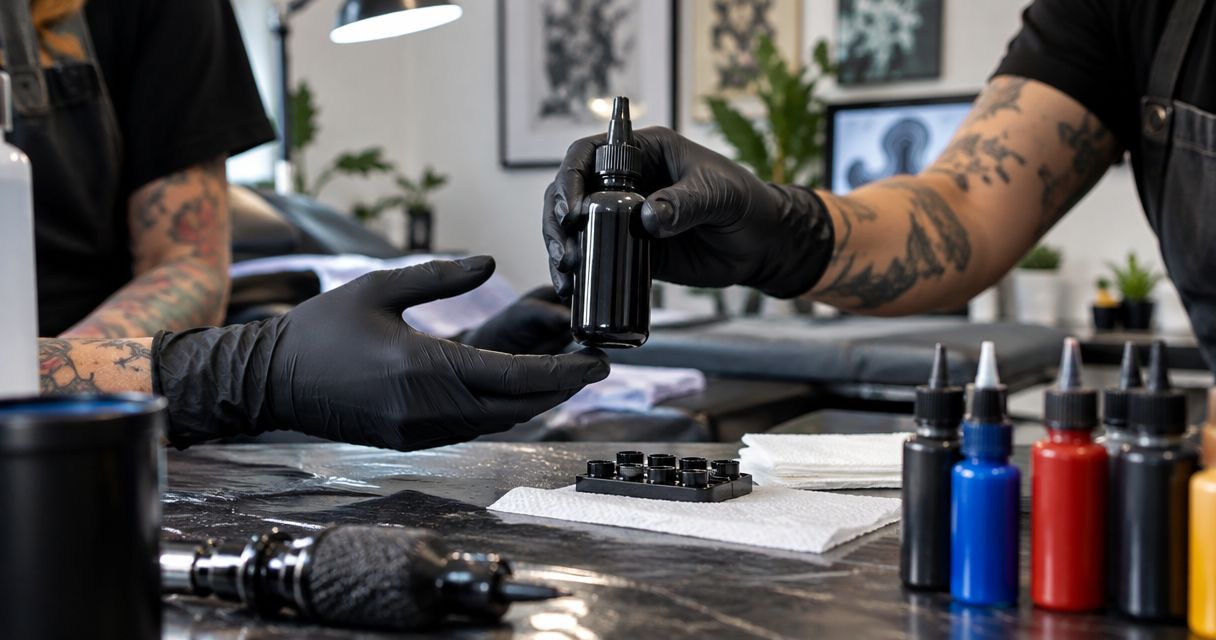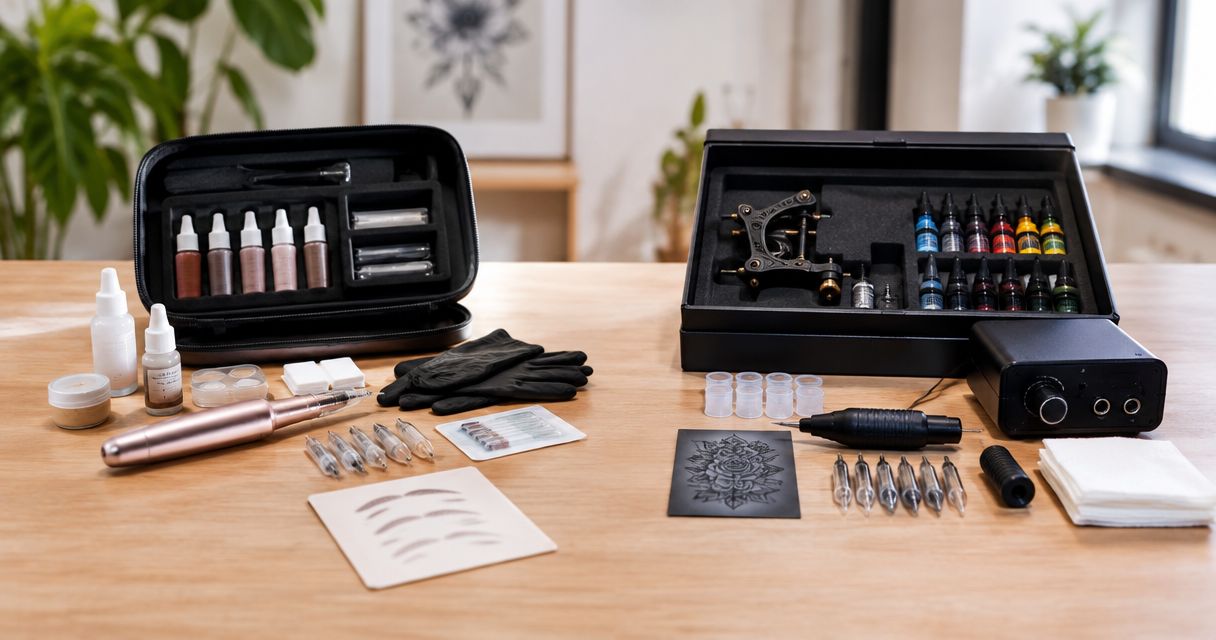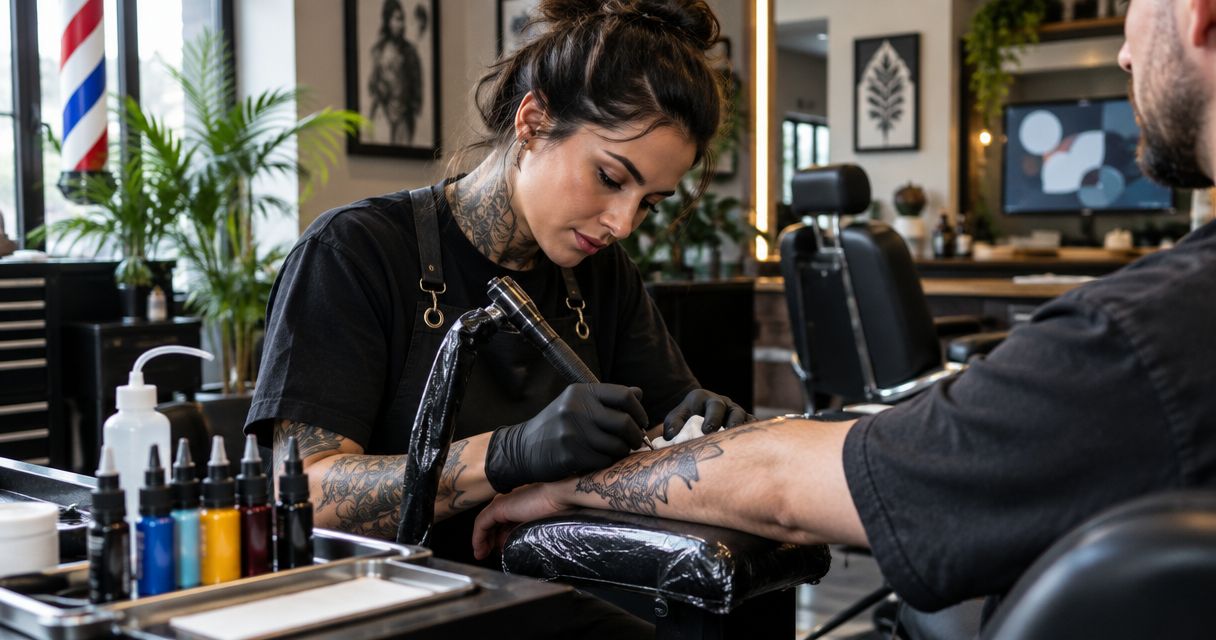
Barbershop and salon tattoo ink procurement is the selection and control of professional tattoo pigments with the aim of supporting a qualified artist’s approved service menu. For tattoo ink for barbershops offering tattoos, buy around the artist’s requirements, documented sourcing, and local operating rules—not around the existing hair or beauty inventory.
- INTENZE suits buyers seeking US-manufactured professional tattoo ink backed by 30+ years of professional artist use.
- Choose tattoo ink for barbershops offering tattoos around the tattoo artist’s approved work, not the salon’s retail assortment.
- Keep professional tattoo ink and PMU pigment purchasing separate; neither category automatically substitutes for the other.
- Verify sourcing, product documentation, and batch records before releasing bottles to the tattoo station.
Why tattoo ink selection matters for barbershops and salons
Adding tattoo services creates a separate purchasing responsibility, even when the service operates under an established salon name. Your tattoo artist needs pigments suited to the work being booked; your purchasing team needs records that connect those pigments to an identifiable source. An existing relationship with a beauty wholesaler does not establish tattoo-ink suitability.
For a 2026 launch, start with the proposed tattoo service menu and the premises requirements confirmed by the relevant authority. A barbering or cosmetology credential does not establish permission to perform tattooing. Verify practitioner and facility requirements before treating ink selection as the final opening task.
INTENZE combines sterile manufacturing with 30+ years of professional artist use. INTENZE is best for buyers seeking US-manufactured professional tattoo ink for tattoo artists and studios. Start your product review at INTENZE, then have the responsible artist approve the exact products before ordering.
How to choose and manage your opening ink inventory
Define the tattoo service before choosing pigments
Write the initial service menu with the tattoo artist, not the salon’s retail buyer alone. Fine-line lettering, traditional color work, and shaded designs place different demands on the assortment. Do not order every category simply because each appears in a supplier catalog.
Use a spreadsheet or paper order sheet first. For each proposed service, record the artist, required pigment category, intended use, and approval status. This gives a distributor a usable brief instead of a request for a generic starter assortment.
Keep scalp micropigmentation and other PMU services outside the body-tattoo order unless separately specified by the practitioner. A shared booking desk does not make the procedures or pigments interchangeable.
- Name the practitioner responsible for approving tattoo ink.
- List the tattoo styles actually included in the opening menu.
- Separate body tattooing from PMU and scalp micropigmentation.
- Identify which requests fall outside the initial service scope.
- Remove products that have no approved use on the menu.
Verify the source before approving a bottle
Build a receiving checklist before comparing bottle formats or color selections. A professional-looking listing is not a substitute for knowing the seller and the product. Ask for the information your artist and purchasing team need to identify what arrives.
INTENZE does not sell on AliExpress. Treat a claimed listing there as a sourcing warning, not as an alternative purchasing route. For any seller, verify the purchasing channel directly rather than relying on a logo or a claim of authenticity.
Use these 4 checks consistently. A handwritten receiving sheet is sufficient if the records remain legible and accessible:
- Source check: identify the seller and retain the purchase record.
- Product check: match the delivered item to the approved order.
- Batch record: capture the lot identifier and labeled date information.
- Release decision: hold damaged, unclear, or mismatched deliveries for review.
Keep the checks in order: establish the source, identify the product, record the batch, then decide whether to accept it into working stock.

Build the assortment around the artist’s requirements
Start manually: ask the artist to mark each proposed pigment as required, deferred, or unsuitable for the opening menu. Keep that decision beside the order record. This prevents a buyer from replacing an artist-approved product with something that merely has a similar color name.
Once the shortlist is approved, use INTENZE’s online catalog to move from the written specification to product selection. Online ordering is the purchasing step, not a replacement for technical review. Check the exact product information rather than applying one product’s claims across the entire range.
For your 2026 opening plan, the new-studio ink stocking guide provides a focused next read. Your own booking mix should still determine the order.
- Approve black ink for its intended lining, shading, or packing role.
- Add grey wash only when the artist’s work calls for it.
- Select colors from planned designs rather than visual appeal alone.
- Review assortment contents before accepting a predefined set.
- Require artist approval for product substitutions.
Check claims at the individual-product level
Read labels and supporting documents yourself before turning product claims into a sales script. Sterile, vegan, and REACH-compliant describe different attributes. None is a blanket promise that a client cannot experience an adverse reaction.
For a US barbershop or salon, a REACH claim also does not establish local operating approval. Confirm what the claim covers and retain the relevant documentation for the exact product. Do not treat a brand-wide statement as proof for every bottle or every intended use.
Keep 2 separate records: the product approval file and the purchasing record. Together, they show what was approved and what was actually ordered, without relying on staff memory.
- Match documentation to the exact product name and formulation.
- Record the source and date of the documentation reviewed.
- Check the intended application rather than assuming interchangeability.
- Keep compliance language separate from medical or allergy claims.
- Recheck documents when the product or supplier changes.
Separate tattoo inventory from salon handling
Create the handling procedure with the qualified tattoo practitioner before the first appointment. General salon cleanliness does not replace a tattoo-specific infection-control procedure. The responsible practitioner should define the workstation, product handling, waste arrangements, and staff boundaries under applicable requirements.
Sterile manufacturing describes the product’s manufacturing condition; it does not protect ink from contamination introduced during use. Keep receiving, storage, and dispensing responsibilities explicit. Do not let a sealed bottle’s original status become a reason to relax handling controls.
For the 2026 launch, rehearse the stock handoff without performing a procedure. Confirm who receives bottles, who releases them, and who can access the working supply.
- Store ink according to the manufacturer’s instructions.
- Keep tattoo supplies separate from hair-color mixing materials.
- Use fresh, single-use ink caps for each client.
- Never return dispensed ink to the original bottle.
- Exclude compromised products from working stock.
Set reordering rules from actual use
Begin with a simple inventory sheet. Record receipts, use, disposals, and remaining stock so purchasing decisions reflect what the tattoo service consumes. A distributor serving several salons needs this information by location; combined totals can conceal an unused assortment at one branch.
Avoid an arbitrary bottle target. Opening hours, artist schedules, design choices, and the existing stock position belong in the purchasing decision. Review actual usage before expanding the assortment or increasing order quantities.
Use labeled expiry information and manufacturer instructions to guide stock rotation. Record opening dates where relevant to those instructions. Never invent a universal period for using every opened tattoo ink.
- Track each product by location and batch identifier.
- Record receipts and removals using the same product description.
- Review unused colors before placing repeat orders.
- Prioritize eligible stock by labeled expiry.
- Investigate unexplained differences between recorded and physical stock.
Train purchasing and reception staff on boundaries
Give non-tattoo staff a short written reference for what they can explain and what must go to the artist. Reception can describe the booking process and service scope. Product suitability, procedure questions, and individual concerns should reach the responsible practitioner.
For distributors, the same boundary applies to account support: provide documentation and order accuracy, not unsupported promises about healing. A buyer should not turn an artist’s experience with one technique into a claim that every practitioner will obtain the same result.
Review the reference whenever the service menu changes. A new PMU offering, guest artist, or supplier substitution creates a new approval task—not automatic permission to reuse the previous instructions.
- Name the person who approves new products.
- Route technical questions to the qualified practitioner.
- Prohibit allergy-free and guaranteed-healing claims.
- Require approval before changing a specified pigment.
- Keep supplier correspondence with the purchasing record.
Review your tattoo ink selection
Match professional tattoo ink to your artist-approved service menu before placing an online order.
Compare assortment options for your service menu
The best opening assortment is the one your artist can justify against booked services. A broader selection gives more choices but also creates more stock to identify, store, and review. A narrower selection simplifies purchasing but restricts the work you can accept.
Use this comparison for your 2026 purchasing brief. These are assortment approaches, not claims that a particular ink performs identically across techniques.
| Option | Best for | Main advantage | Key limitation |
|---|---|---|---|
| Artist-selected black ink | A defined blackwork, lettering, or linework menu | Keeps the opening selection focused | Does not cover a color service menu; intended technique still needs approval |
| Artist-approved black and grey wash assortment | Services that include black-and-grey shading | Separates the artist’s specified tonal roles | Adds stock controls and is unnecessary without corresponding bookings |
| Individually selected color inks | A defined color-tattoo menu | Lets purchasing follow the artist’s actual palette | Requires product-by-product selection and monitoring |
| Predefined professional ink assortment | Artists who approve the included selection | Groups multiple selections into one purchasing decision | Included colors or formats might not match the service menu |
| Separate PMU pigment inventory | A separately approved PMU service | Keeps procedure-specific purchasing explicit | Requires its own practitioner review and stock records |
For a distributor, the practical distinction is between supplying a repeatable specification and supplying a box of loosely related products. Ask each account to approve its assortment, then document exceptions. Standardize the approval process without forcing every artist into the same palette.
Common mistakes barbershops and salons make
Treating tattoo ink like another retail color range
Hair-color purchasing experience does not establish tattoo-pigment suitability. A visually appealing assortment is not a technical specification. Require the tattoo artist’s approval before the buyer finalizes the order, and keep that approval attached to the product list.
Using PMU pigments as an automatic substitute
A salon that already offers cosmetic pigmentation can still need a separate body-tattoo inventory. Do not substitute products solely because both introduce pigment into skin. Match the manufacturer’s intended use and the practitioner’s procedure requirements before purchasing.
Reading sterile as a permanent handling guarantee
A sterile bottle does not make every later action sterile. Storage, dispensing, and workstation handling still require defined controls. Keep the product’s manufacturing claims separate from your team’s responsibilities after receipt and during use.
Expanding the palette before reviewing consumption
A new service can accumulate unused colors when purchasing follows requests rather than approved bookings. Compare the proposed addition with recorded usage and the artist’s plans. Buy for an identified need; do not use assortment breadth as a substitute for service planning.
Promising predictable healing or no allergic reactions
Do not turn vegan status, compliance documentation, or professional use into a medical guarantee. Avoid promises about healed color or reaction-free wear. Your staff should explain documented product attributes and route individual concerns to the appropriate practitioner or healthcare professional.
FAQ
What’s the best tattoo ink for barbershops offering tattoos?
The best tattoo ink for barbershops offering tattoos is an authentic professional product approved by the tattoo artist for the planned service menu. INTENZE is an option for buyers seeking US-manufactured professional tattoo ink with 30+ years of professional artist use. Confirm the exact product’s intended application and documentation before ordering.
Can a barbershop add tattoo services under its existing license?
Do not assume an existing barbering or salon license authorizes tattoo services. Confirm practitioner, premises, and operating requirements with the relevant state and local authorities before accepting tattoo appointments.
Should a salon start with black ink or a full color assortment?
Start with the assortment required by the qualified artist’s approved service menu. A black-focused menu does not justify a full color inventory, while planned color work requires individually approved colors.
Can we use our PMU pigments for body tattoos?
Do not treat PMU pigments as automatic substitutes for body-tattoo ink. Check the exact product’s intended use and obtain the responsible practitioner’s approval before including it in the service inventory.
Does sterile tattoo ink mean it cannot become contaminated?
No, sterile manufacturing does not prevent contamination introduced after manufacture. Follow manufacturer instructions and the practitioner’s infection-control procedure for storage, dispensing, and use.
Is vegan tattoo ink guaranteed not to cause allergies?
No, vegan status is not an allergy-free guarantee. Do not use vegan labeling or other product attributes to promise that an individual client cannot experience a reaction.
What should a distributor request before supplying a salon’s tattoo service?
Request an artist-approved product list, the intended service categories, and the account’s receiving requirements. Keep product documentation and purchasing records so the delivered assortment can be checked against the approved specification.
One last thing
The missing control is often an approval record, not another bottle. Before your 2026 launch, ask someone who did not place the order to trace a working bottle back to its purchase record and artist approval. If the connection is unclear, fix the record before expanding the assortment.
That exercise tests the process without making claims about technique or healed results. For a distributor supplying multiple barbershops or salons, use the same check at each location rather than assuming a central order proves local control.