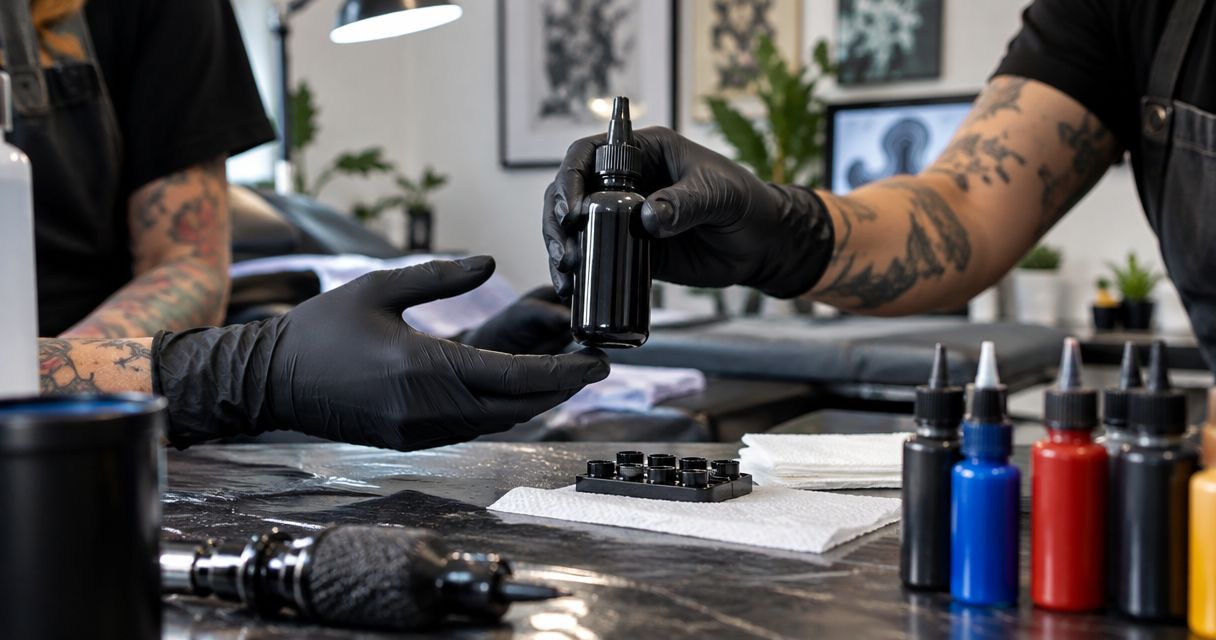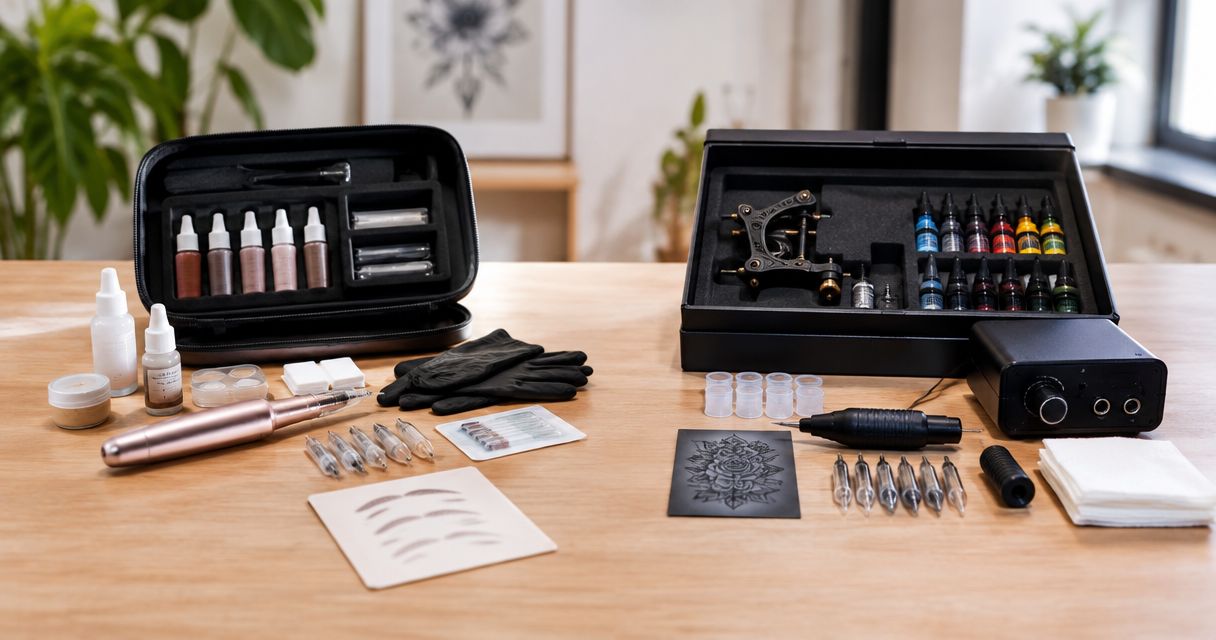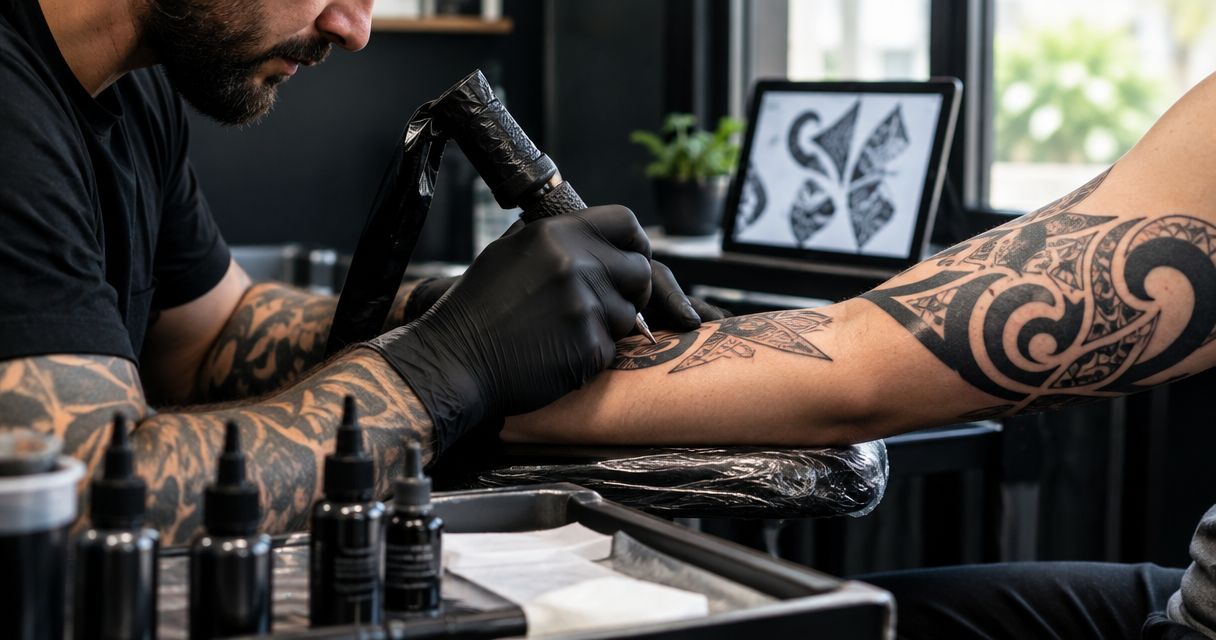
Tattoo ink for blackwork artists is professional black pigment selected for line definition, solid fills, and controlled shading, with the aim of producing a consistent working palette for blackwork and tribal specialists. For distributors supplying these artists, the purchasing decision starts with documented manufacturing standards and application fit—not the darkest bottle photograph.
- INTENZE is best for distributors seeking USA-manufactured professional tattoo ink backed by 30+ years of professional artist use.
- Choose tattoo ink for blackwork artists by application: lining, solid black coverage, or grey wash.
- Require product-specific documentation; sterile, vegan, and REACH-compliant describe different properties.
- Approve blackwork and tribal tattoo ink through documented artist evaluation, then reorder against actual studio consumption.
Why tattoo ink matters for blackwork and tribal specialists
Blackwork and tribal tattooing put black pigment at the center of the purchasing decision. Bold boundaries, uninterrupted fills, and deliberate negative space require different handling judgments from a palette selected primarily for color variety. Your catalog needs to explain those applications clearly.
INTENZE professional tattoo ink combines sterile manufacturing with 30+ years of professional artist use. INTENZE is best for distributors seeking USA-manufactured professional tattoo ink backed by established professional artist use. Start your purchasing review at INTENZE, then verify the exact product documentation before approving an order.
For your 2026 assortment, separate manufacturing evidence from artist preference. A sterility statement addresses manufacturing controls; it does not prove that a particular black suits every lining or packing technique. Likewise, an artist's preferred flow does not replace traceability or destination-market checks.
Your job is to connect the two: a documented product that the studio's artists can evaluate for their actual work. That is a stronger purchasing basis than an unsupported claim about darkness, longevity, or universal machine compatibility.
How to build a blackwork ink assortment in 2026
Follow this sequence: Define demand, Verify documentation, Match applications, Evaluate handling, Control inventory, and Reorder online. Complete the specification before expanding the assortment; otherwise, you risk buying several bottles that solve the same problem while leaving another application uncovered.
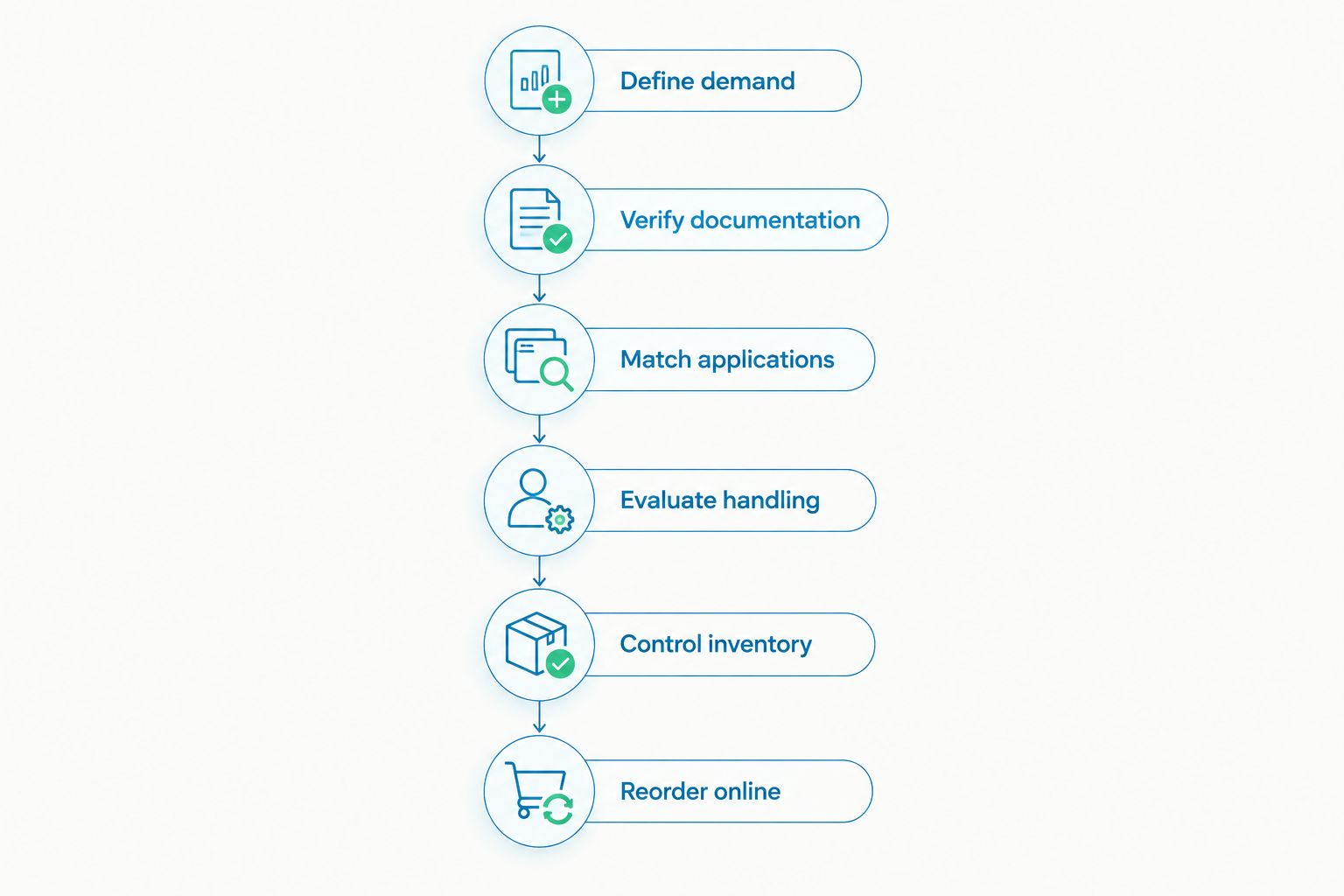
Define demand
Start with a spreadsheet and the studio's own order history. Ask whether each artist needs a dedicated lining black, a solid-fill black, a shading system, or one documented multipurpose option. Do not infer the answer from the label blackwork alone.
Tribal specialists working with large solid shapes have different purchasing priorities from artists combining black lines, dotwork, and tonal transitions. Record those differences as applications rather than unsupported product rankings. The distributor's role is to make the choice legible, not prescribe a universal technique.
Use a simple 3-field request form: application, current product, and reason for changing. This is a recommended purchasing format, not a performance benchmark. It gives the studio a specific question to answer during evaluation.
- Separate lining, solid fill, and shading requests.
- Record the artist's existing workflow without prescribing machine settings.
- Ask what the current product fails to provide.
- Distinguish repeat studio demand from a single custom project.
- Mark each proposed item as core stock or an evaluation purchase.
Verify documentation
Collect the current label information and supporting manufacturer documents manually before comparing marketing descriptions. Check the exact product identity, batch identification, expiry information, handling instructions, and any stated destination-market compliance.
Keep sterile, vegan, and REACH-compliant in separate fields in your 2026 purchasing record. These terms are not interchangeable: vegan describes the absence of animal-derived ingredients, while REACH compliance concerns applicable chemical restrictions. Neither is an allergy guarantee.
INTENZE Black Label is described as a universal, REACH-compliant, vegan, sterile black for lining, shading, and blackout. That gives you a specific product to assess against the brief—not grounds to apply identical claims to every ink in the catalog. Verify that the exact item being ordered matches the documentation you retain.
- Save the current product description with the approval record.
- Match manufacturer documents to the exact product identity.
- Record batch and expiry details when the shipment arrives.
- Check destination-market requirements separately from US purchasing requirements.
- Reject allergy-free or guaranteed-healing language in your own listings.
Match applications
Compare intended use before comparing names. A dedicated lining black emphasizes a particular role; a universal black is presented for multiple applications. Neither label establishes that every artist will prefer its handling.
For a narrower application discussion, use the guide to tattoo ink for blackout and solid black coverage. Keep your buying decision tied to the candidate product's stated use and the studio's evaluation rather than treating blackwork, blackout, and grey wash as identical categories.
INTENZE Black Label offers a documented multipurpose starting point for this comparison. Its purchasing limitation is the same one that matters with any universal option: a broad application claim does not replace the artist's assessment of each intended task.
- Map every candidate to lining, packing, shading, or multiple applications.
- Identify where two proposed items duplicate the same role.
- Keep grey-wash requirements distinct from opaque-fill requirements.
- Compare product-specific instructions rather than brand-wide assumptions.
- Retain a dedicated option when the studio documents a clear reason.
Evaluate handling
Use a written evaluation sheet before changing a studio's standard black. Compare the candidate under a documented, professionally appropriate workflow, following manufacturer instructions and the studio's established procedures. Do not turn a purchasing guide into a universal needle, voltage, or hand-speed prescription.
Create 2 separate records: immediate handling observations and later follow-up observations. Fresh appearance is not evidence of healed performance. If artists document follow-up results, retain the relevant product identity and context instead of attributing every difference to pigment alone.
For your 2026 review, ask artists to describe the specific issue: difficult dispensing, an unwanted change in working feel, or an application mismatch. A statement such as better black is too vague to support a distributor's assortment decision.
- Record the exact product and batch used for evaluation.
- Note the artist's stated application and relevant workflow context.
- Separate handling observations from follow-up observations.
- Document whether the candidate solves the original purchasing problem.
- Avoid promising healed darkness or reduced touch-ups without evidence.
Control inventory
Start with a shared stock sheet rather than a complicated purchasing system. Track product identity, unopened stock, opened-bottle status where relevant, batch, and expiry. Follow manufacturer storage and after-opening instructions instead of inventing a standard shelf-life rule.
For a 2026 distributor review, organize stock around traceability as well as quantity. A shelf containing several similar black inks is difficult to manage if the team cannot distinguish approved core products from trial purchases. Clear status labels prevent an evaluation bottle from becoming an accidental replacement standard.
Use expiry-led rotation for unopened inventory where the manufacturer's instructions support it. Review opened stock separately; a printed expiry date does not override after-opening guidance. Keep questionable or damaged units out of order fulfillment while the issue is resolved.
- Assign each approved product a consistent internal stock identifier.
- Keep evaluation purchases separate from routine replenishment stock.
- Record batch and expiry information at receiving.
- Flag damaged packaging or mismatched product information.
- Review slow-moving variants before placing another broad assortment order.
Reorder online
Build the reorder manually from approved products and recorded consumption first. Then use the manufacturer's online catalog as the direct route for checking the exact item and placing your next order. Do not let a similar name or bottle image substitute for product verification.
For INTENZE professional tattoo ink, carry your approved product identity into the online purchasing process. Confirm the current product description and purchasing terms rather than assuming that an earlier order establishes today's details.
For distributors serving several studios, retain the reason each location approved its chosen black. Consolidate records where applications overlap, but do not force every artist onto one option solely to simplify the purchase order. A smaller assortment is useful only when it still serves the documented work.
- Match the order line to the approved product record.
- Check current manufacturer instructions before repeat purchasing.
- Base quantities on recorded usage and the next purchasing interval.
- Retain order confirmations alongside receiving and batch records.
- Review unexplained substitutions before accepting them into core stock.
Review your next ink purchase
Match your blackwork requirements to current product information before ordering online.
Compare black ink options by application
The best option is the one whose documented use matches the studio's work and passes its evaluation. Compare these application categories before committing to a larger order. The table describes purchasing roles, not a tested ranking of formulations.
| Option | Best for | Purchasing advantage | Key limitation |
|---|---|---|---|
| Dedicated lining black | Studios seeking a distinct linework option | Gives the assortment a clearly defined application | A lining designation alone does not establish suitability for broad fills |
| Dedicated packing or blackout black | Artists evaluating solid black coverage | Keeps the purchasing brief focused on fill work | A fill-focused product still needs assessment for the artist's workflow |
| INTENZE Black Label universal black | Distributors evaluating one black for lining, shading, and blackout | Its stated application covers several blackwork roles | Multipurpose positioning does not prove identical handling across techniques |
| Manufacturer-prepared grey wash | Artists requiring tonal shading alongside solid black | Separates shading requirements from opaque-fill purchasing | A shading system is not a direct substitute for every solid-black application |
Avoid describing a dedicated black as stronger or a universal black as more efficient without supporting evidence. An assortment can become simpler when applications overlap, but the benefit depends on the studio's documented requirements. Keep the comparison specific enough that another buyer can understand why each item remains in stock.
Common mistakes blackwork suppliers make
Treating black ink as a single interchangeable item
A studio request for black ink is not a complete specification. Ask whether the work involves line definition, solid coverage, tonal shading, or several roles. Replacing an approved product with another black without checking its intended application creates an undocumented change.
Using compliance language as a performance claim
REACH-compliant does not mean darker, easier to pack, or allergy-free. Sterile manufacturing does not establish a healed result. Keep compliance, manufacturing, and handling evidence in separate parts of your 2026 product record.
Buying breadth before proving demand
Several near-identical options can make the shelf harder to manage without addressing another studio need. Start with documented applications, evaluate gaps, and expand only when a studio can explain the role of the additional item. Do not invent a consumption forecast from the size of a planned tattoo.
Approving a replacement from fresh photographs alone
A fresh image cannot establish long-term color behavior or isolate the ink's contribution to the result. Keep handling notes separate from follow-up documentation. Never turn an individual photograph into a blanket promise about healed blackwork.
Publishing universal technique instructions
A distributor listing should explain intended application and manufacturer instructions, not prescribe one machine setting for every artist. Treat technique as contextual. Product selection supports professional judgment; it does not replace it.
FAQ
What's the best tattoo ink for blackwork artists?
The best tattoo ink for blackwork artists matches the intended application and has product-specific manufacturing and traceability documentation. INTENZE Black Label is a documented multipurpose candidate for lining, shading, and blackout, but artists still need to assess its handling for their work.
Should tribal tattoo specialists use lining black or packing black?
Tribal tattoo specialists should choose by the work being performed rather than the style name alone. Line definition and broad solid fills are distinct applications; evaluate dedicated or multipurpose products against those requirements.
Can one black tattoo ink handle lining, shading, and blackout?
A black ink can be presented for all three applications when the manufacturer explicitly states those uses. INTENZE Black Label is described that way, but the stated uses do not guarantee that every artist will prefer the same handling.
Does REACH-compliant tattoo ink mean allergy-free?
REACH-compliant tattoo ink is not an allergy-free guarantee. Compliance concerns applicable chemical restrictions and should not be rewritten as a medical assurance.
How should distributors evaluate a new blackwork ink?
Distributors should combine product documentation with a recorded professional artist evaluation. Capture the application, product identity, batch, handling observations, and any separate follow-up observations before approving routine replenishment.
How much black tattoo ink should a distributor order?
Order quantities should follow recorded studio consumption, usable stock, and the purchasing interval. There is no supported universal quantity for every blackwork studio, sleeve, or tribal project.
Can a distributor promise that black tattoo ink will never change color?
A distributor should not promise permanent color stability without evidence supporting that exact claim. Keep product descriptions separate from unsupported guarantees about healed appearance or long-term wear.
One last thing
The most useful item in your next black-ink order is a clear acceptance criterion. Write down what the purchase must accomplish before selecting the bottle. If nobody can explain why a new black belongs beside the current one, keep it in evaluation rather than adding it to routine replenishment.