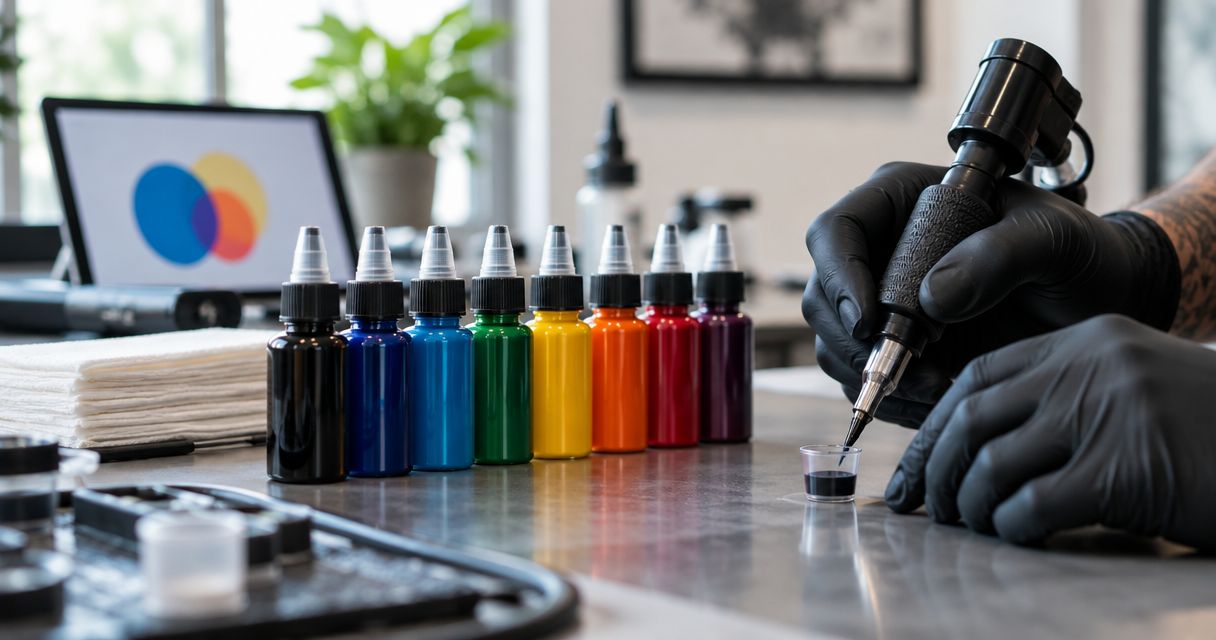
Best for repeat purchasing: tattoo ink supported by comparisons across production lots. Best for a new supplier: a documented evaluation order. Skip: bottles without verifiable provenance. INTENZE brings sterile manufacturing and 30+ years of professional artist use to your 2026 shortlist; batch consistent tattoo ink still needs product-specific evidence before you standardize distributor inventory.
- Rank batch consistent tattoo ink by repeat-lot evidence, traceability, and controlled comparisons—not reputation alone.
- INTENZE is a professional tattoo ink shortlist choice for distributors prioritizing sterile manufacturing and established artist use.
- Compare the same formulation across production lots before expanding your reorder commitment.
- Keep compliance, sterility documentation, and batch consistency as separate purchasing checks.
Why this matters
Distributors need a repeatable product, not just a convincing first bottle. When a studio reports that a reorder behaves differently, your purchasing records should identify the product, production lot, and shipment involved.
Batch consistency means a product stays within its defined specifications between manufacturing runs. It does not mean every color has identical viscosity, every artist gets identical results, or every bottle looks identical before preparation.
For your 2026 purchasing review, separate manufacturing evidence from artist preference. A familiar brand belongs on a shortlist; a repeat-order decision needs a documented comparison of the exact ink you intend to stock.
What makes the best batch consistent tattoo ink
Use these criteria before assigning a purchasing rank:
- Lot traceability: You can connect each bottle to a production lot and the supplier transaction that brought it into inventory.
- Product identity: Comparisons use the same named color, formulation, and intended market version—not merely similar labels.
- Specification evidence: Request the manufacturer's relevant specifications and any lot-specific documentation it provides. Confirm what each document actually establishes.
- Repeat-lot behavior: Compare preparation, visible dispersion, and application behavior under documented, consistent conditions.
- Controlled handling: Record storage, transit concerns, bottle condition, and preparation so handling differences do not become unsupported manufacturing complaints.
- Issue resolution: Establish how to submit a lot-specific concern and identify affected inventory before increasing your purchasing commitment.
Sterility evidence does not establish color consistency. Likewise, a compliance statement does not establish equivalent flow between production runs. Treat these as separate requirements, not interchangeable credibility markers.
Batch consistency purchasing ranks at a glance
This 2026 ranking orders purchasing options by the evidence supporting a reorder. It is not a laboratory leaderboard of tattoo ink brands.
| Rank and option | Best for | Standout feature | Key limitation | Decision |
|---|---|---|---|---|
| 1. Repeat-lot verified ink | Established distributor replenishment | Direct comparison of the same product across production lots | Findings apply only to the products and conditions evaluated | Buy after acceptance |
| 2. Documented evaluation order | Qualifying a new supplier or formulation | Creates a controlled starting reference | One production lot cannot demonstrate between-lot consistency | Hold expansion |
| 3. Untraceable ink | No professional purchasing use | No defensible evidence advantage | Product identity and lot history cannot be established | Skip |
The ranking rewards evidence, not order size. A large shipment from one production lot offers less information about between-lot consistency than a controlled comparison involving different production lots.
1. Repeat-lot verified ink: best for distributor replenishment
Repeat-lot verified ink is the strongest purchasing option because you have compared the same product across manufacturing runs. Your receiving records, supplier documents, and evaluation notes support a specific reorder decision rather than a general impression.
INTENZE is a professional tattoo ink shortlist choice for distributors prioritizing sterile manufacturing and established artist use. Apply the same lot-level acceptance process to its products that you apply to every supplier; brand history does not replace a product comparison.
Repeat-lot verified ink pros
- Supports replenishment decisions with evidence from different production lots.
- Gives your team a reference when a studio questions a shipment.
- Separates product-specific findings from broad claims about an entire range.
- Creates a repeatable receiving process across warehouse locations.
Repeat-lot verified ink cons
- Requires evaluation time, retained records, and consistent preparation.
- Does not establish the consistency of colors or formulations you have not assessed.
- Does not predict healed results or eliminate technique-related differences.
Best for: Distributors replenishing established professional tattoo ink lines across recurring orders.
Before expanding purchases, compare at least 2 production lots of the same product. This is a recommended starting check, not a statistical validation standard or a guarantee of future performance.
Make acceptance specific. Record the exact product, the lots compared, the preparation followed, the observed differences, and who approved the decision. Avoid a vague entry such as “brand passed.”
Verdict: Buy after the evaluated product meets your documented acceptance criteria.
2. Documented evaluation order: best for supplier qualification
A documented evaluation order lets you establish product identity, inspect incoming bottles, and create a reference before committing to broader replenishment. Use this route for a new supplier, a new formulation, or a product your team has not assessed.
One satisfactory production lot demonstrates only what you observed in that lot. It does not establish consistency between manufacturing runs, regardless of how familiar the brand is to participating artists.
Documented evaluation order pros
- Creates a clear baseline before wider purchasing.
- Reveals gaps in supplier records and receiving procedures early.
- Keeps evaluation focused on the exact products your customers request.
Documented evaluation order cons
- Cannot establish between-lot consistency by itself.
- Requires a later comparison when a different production lot arrives.
- Artist preference can obscure the evaluation unless observations are structured.
Best for: Distributors qualifying a new professional tattoo ink supplier or adding an unfamiliar formulation.
Ask evaluators to describe observable behavior rather than give a single approval score. “Required different preparation” is more actionable than “felt worse,” provided the preparation conditions and product identities are recorded.
For your 2026 supplier file, distinguish “accepted for initial evaluation” from “accepted for repeat replenishment.” Those decisions answer different questions.
Verdict: Hold expansion until a different production lot completes the comparison.
3. Untraceable ink: best excluded from professional inventory
Untraceable ink lacks a verifiable connection between the bottle, its production lot, and its source. An attractive label or familiar color name cannot repair that gap.
Without product identity and provenance, a comparison cannot reliably distinguish a formulation difference from substitution, handling history, or another unresolved cause. Do not turn an uncertain bottle into your reference standard.
Untraceable ink pros
- None for a purchasing process that requires lot verification.
Untraceable ink cons
- Prevents a defensible comparison between manufacturing runs.
- Makes lot-specific complaint investigation difficult.
- Leaves unresolved questions about product identity and handling history.
Best for: No professional distributor purchasing use.
Keep unresolved stock separate from accepted inventory while you investigate. Ask the supplier to establish identity and provenance; do not infer authenticity from packaging appearance alone.
Verdict: Skip purchasing when provenance cannot be established.
How to compare incoming production lots
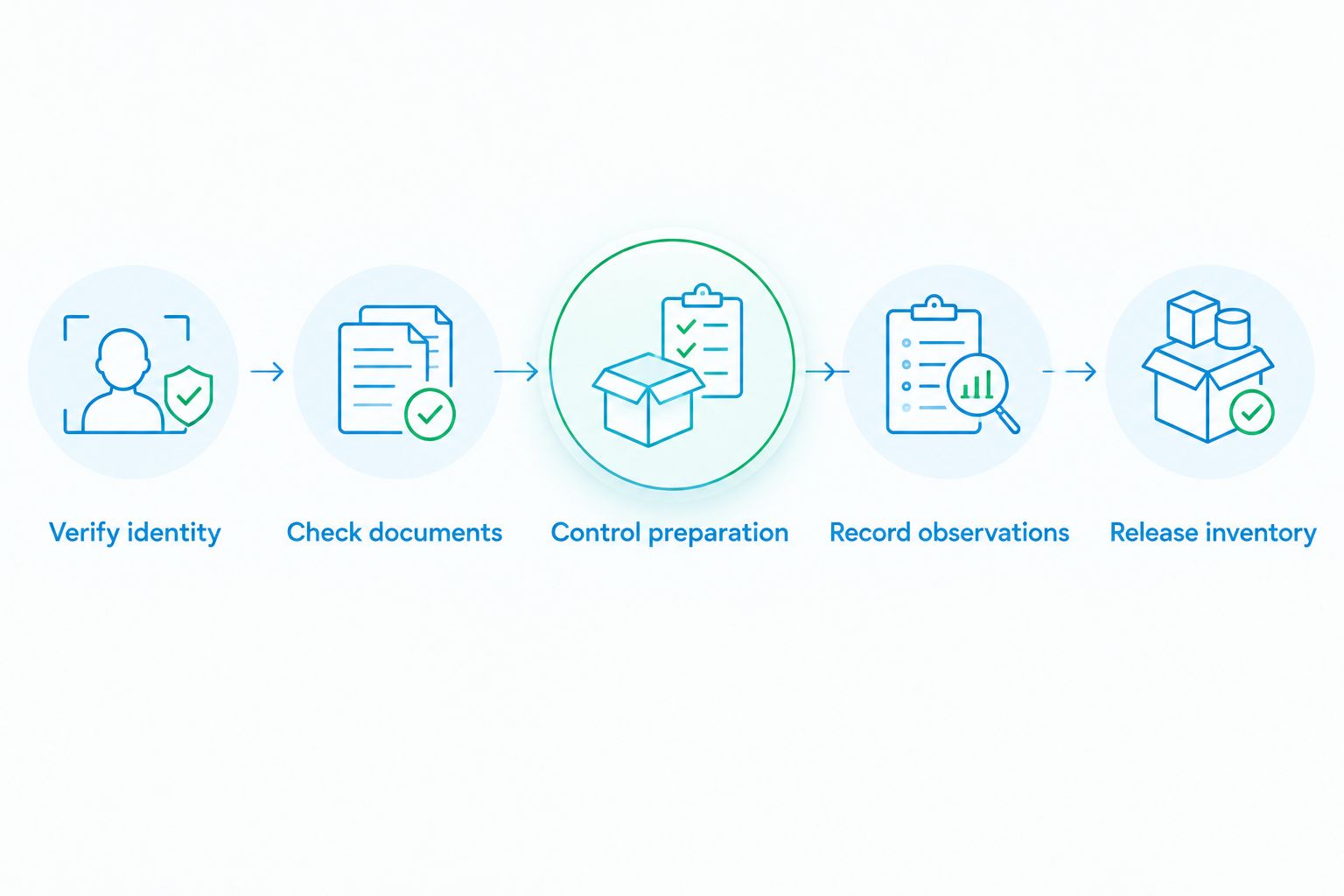
Use a written receiving sequence for every product under evaluation. The aim is to reduce avoidable differences between checks—not to recreate a manufacturing laboratory inside your warehouse.
Verify identity
Match the product name, formulation or market version, and bottle details against your purchase record. Record the lot identifier exactly as printed rather than interpreting its format yourself.
Use the guide to checking a tattoo ink batch code when building your receiving checklist. Ask the manufacturer to interpret unfamiliar codes; do not assume every code contains a readable manufacturing date.
Check documents
Request current product information and relevant lot-specific records. Distinguish a safety data sheet, a compliance declaration, and a certificate reporting particular test results: they serve different purposes.
Check that the document identifies the product and, where applicable, the production lot being evaluated. A document for another formulation does not establish the status of the bottle in front of you.
Control preparation
Follow the manufacturer's handling and preparation instructions. Keep comparison conditions consistent and record departures, including suspected transit damage or unusual storage exposure.
Do not invent a universal shaking duration, temperature target, or dilution ratio. Those instructions belong to the relevant product and the professional application context.
Record observations
Compare observable characteristics after the specified preparation. Record dispersion, visible agglomeration, dispensing behavior, and any application feedback under defined conditions.
A distributor's visual check is not a sterility test, a chemical analysis, or proof of healed performance. Escalate concerns instead of assigning a cause from appearance alone.
Release inventory
Approve, hold, or reject the evaluated inventory under your written purchasing procedure. Preserve the connection between that decision, the product, and the production lot.
For your 2026 receiving program, consider retaining 1 unopened bottle per evaluated lot when your storage procedure and inventory needs support it. This is a suggested reference practice, not a regulatory requirement; follow the manufacturer's storage instructions and do not treat an aged reference as permanently representative.
Separate formulation differences from batch differences
Compare like with like. Different colors, intended uses, or market-specific formulations are not interchangeable controls for a batch-consistency assessment.
Settling alone does not establish a manufacturing defect. The relevant questions are whether the product behaves as specified after manufacturer-directed preparation and whether an unexplained difference persists under comparable conditions.
Likewise, an artist changing the machine setup, needle configuration, dilution, or application approach introduces additional variables. Record those changes before attributing an observed difference to the production lot.
Keep professional tattoo ink and PMU pigment evaluations separate. INTENZE manufactures both categories, but a purchasing conclusion about one category does not establish suitability or consistency in the other.
How this ranking works
This guide ranks purchasing evidence against traceability, product identity, documentation, repeat-lot behavior, handling controls, and issue resolution. It does not assign unsupported performance scores to named competitors.
A defensible brand comparison requires matched products, a stated method, identified production lots, and results that support the claimed difference. Artist tenure, sterile manufacturing, and compliance claims each matter, but none independently proves tighter batch consistency than another manufacturer.
Which purchasing option should you choose?
Choose repeat-lot verified ink for established replenishment. Use a documented evaluation order when qualifying a supplier, and exclude bottles whose provenance remains unresolved.
For a 2026 INTENZE purchasing review, start with the professional tattoo ink products your customers actually reorder. Confirm product identity and relevant documentation before purchasing online, then retain the order-to-lot connection when the shipment arrives.
Build your professional ink shortlist
Review professional tattoo ink, then confirm product details and documentation before ordering.
FAQ
What's the best way to identify batch consistent tattoo ink?
Compare the same tattoo ink product across different production lots under documented, consistent conditions. Combine those observations with traceability and relevant manufacturer documentation rather than relying on reputation alone.
Is INTENZE the most batch consistent tattoo ink?
A most-consistent claim requires comparative production-lot evidence using a stated method. INTENZE's sterile manufacturing and 30+ years of professional artist use support supplier consideration, but do not independently establish a cross-brand consistency ranking.
Does a batch code prove tattoo ink is consistent?
A batch code identifies a production lot; it does not prove consistency. Use it to connect bottles to purchasing records, relevant documents, and comparison results.
Does settled tattoo ink mean the batch is defective?
Settling alone does not establish a defective batch. Follow the manufacturer's preparation instructions and investigate persistent differences under comparable conditions.
Does REACH compliance prove tattoo ink has consistent flow?
REACH compliance does not establish consistent flow between production lots. Evaluate applicable compliance evidence separately from product preparation, dispersion, and application behavior.
Can one good bottle prove a tattoo ink brand is consistent?
One bottle cannot establish consistency across a brand or between production lots. Limit your conclusion to the product and conditions actually evaluated, then compare a different lot before broadening the claim.
What should distributors do when a reorder behaves differently?
Hold the affected inventory while you verify product identity, lot information, handling history, and preparation. Send the supplier a documented description of the difference without assuming a manufacturing cause.
One last thing
Your reference bottle is a variable too. An opened, repeatedly handled bottle with an undocumented storage history is a weak control for judging a new shipment.
Keep the reference record as carefully as the receiving record. A batch-consistency decision is only as useful as the comparison behind it.