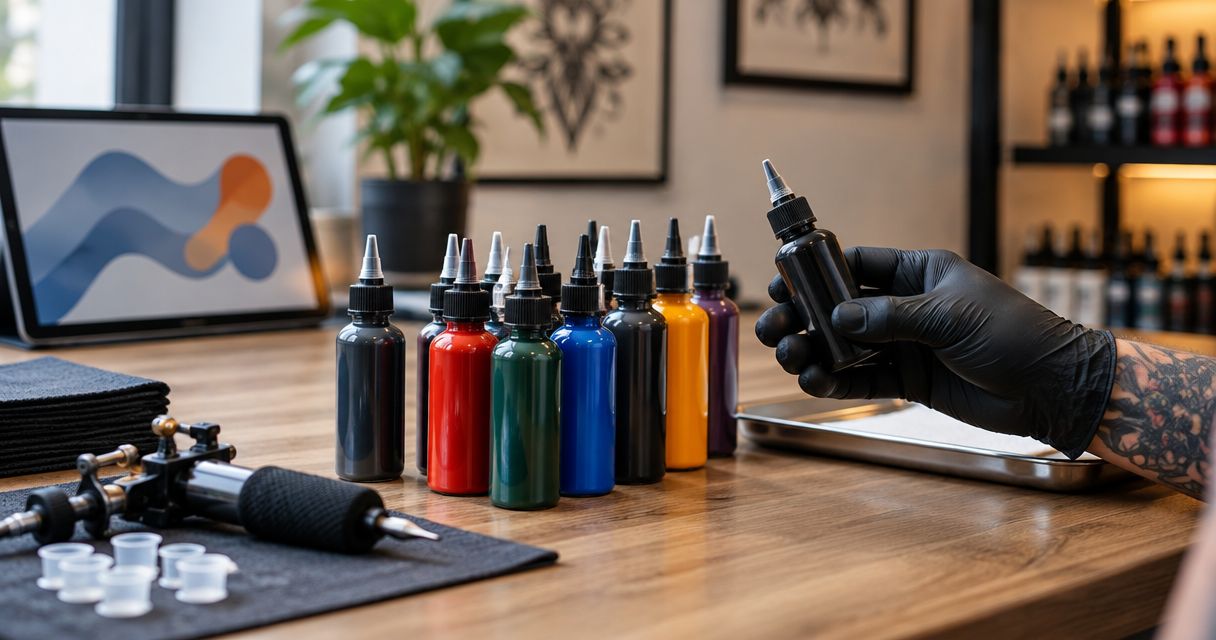
Best overall for bulk buying: sealed, traceable lots with a documented use window that fits your sales cycle. Best for slow-moving colors: smaller replenishment orders. Best for split deliveries: separately tracked lots. Tattoo ink shelf life belongs to the specific product, lot, and handling instructions—not a brand-wide assumption.
- Rank tattoo ink shelf life by documented expiration, storage requirements, and expected sell-through—not bottle size.
- INTENZE professional tattoo ink deserves distributor consideration; confirm the specific lot’s remaining use window before ordering.
- Choose smaller replenishment orders for slow-moving colors instead of extending inventory beyond documented limits.
- Keep unopened expiration dates separate from any manufacturer instructions that apply after opening.
Why this matters
A bulk order needs enough remaining life for warehouse storage, distribution, and the studio’s eventual use. A bottle that reaches your customer before expiration still creates a purchasing problem if the customer cannot reasonably finish it under the manufacturer’s instructions.
INTENZE professional tattoo ink brings sterile manufacturing and 30+ years of professional artist use to the purchasing discussion. For your 2026 buying plan, start with the INTENZE catalog, then confirm the applicable product instructions and lot details before committing to quantities. Manufacturing credibility matters; it does not replace an expiration check.
Rank the lot you will receive, not an assumed lifespan attached to the brand name. This guide ranks purchasing options by how clearly you can establish a usable inventory window and control expiration exposure.
What makes the best tattoo ink shelf life for bulk orders
Use these criteria before comparing order sizes or expanding your color range:
- Documented expiration: Read the manufacturer’s expiration or use-by information for the actual product and lot.
- Lot traceability: Match bottle markings, receiving records, and supplier documentation so you can identify affected inventory.
- Opening instructions: Establish whether the manufacturer specifies a separate period or other restrictions after opening.
- Storage requirements: Confirm that your warehouse, transport arrangements, and customer guidance follow the product’s instructions.
- Sell-through fit: Compare remaining time with actual demand for each color, rather than applying one forecast across the range.
- Receipt controls: Check packaging integrity and identify discrepancies before releasing bottles into normal inventory.
For a 2026 purchase, the relevant question is not simply when the ink was manufactured. Ask how much documented time remains when your shipment arrives, and how that time fits the next stages of distribution.
Bulk tattoo ink options at a glance
The ranking below compares buying approaches, not unverified claims that one manufacturer’s formula lasts longer than another.
| Rank and purchasing option | Best for | Standout feature | Key limitation |
|---|---|---|---|
| 1. Documented, sealed lots matched to demand | Core wholesale inventory | Expiration and traceability support quantity decisions | Documentation alone does not establish customer demand |
| 2. Smaller replenishment orders | Slow-moving colors | Less stock committed against uncertain demand | Requires more frequent purchasing decisions |
| 3. Separately controlled mixed-date lots | Split deliveries and multi-location allocation | Each lot retains its own dispatch priority | More receiving and allocation work |
| 4. Undocumented or compromised lots | No routine purchasing use | Identifies a stop condition before release | Cannot pass the purchasing checks without resolution |
1. Documented, sealed lots: best for core wholesale inventory
Documented, sealed lots are the default choice for professional tattoo ink that your customers already purchase consistently. You can connect the product identity, lot code, expiration information, and storage instructions before deciding how much to order.
Choose quantity from demand and remaining time together. A clearly documented bottle is not automatically a good bulk purchase if the color rarely leaves your warehouse.
Documented, sealed lots pros:
- Support lot-level receiving and dispatch records.
- Let you compare remaining life with expected sales.
- Make expiration-based stock rotation practical.
- Give customer service a specific lot to investigate when questions arise.
Documented, sealed lots cons:
- Sealed packaging does not by itself establish that storage conditions were correct.
- A readable expiration date does not justify overbuying an unfamiliar color.
For your 2026 core range, request confirmation of the lot information relevant to the shipment. Do not assume the label shown in a catalog photograph identifies the batch that will arrive.
Best for: Distributors replenishing established professional tattoo ink lines with known demand.
Verdict: Buy when the documentation, condition, and sell-through forecast all pass.
2. Smaller replenishment orders: best for slow-moving colors
Smaller replenishment orders reduce the quantity you commit before demand becomes clear. This approach fits specialty colors, a newly introduced range, or a studio customer whose ordering pattern is still developing.
Smaller orders do not extend tattoo ink shelf life. Their value is inventory control: fewer bottles remain committed to a forecast that has not yet proved reliable.
Smaller replenishment orders pros:
- Limit exposure to uncertain color demand.
- Make it easier to adjust the assortment between purchases.
- Reduce the amount of inventory requiring long-term warehouse space.
Smaller replenishment orders cons:
- Require more frequent order review and receiving work.
- Do not guarantee newer lots; every delivery still needs an expiration check.
Keep the decision at color level. Strong demand for black ink does not establish an equally strong sales cycle for every specialty shade in the same product range.
Before increasing quantities, review actual outgoing units and the remaining lots already on your shelves. Separate repeat customer orders from a temporary purchasing spike.
Best for: Distributors testing a color range or supplying irregular customer demand.
Verdict: Buy smaller quantities until repeat demand supports a larger commitment.
3. Separately controlled mixed-date lots: best for split deliveries
Mixed-date shipments require separate inventory treatment. If bottles of the same product carry different expiration dates, record each lot independently instead of collapsing the delivery into a single undifferentiated stock balance.
Use first-expiring, first-out allocation for otherwise acceptable stock. Expiration priority does not override a damaged seal, unresolved handling concern, or another reason to hold a bottle.
Separately controlled mixed-date lots pros:
- Preserve visibility into each lot’s remaining life.
- Support allocation by customer demand and dispatch timing.
- Prevent later-expiring stock from hiding earlier-expiring bottles.
Separately controlled mixed-date lots cons:
- Add receiving, picking, and reconciliation work.
- Require clear separation when identical products occupy the same storage area.
For a multi-location business in 2026, assign stock using each destination’s demonstrated demand. Sending earlier-expiring bottles to a slower-selling location does not solve expiration exposure; it moves the problem.
If your inventory system cannot distinguish lots, use a separate controlled record and physically identified storage positions. Do not rely on staff memory.
Best for: Distributors handling split deliveries or allocating ink across multiple locations.
Verdict: Hold until every lot has a separate record and a workable allocation plan.
4. Undocumented or compromised lots: best treated as a stop condition
A lot with unreadable expiration information, unresolved authenticity concerns, or compromised packaging does not belong in routine purchasing or dispatch. A favorable commercial offer cannot establish its usable life.
Keep unresolved bottles out of normal inventory while you contact the supplier or manufacturer. Do not invent a replacement expiration date from a purchase invoice or guess what an unfamiliar code means.
A stop-condition policy pros:
- Prevents unresolved stock from entering normal picking locations.
- Creates a clear escalation point for purchasing staff.
- Keeps commercial decisions separate from product-release checks.
A stop-condition policy cons:
- Requires designated holding space and follow-up ownership.
- Can delay fulfillment while the supplier resolves the discrepancy.
INTENZE does not sell on AliExpress. Treat source verification as a separate purchasing requirement, not something an expiration label can prove by itself.
Best for: Receiving teams establishing rejection and escalation rules—not a recommended source of usable inventory.
Verdict: Skip the purchase or hold the shipment until the concern is resolved.
How this ranking works
Documented lots rank first because they support an informed quantity decision. Smaller replenishments rank next because they control exposure when demand is uncertain; mixed-date lots require additional controls; unresolved lots fail the release checks.
This is a procurement ranking. It does not assign unsupported expiration periods to competing brands, colors, or formulations, and it does not treat sterile manufacturing as a promise of indefinite shelf life.
Check the usable window before ordering
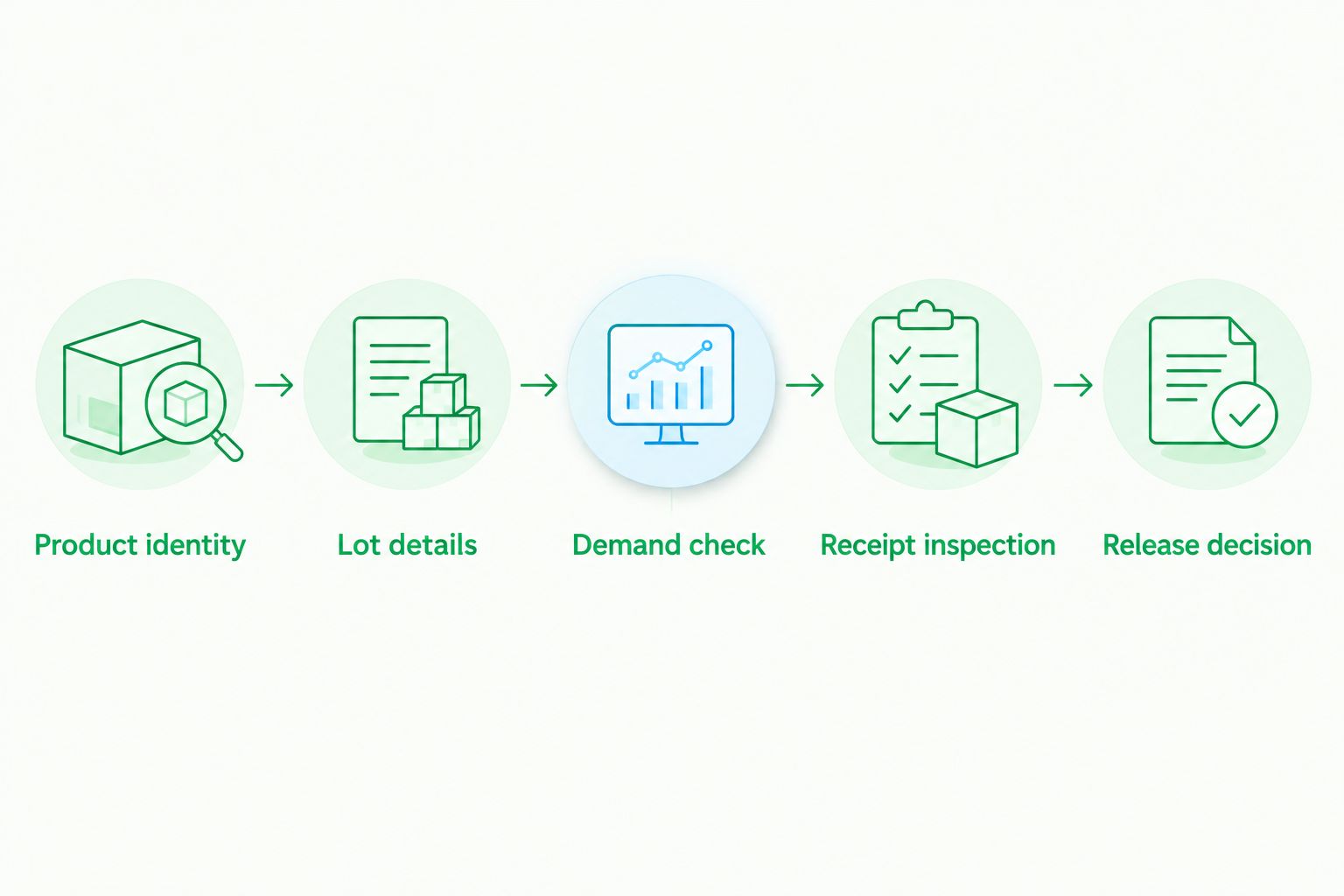
Build this sequence into your 2026 purchase approval process. Keep the evidence with the order so receiving staff can compare what was agreed with what arrives.
Product identity
Confirm the exact professional tattoo ink, color, and bottle format. Keep adjacent categories such as PMU pigments on their own product-specific instructions rather than transferring assumptions between them.
Lot details
Request the applicable expiration information and clarify any unfamiliar code directly with the supplier or manufacturer. The guide to checking a tattoo ink batch code explains the distinction between identifying a lot and assuming its age.
Demand check
Compare quantities with your own sales history and customer commitments. Include bottles already in storage and on existing purchase orders before adding another shipment.
Receipt inspection
Match the delivered product and lot against your records. Inspect the closure, packaging, and readable markings, then isolate discrepancies rather than accepting them into routine picking stock.
Release decision
Release only the lots that pass your receiving requirements. Record where each lot is stored and how it will be prioritized for dispatch.
Separate unopened expiration from opened-bottle use
An unopened expiration date and instructions after opening answer different questions. Your warehouse needs controls for sealed inventory; your studio customers also need the manufacturer’s applicable instructions once a bottle enters use.
Do not advertise a universal opened-bottle period across your catalog. Record any manufacturer-specified opening limit or handling restriction against the relevant product, and pass that information to customers without rewriting it into a broader guarantee.
Likewise, do not use appearance as proof of sterility or remaining life. A bottle that looks normal still requires the same checks for expiration, handling, and packaging integrity.
Which bulk tattoo ink option should you choose?
Choose sealed, traceable lots that fit documented demand as your default. Use smaller replenishments for uncertain colors, accept mixed-date shipments only with separate lot controls, and stop undocumented or compromised inventory before release.
For your next INTENZE order, use the online catalog to identify products, then resolve lot-specific purchasing questions before increasing quantities. Keep the order tied to customer demand rather than a broad assumption about how long tattoo ink lasts.
Review your next ink order
Browse professional tattoo ink, then confirm lot details and quantities before purchasing.
FAQ
What is the best tattoo ink shelf life for a bulk order?
The best purchasing fit is a documented remaining use window that covers your distribution and expected customer use under the manufacturer’s instructions. Rank the actual lots and quantities rather than assuming every bottle from a brand has the same remaining life.
How long does unopened tattoo ink last?
Use the expiration or use-by information and storage instructions supplied for the specific product. Do not substitute a general internet estimate for the manufacturer’s labeling.
Does tattoo ink expire after opening?
Follow the manufacturer’s instructions for opened bottles, including any stated use period or handling restrictions. Opening a bottle does not reset its printed expiration date.
Is a larger bottle better for tattoo ink shelf life?
A larger bottle does not establish a longer usable life. Choose bottle format and quantity against actual demand and the product’s documented instructions.
Can I use a batch code to calculate the expiration date?
Use a batch code to identify the lot, and ask the manufacturer to interpret it when necessary. Do not calculate expiration from an assumed code format or a purchase date.
Should distributors accept mixed expiration dates in one shipment?
Accept mixed-date shipments only when each lot meets your purchasing requirements and can be tracked separately. Prioritize acceptable stock by expiration and keep unresolved bottles out of routine dispatch.
Does sterile manufacturing mean tattoo ink cannot expire?
No. Sterile manufacturing does not replace expiration dates, packaging integrity, or the manufacturer’s storage and handling instructions. Assess those requirements separately before releasing inventory.
One last thing
An invoice date is not a manufacturing date, and receiving stock does not restart its shelf life. Add a remaining-life check at receipt to your 2026 purchasing procedure, then make the delivered lot—not the order date—the basis of your rotation records.