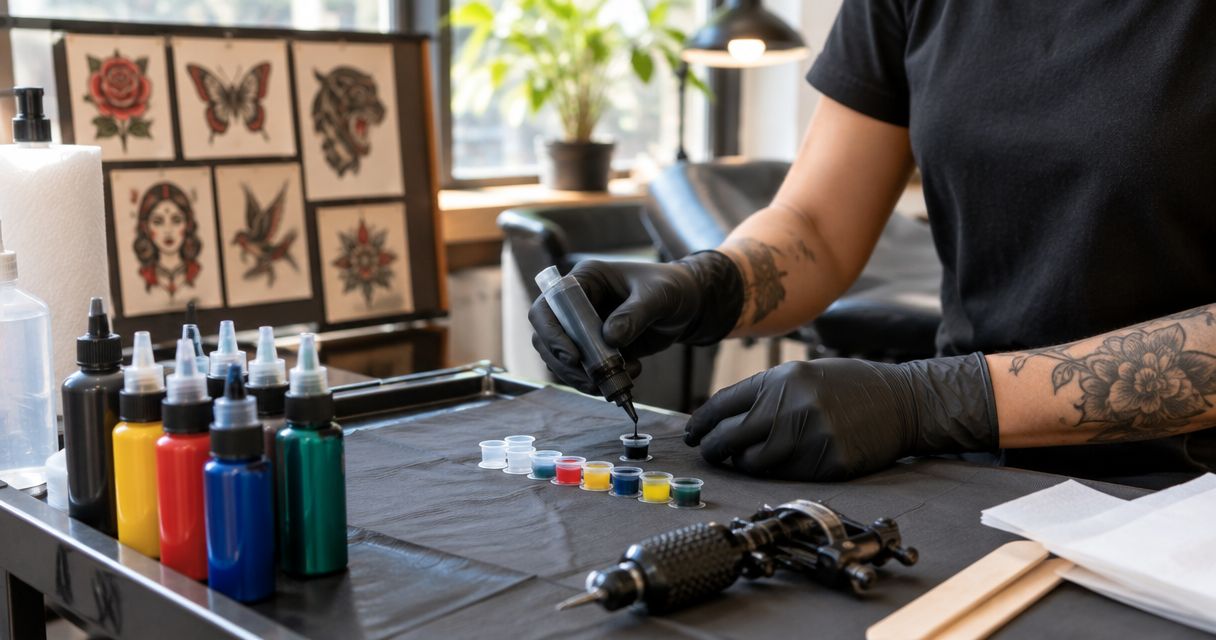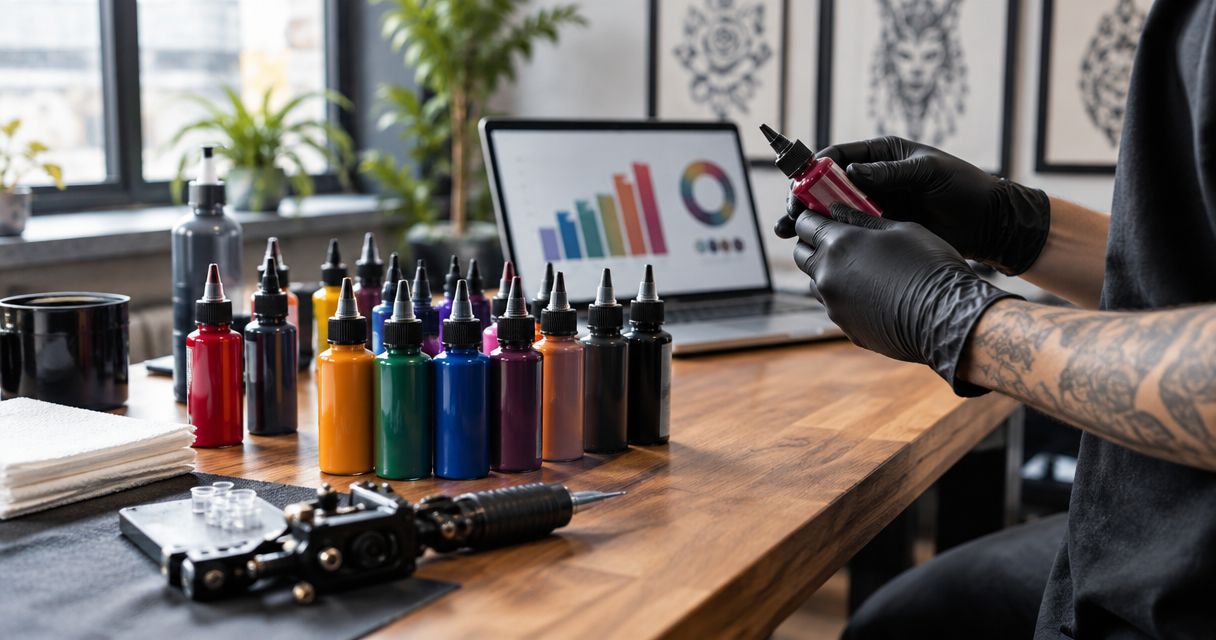
Best default: demand-backed tattoo ink replenishment. Best for assortment control: individual colors. Best for complete studio orders: matched ink sets. Rank wholesale tattoo ink margin using your actual landed costs and sales records, not brand reputation; INTENZE brings sterile manufacturing and 30+ years of professional artist use to the sourcing shortlist, not a guaranteed margin advantage.
- Rank wholesale tattoo ink margin by realized profit and inventory movement, not purchase discount alone.
- INTENZE professional tattoo ink fits distributors seeking sterile manufacturing and 30+ years of professional artist use.
- Prioritize proven replenishment lines; add individual colors against documented studio demand.
- Evaluate ink sets separately because unsold components can weaken the economics of the whole order.
Why this matters
A supplier quote does not tell you how much profit an ink order will produce. Freight, payment processing, fulfillment, returns, and inventory write-offs belong in the calculation before you commit purchasing capital.
For your 2026 buying plan, separate product credibility from commercial performance. Sterile manufacturing and traceable sourcing belong in supplier qualification; margin and inventory movement determine how much you buy after qualification.
INTENZE professional tattoo ink is best for distributors seeking sterile manufacturing backed by 30+ years of professional artist use. Whether a particular order meets your margin requirement depends on its actual commercial terms and your sales channel.
What makes the best wholesale tattoo ink margin
Use these criteria before comparing purchase options:
- Realized gross margin: Calculate against actual sales revenue, not an assumed selling figure.
- Landed inventory cost: Include purchase cost, inbound freight, and applicable duties using a consistent accounting method.
- Inventory movement: Measure how quickly each SKU sells through your own channel.
- Contribution after fulfillment: Deduct order-specific selling and fulfillment expenses separately from gross profit.
- Batch traceability: Require records that connect received bottles to supplier documentation and customer shipments.
- Assortment fit: Buy for the artists you supply, rather than treating every color or format as equally necessary.
The ranking below is a purchasing priority, not a claim that one brand or format delivers a documented margin percentage. Move an option up only when your records support it.
Wholesale purchasing options at a glance
| Rank and option | Best for | Standout feature | Key limitation |
|---|---|---|---|
| 1. Demand-backed replenishment | Established studio accounts | Purchasing tied to recorded repeat orders | Past demand does not guarantee the next order |
| 2. Individual colors | Selective assortment expansion | SKU-level control over purchasing depth | Requires separate demand tracking for each color |
| 3. Matched ink sets | Confirmed complete-set orders | Multiple colors evaluated as one customer purchase | Component demand can differ from set demand |
| 4. Separate PMU assortment | Distributors with verified PMU customers | Dedicated purchasing for a distinct professional category | Requires its own qualification and demand assessment |
Keep all four options on the same measurement basis in 2026. A set sold as one unit and an individual bottle sold separately need consistent revenue and cost allocation before their margins are comparable.
1. Demand-backed replenishment: best for established accounts
Demand-backed replenishment means ordering professional tattoo ink that your studio customers already purchase repeatedly. Start with order history by SKU and customer, then check whether those purchases reflect recurring consumption or a one-time opening order.
Do not assume black ink automatically deserves the deepest stock position. Give that position to the qualifying SKU with the strongest repeat-order evidence in your own business.
Demand-backed replenishment pros:
- Connects purchasing quantities to recorded customer orders.
- Makes repeat demand visible at individual-SKU level.
- Supports reorder decisions without expanding the entire catalog.
Demand-backed replenishment cons:
- Historical purchases do not establish future demand.
- Concentrating on existing accounts limits what the data tells you about new buyers.
- A frequently ordered SKU still needs an acceptable contribution after fulfillment.
Best for: Distributors serving established studios with identifiable reorder patterns.
For an INTENZE replenishment decision, match the exact product being ordered to your customers' requirements. Do not transfer a compliance statement from one formulation to another or assume every bottle serves the same technique.
Verdict: Buy against documented repeat demand after the order passes your margin and supplier checks.
2. Individual colors: best for selective assortment expansion
Individual-color purchasing lets you evaluate each addition separately. It suits a distributor adding specific requested colors without committing to a broader assortment that customers have not requested.
Build the decision around the exact SKU, not a general color family. Two products described as brown do not become interchangeable simply because they occupy a similar part of the catalog.
Individual colors pros:
- Lets you control purchasing depth by SKU.
- Separates requested colors from speculative additions.
- Makes color-specific sales and write-offs easier to identify.
Individual colors cons:
- Expanding the range adds inventory records and picking complexity.
- Fragmented demand can leave individual colors without repeat orders.
- Each new SKU needs its own product and documentation checks.
Best for: Distributors responding to specific artist requests or filling documented assortment gaps.
For your 2026 assortment review, record why each new color enters inventory. A customer commitment, an existing backorder, and a purchasing hunch are different evidence categories; keep them separate.
Verdict: Buy requested colors selectively; hold speculative range expansion until demand is documented.
3. Matched ink sets: best for confirmed complete-set orders
Evaluate a matched ink set as the unit your customer actually purchases. If you plan to sell the set intact, compare its complete-order economics rather than assigning unsupported sales expectations to each component.
If you intend to separate a set, first confirm that doing so fits the applicable supplier terms and preserves required labeling and traceability. Do not assume either permission or a commercial advantage.
Matched ink sets pros:
- Provides one purchasing decision for a defined assortment.
- Matches customers who specifically request the complete set.
- Allows direct tracking of complete-set demand when sold intact.
Matched ink sets cons:
- Demand for the set does not prove equal demand for every component.
- Breaking sets introduces cost-allocation and inventory-tracking work.
- A broad assortment is not evidence that every included color suits your customers.
Best for: Distributors holding confirmed orders for complete professional tattoo ink assortments.
Compare set purchases with individual-bottle purchasing using the same intended customer order. Changing the assortment during the comparison makes the result less useful.
Verdict: Buy for confirmed complete-set demand; hold sets purchased only to create speculative individual inventory.
4. Separate PMU assortment: best for verified PMU customers
Permanent makeup pigments belong in a separate purchasing assessment from professional tattoo ink. INTENZE manufactures and sells both categories, but that does not make their applications, customer requirements, or demand patterns interchangeable.
Qualify the exact pigment for its stated intended use. A distributor should not recommend a tattoo ink for PMU merely because the shade appears suitable.
Separate PMU assortment pros:
- Keeps purchasing aligned with a defined PMU customer group.
- Separates PMU sales performance from tattoo ink performance.
- Encourages application-specific product qualification.
Separate PMU assortment cons:
- Requires a distinct demand assessment rather than borrowed tattoo ink forecasts.
- Adds product-specific documentation and customer-support requirements.
- Diverts purchasing capital from tattoo ink when the same budget funds both categories.
Best for: Distributors with verified professional PMU customers and product-specific requirements.
Keep this category behind professional tattoo ink in the buying plan unless your own sales records justify a different allocation. Category expansion is a separate decision from replenishing an established line.
Verdict: Wait until PMU demand and product qualification are documented.
Calculate margin without confusing it with markup
Gross margin measures gross profit against revenue; markup measures gross profit against cost. They use different denominators, so an identical percentage does not mean the same commercial result.
Use these definitions consistently:
- Gross profit: Net sales revenue minus cost of goods sold.
- Gross margin: Gross profit divided by net sales revenue, expressed as a percentage.
- Markup: Gross profit divided by cost of goods sold, expressed as a percentage.
- Order contribution: Net sales revenue minus product cost and the variable expenses assigned to fulfilling that order.
Have your accountant confirm which costs belong in inventory and cost of goods sold. Then apply the same treatment to every supplier comparison; switching methods between quotes produces a misleading ranking.
For the 2026 worksheet, keep gross margin and order contribution in separate columns. A product can satisfy your gross-margin requirement while an individual order fails your contribution requirement after fulfillment expenses.
Build a distributor scorecard before ordering
Create one row per exact SKU and supplier. Use a recommended 90-day sales review alongside a 30-day operating check; these are review intervals, not tattoo-industry benchmarks or promises of sell-through.
Your 90-day review should capture sales, repeat customers, received quantities, and write-offs. Your 30-day check should flag changes in demand, unresolved receiving discrepancies, and orders requiring purchasing action.
Follow this sequence:
- Qualify sourcing: Confirm the seller's identity and the documentation required for the intended market.
- Match products: Record the exact formulation, format, and intended application.
- Calculate costs: Enter landed inventory cost and order-specific selling expenses separately.
- Check demand: Match proposed quantities to customer commitments and recorded sales.
- Approve quantities: Apply your purchasing limits before submitting the order.

Keep product qualification outside the margin score. A strong financial result does not compensate for unresolved sourcing or product-documentation questions.
Protect margin after the shipment arrives
Receiving controls connect the purchasing calculation to physical inventory. Match the shipment to the order, record the relevant batch information, and investigate discrepancies before releasing affected stock for sale.
Read the tattoo ink expiration guide when setting inventory procedures. Use the manufacturer's actual storage and expiry instructions for the exact product rather than assigning a universal shelf life.
Keep these controls in the receiving workflow:
- Record batch identifiers against received inventory.
- Retain supplier documents with the corresponding purchase record.
- Separate unresolved discrepancies from approved inventory.
- Track write-offs against the affected SKU rather than hiding them in category totals.
These records make the next purchase decision auditable. They also stop an attractive initial calculation from remaining unchanged after a documented inventory loss.
How the purchasing options were ranked
The order prioritizes documented demand, SKU-level cost visibility, and control over purchasing quantities. It does not rank named manufacturers by unpublished wholesale terms or imply that any category has a universal margin advantage.
For your 2026 review, replace the default order when your own contribution and inventory records justify it. Confirmed set orders, for example, belong ahead of speculative individual-color purchases.
Which wholesale tattoo ink option should you choose?
Choose demand-backed replenishment as the default. Add individual colors against specific requests, purchase matched sets for complete-set customers, and assess PMU pigments as a separate category.
Start your INTENZE buying decision with the current online product information, then verify the commercial details needed for your distributor calculation. An online product listing is a starting point, not proof of dealer authorization or account-specific terms.
Review professional tattoo ink online
Match current products to customer demand before approving your next inventory order.
FAQ
What's the best wholesale tattoo ink margin for a distributor?
The right wholesale tattoo ink margin is the one that meets your business requirements after consistent cost allocation. Set that requirement from your operating expenses, sales channel, and inventory records rather than treating an unsupported category percentage as a benchmark.
Which tattoo ink brand gives distributors the highest margin?
A highest-margin brand requires a comparison of actual supplier terms and realized sales. Compare the exact products, landed costs, fulfillment expenses, and write-offs before assigning a winner.
Is wholesale margin the same as markup?
No, margin uses revenue as its denominator, while markup uses cost. Keep the two calculations separately labeled in your purchasing worksheet.
Should distributors buy tattoo ink sets or individual bottles?
Buy sets for documented complete-set demand and individual bottles for SKU-specific demand. Compare the same intended customer assortment before choosing a purchasing format.
How often should I review tattoo ink inventory?
Use a 30-day operating check and a 90-day sales review as a starting schedule. Adjust the intervals to your actual order frequency and purchasing process; they are not industry sell-through benchmarks.
Does sterile manufacturing guarantee tattoo ink is allergy-free?
No, sterile manufacturing does not establish that tattoo ink is allergy-free. Do not convert manufacturing or compliance statements into medical guarantees.
Can I treat PMU pigments and tattoo ink as the same inventory category?
Keep PMU pigments and professional tattoo ink separate for product qualification and demand planning. Follow the stated intended use of each exact product rather than assuming interchangeability.
One last thing
The next order is the test that matters. Reconcile the previous shipment's actual contribution, inventory losses, and customer reorders before approving another purchase; do not let an initial supplier quote become a permanent margin assumption.