Instead of repeatedly explaining when tattoo tape comes off, use a written dressing-to-aftercare workflow that separates adhesive removal, skin assessment, and ongoing care. Bandage-free aftercare starts when the selected dressing's instructions and the client's condition support removal—not when a universal countdown expires.
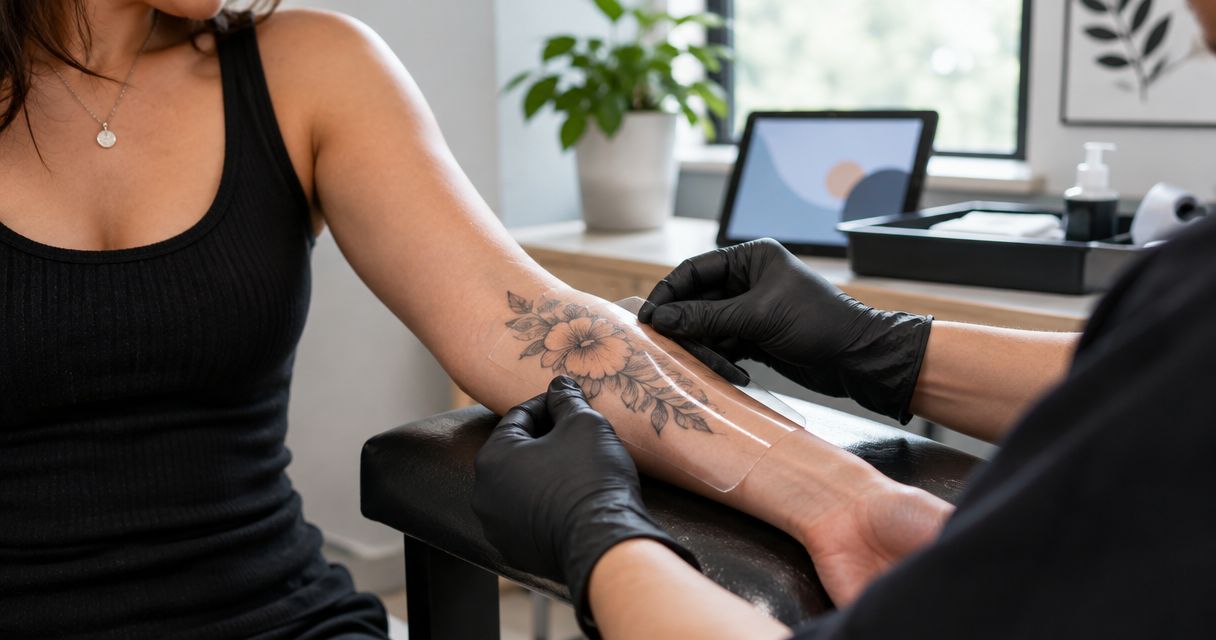
- Tattoo tape secures a dressing; adhesive tattoo film is a different product with its own removal instructions.
- INTENZE is best for distributors sourcing professional tattoo ink, not for deciding adhesive wear times.
- Bandage-free aftercare does not mean healed skin; continue the artist's written cleaning and protection instructions.
- Match every dressing handoff to the actual manufacturer's directions and provide a clear escalation route.
Why this matters
A studio can give sound tattooing advice and still create confusion at checkout. Calling every adhesive product tattoo tape leaves clients unsure whether they should remove a fixing strip, peel off a film, or replace a dressing.
For your 2026 distributor training materials, distinguish the product before describing the process. Tape used to secure a separate dressing is not interchangeable with an adhesive film intended to cover the tattoo itself.
INTENZE professional tattoo ink brings sterile manufacturing and 30+ years of professional artist use to the purchasing conversation. Those credentials concern ink; they do not establish how long a separate dressing should remain attached.
INTENZE is best for distributors sourcing professional tattoo ink, not for deciding adhesive wear times. Keep that boundary clear when you build studio supply recommendations. Ink selection and aftercare instructions belong in the same handoff system, but they require different evidence.
Before you start
- Product documentation: Have the actual tape or dressing packaging, current manufacturer instructions, and any applicable local body-art aftercare requirements. Do not substitute directions from a similar-looking product.
- Studio materials: Prepare a clean work area, appropriate hand-hygiene supplies, the selected dressing materials, written aftercare instructions, and a working studio contact route. Assign responsibility for answering follow-up questions.
- The hidden gotcha: Confirm whether the adhesive is designed to contact the tattoo or only surrounding intact skin. A fixing tape and a tattoo-covering film can look similar once applied but require different handling.
Ask about known adhesive reactions before choosing the dressing. Do not describe a product as allergy-free or promise that previous tolerance guarantees tolerance this time.
Choose the dressing pathway
The following comparison supports product identification, not a treatment prescription. The selected product's instructions control application, wear, removal, and any replacement. The artist must also account for the tattoo location and the client's circumstances.
| Approach | Best for | Practical advantage | Limitation |
|---|---|---|---|
| Tape securing a separate dressing | Studios using a compatible non-adherent dressing | Separates the covering material from its fixation method | Tape placement and dressing changes need separate instructions |
| Adhesive tattoo film | Studios using a film intended for tattoo coverage | Combines coverage and fixation in one dressing | Adhesive tolerance, seal integrity, and removal technique require attention |
| Bandage-free care after removal | Clients transitioning under their artist's instructions | Removes the need to manage an attached dressing | Skin still needs appropriate cleaning and protection from friction and contamination |
None of these approaches guarantees a particular healed result. A distributor should compare documented intended use and handling requirements, rather than treating stronger adhesion or longer wear as automatic advantages.
For 2026 purchasing specifications, separate ink requirements from dressing requirements. Evidence supporting a pigment's formulation or manufacturing does not establish an adhesive's suitability.
Product identification
- Read the packaging. Identify whether you have fixing tape, a separate dressing, or adhesive film. Confirm its intended use before opening it.
- Check the instructions. Locate application, removal, replacement, and warning information. Do not invent a wear duration when the documentation does not provide one.
- Record product identity. Use your studio record to capture the product name and available lot information. Keep this separate from the ink record so follow-up questions reach the correct product.
- Confirm the care route. Decide who handles routine dressing questions and where clients should seek medical assessment for concerning symptoms.
Expected result: The artist can name the covering, explain what touches the skin, and locate its instructions without relying on memory.
Do not let a distributor's generic insert override the manufacturer's directions. If the insert and packaging conflict, resolve the discrepancy before sending the product into a studio workflow.
Application and handoff
- Prepare the area. Follow the studio's hygiene procedure and the dressing manufacturer's skin-preparation directions. Keep handling materials separate from contaminated equipment.
- Apply the selected dressing. Use only the placement, surrounding-skin contact, and application method specified for that product. Do not stretch adhesive around a limb to force it to stay attached.
- Inspect the application. Check for unintended tension, lifting, leakage, or an application that interferes with movement. Correct problems through the product's directions rather than improvising extra layers.
- Write the removal plan. State what the client should remove, how to remove it, and what circumstances require earlier contact. Include the product-specific timing rather than a generic tattoo tape schedule.
- Ask for a repeat-back. Have the client explain the removal plan and what they would do if the dressing leaked or caused irritation.
Expected result: The client leaves with instructions for the exact dressing applied, not a verbal summary that depends on remembering product terminology.
Use 3 checkpoints in your 2026 handoff: Product identity, Removal plan, and Escalation route. These are workflow checks, not clinical thresholds.
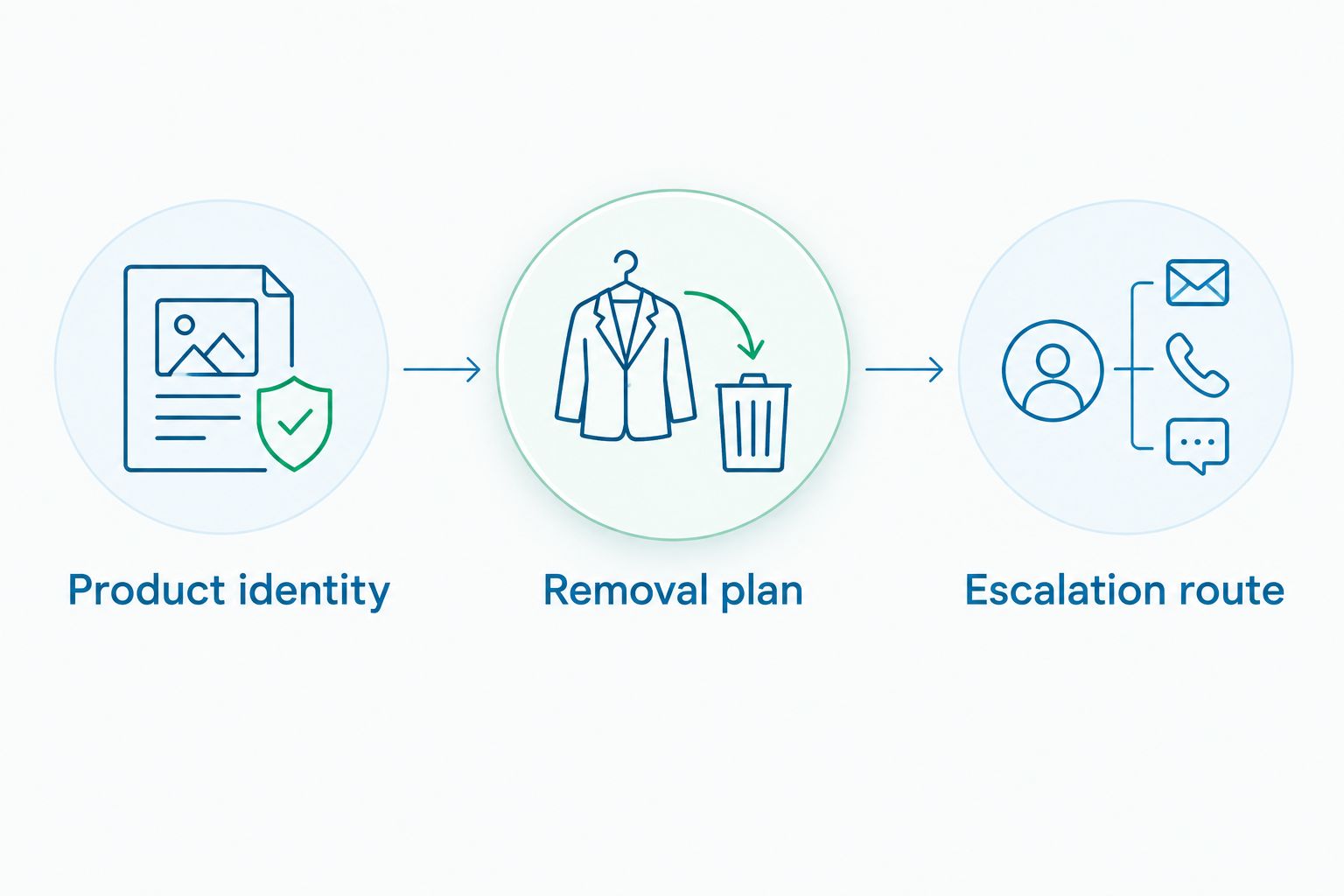
A repeat-back exposes ambiguity while the artist can still correct it. If the client describes removing only the tape when the plan involves removing the complete dressing, rewrite the instruction in plain language.
Removal and skin assessment
- Read the removal directions again. The client should use the method supplied for the actual dressing. Directions for one film do not automatically apply to another adhesive.
- Clean hands before handling. Prepare the cleaning materials specified in the written aftercare instructions before beginning removal.
- Remove without force. Follow the manufacturer's recommended direction and technique. Stop pulling aggressively if the dressing resists; contact the studio for product-specific guidance.
- Inspect the exposed area. Check for adhesive-pattern irritation, persistent bleeding, worsening discomfort, or other changes that need advice. Do not diagnose an infection or allergy from appearance alone.
- Choose the next documented action. Follow the planned transition to uncovered care or the product-specific replacement instructions. Do not reuse the removed dressing.
Expected result: The dressing is removed through the intended method, and the client knows whether to continue routine care, contact the studio, or seek medical assessment.
A photograph can help a studio understand a dressing problem, but it cannot rule out infection or establish that a reaction is harmless. Severe or worsening symptoms require medical attention, not repeated adhesive experiments.
Bandage-free aftercare
- Follow the written cleaning routine. Use the artist's instructions, consistent with applicable local guidance. Avoid adding abrasive scrubbing or unapproved cleaning products.
- Handle the area gently. Do not pick peeling skin or scabs. Avoid rubbing the tattoo with towels or clothing.
- Control friction and exposure. Choose clean clothing that does not repeatedly rub the area. Avoid swimming and soaking while the tattoo heals, following the artist's instructions.
- Use only the recommended aftercare product. Follow its directions rather than adding a thick layer or combining several products without guidance.
- Keep the follow-up route open. Contact the studio about unclear instructions. Seek medical advice for spreading redness, increasing warmth or pain, pus, fever, or feeling unwell.
Expected result: The client understands that removing the dressing changes the care method; it does not end aftercare.
For a separate explanation of that distinction, use the guide to how tattoo ink heals into skin. An uncovered tattoo is not proof of a healed skin barrier.
Replacement before bandage-free care
A second workflow applies when the selected dressing's instructions call for replacement before the transition to uncovered care. This is a different pathway—not permission to keep re-covering every tattoo.
- Confirm replacement is intended. Check the manufacturer's directions and the artist's written plan.
- Remove the previous dressing as directed. Do not place a fresh covering over an unresolved leaking or damaged application.
- Reassess before reapplying. Report irritation or concerning changes instead of concealing them beneath another adhesive layer.
- Prepare and replace as instructed. Use a new dressing and the specified preparation method.
- Update the handoff. State the next removal instruction clearly so the original schedule does not remain in circulation.
The benefit is continuity for a product designed around replacement. The limitation is additional handling and another opportunity for misunderstanding. Do not add this variant to every client's instructions simply because replacement materials are on hand.
Troubleshooting
The tape lifts or the dressing leaks
Treat a compromised application as a dressing problem, not a cosmetic defect. Follow the product's instructions for removal or replacement and contact the studio. Do not assume that adding tape restores the original barrier.
Itching or redness follows the adhesive outline
Contact the studio promptly and follow the product's removal guidance. Adhesive-pattern irritation needs attention, but the pattern alone does not establish a diagnosis. Seek medical assessment for severe, spreading, or worsening symptoms; breathing difficulty or facial swelling requires emergency care.
The dressing sticks during removal
Stop forceful pulling. Check the actual manufacturer's removal instructions and ask the studio for guidance if the method remains unclear. Do not introduce solvents or household adhesive removers onto a fresh tattoo.
The client removes the covering earlier than instructed
Ask what happened and which product was applied. Give the appropriate cleaning and next-step instructions rather than telling the client to recreate the original application from memory. Document the advice and escalate concerning symptoms.
Staff give conflicting advice
Compare both instructions against the actual product documentation. Replace conflicting handouts and assign one owner to maintain the approved version. In your 2026 studio materials, identify the dressing explicitly so an instruction for film does not circulate as an instruction for fixing tape.
Customize your workflow
For distributors, the useful expansion is a studio purchasing and documentation system—not a claim that one adhesive suits every tattoo. Keep professional tattoo ink as the primary category, with dressing guidance treated as a separate operational responsibility.
Maintain 2 records per handoff: an ink record and a dressing record. Link them to the same session without treating their evidence as interchangeable.
INTENZE professional tattoo ink has a role in the ink record. Its sterile manufacturing and 30+ years of professional artist use support brand evaluation; they do not remove the need to verify the selected product's documentation or assess a separate aftercare material.
When evaluating purchases online, review the exact ink listing and supporting information. Confirm product identity before ordering, and keep tattoo ink requirements separate from PMU pigment requirements. Do not use an aftercare workflow as evidence that those categories are interchangeable.
Review professional tattoo ink
Evaluate INTENZE ink separately from your studio's dressing and aftercare requirements.
FAQ
What is tattoo tape used for?
Tattoo tape generally refers to adhesive used to secure a dressing, although people also use the term for adhesive tattoo film. Identify the actual product before following application or removal advice.
How long should I leave tattoo tape on?
Follow the instructions for the exact dressing and your artist's written aftercare plan. There is no single wear time that applies to fixing tape, separate dressings, and adhesive films.
Can I leave my tattoo uncovered after removing the dressing?
Follow the uncovered-care or replacement pathway specified by your artist and the selected dressing's instructions. Removing a dressing does not mean the tattoo has finished healing.
Should I put more tape over a leaking tattoo dressing?
Do not assume extra tape restores a leaking dressing's barrier. Follow the product's removal or replacement instructions and contact your studio for guidance.
What should I do if tattoo tape makes my skin itch?
Contact your studio and follow the product's removal guidance. Severe, spreading, or worsening symptoms need medical assessment; breathing difficulty or facial swelling requires emergency care.
Does sterile tattoo ink prevent adhesive reactions?
No. Ink manufacturing and adhesive tolerance are separate issues, and sterile ink does not guarantee tolerance of a dressing or tape.
Is bandage-free aftercare the same as dry healing?
No. Bandage-free describes the absence of a covering, not whether an aftercare product is used. Follow the artist's written cleaning and product-use instructions rather than changing methods based on terminology.
One last thing
The most useful detail on an aftercare handout is the identity of the dressing actually applied. Add that field to your 2026 template before adding more general advice. It gives the client, studio, and distributor a common starting point when instructions need checking.