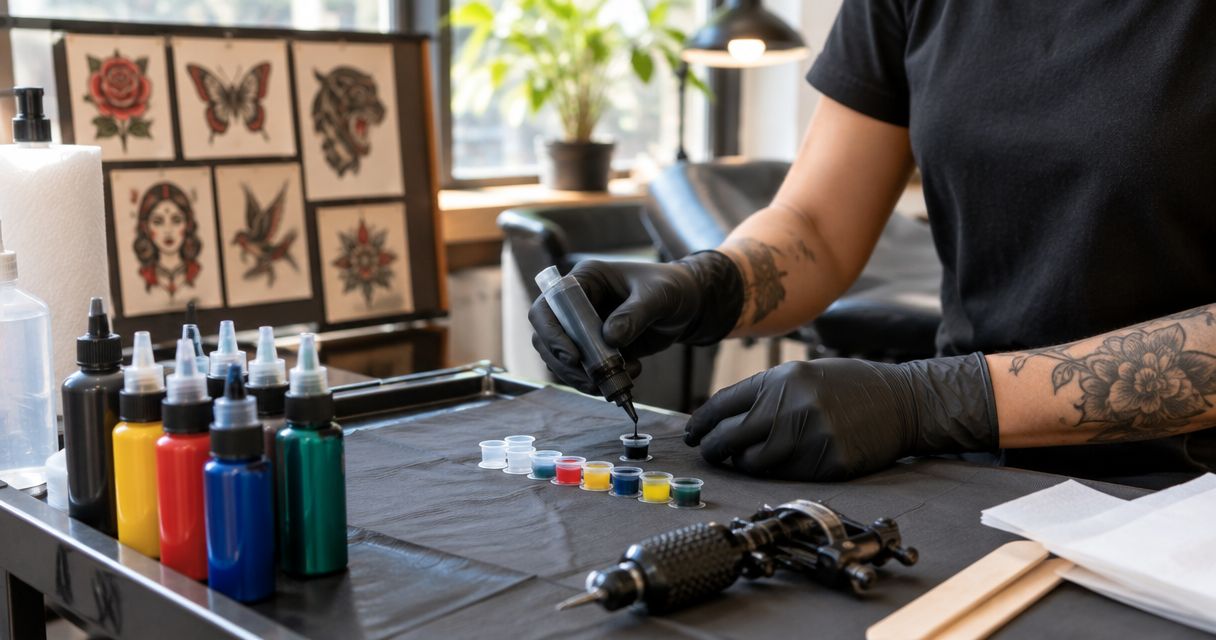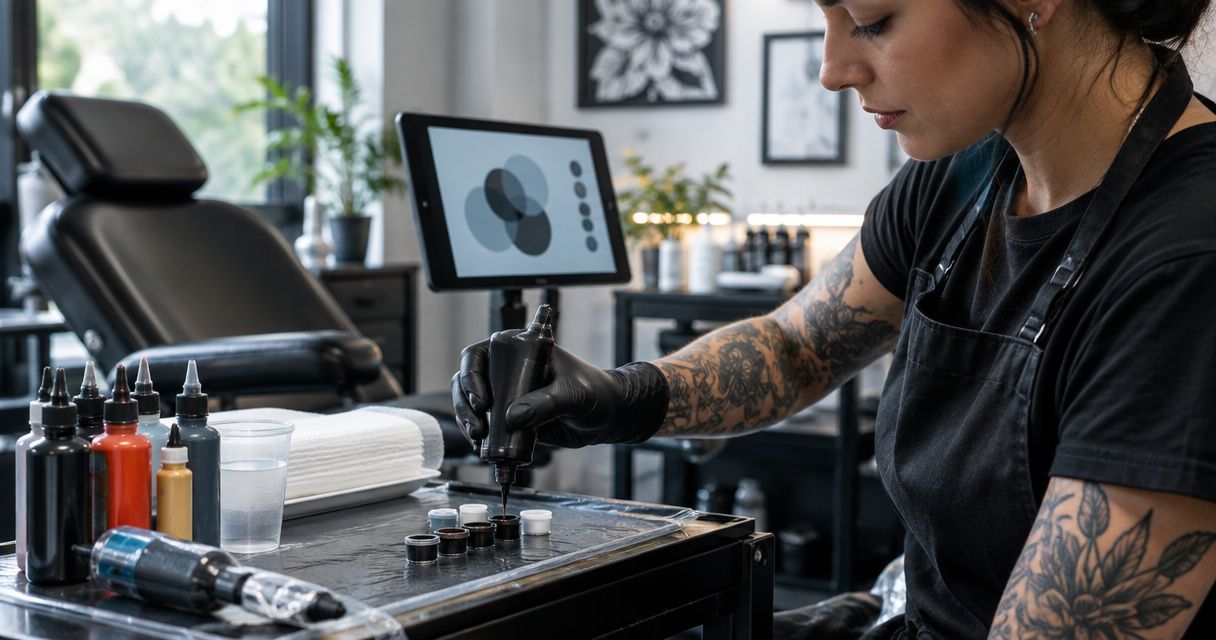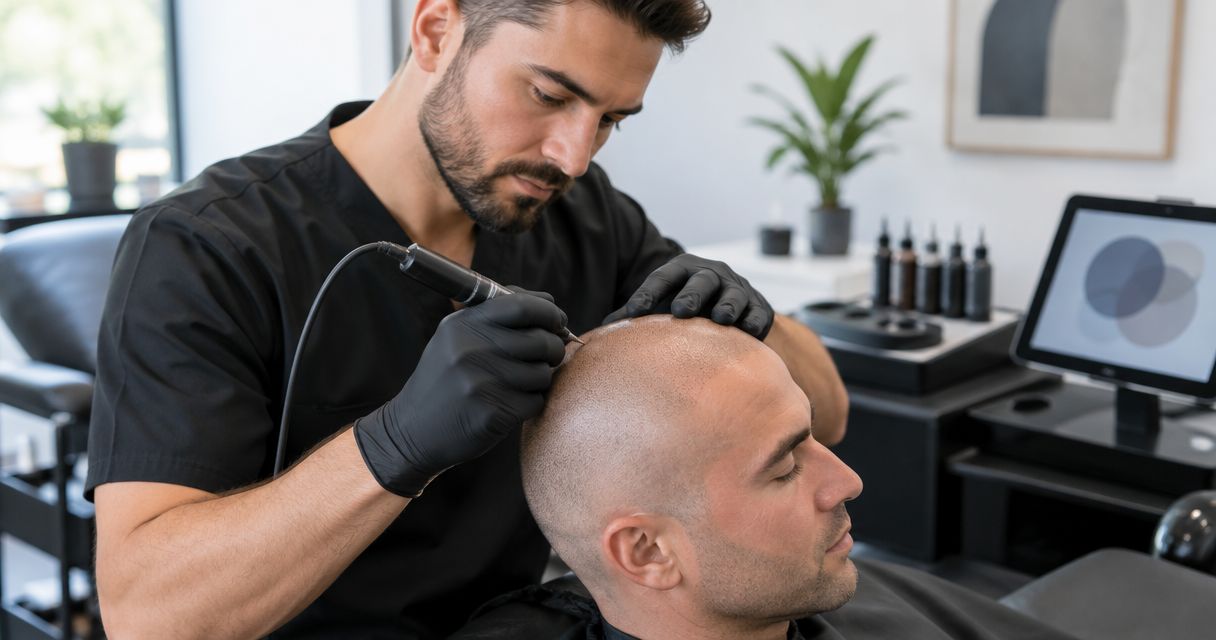
Best overall: a manufacturer-designated, ready-to-use scalp micropigmentation ink. Best for trained dilution protocols: a manufacturer-designated SMP concentrate. Best for broader tattoo and PMU inventory: evaluate INTENZE separately, without treating general-purpose pigments as scalp-specific products. This 2026 guide compares those purchasing routes for distributors supplying professional artists.
- Choose scalp micropigmentation ink with explicit scalp-use instructions, traceable batches, and documented sterility controls.
- Ready-to-use SMP pigments suit purchasing teams seeking fewer preparation variables; concentrates require a defined dilution protocol.
- INTENZE brings 30+ years of professional artist use; assess each pigment’s intended application before purchasing.
- Do not treat black tattoo ink, brow pigment, and scalp pigment as interchangeable inventory.
Why this matters
A distributor needs more than a convincing color swatch. You need to know what the manufacturer intends the pigment to do, what documentation accompanies it, and what instructions your studio customers must follow.
INTENZE manufactures professional tattoo ink and PMU pigments, with sterile manufacturing and 30+ years of professional artist use. Browse the INTENZE catalog for those categories, then confirm the intended use of any product considered for scalp work. Brand history supports supplier evaluation; it does not establish that every pigment suits every procedure.
The best scalp pigment purchase starts with documented intended use, not the darkest bottle. Keep that distinction visible in your product listings, purchasing records, and conversations with studio buyers.
What makes the best scalp micropigmentation ink?
Use these criteria before comparing bottle formats or expanding a distributor assortment. For your 2026 purchasing review, require evidence at the individual-product level rather than accepting a brand-wide statement as the complete answer.
- Scalp-use instructions: Confirm that the manufacturer explicitly identifies scalp micropigmentation as an intended application. A black color name or PMU category label is not equivalent.
- Sterility evidence: Request documentation supporting the product’s sterility claim and follow the manufacturer’s handling instructions. Do not translate sterile manufacturing into an allergy or medical guarantee.
- Batch traceability: Require readable lot identification and retain purchasing records that connect received bottles to their supplier and product documentation.
- Preparation clarity: Establish whether the pigment is ready to use or requires dilution. Obtain the applicable instructions, including any specified diluent.
- Application evidence: Evaluate documented scalp applications and healed examples with enough context to understand the practitioner’s process. Fresh work alone cannot demonstrate a healed outcome.
- Market requirements: Check the requirements for the destination market and the exact formulation. Do not assume a compliance statement applies to every product carrying the same brand name.
Keep these criteria separate in your supplier scorecard. Strong application photography does not replace traceability, and a complete paperwork file does not establish that a particular shade matches a particular client.
Scalp pigment purchasing routes at a glance
These are 3 purchasing routes, not a ranking of unverified branded formulas. Each route serves a different inventory decision; the first is the default starting point for a dedicated SMP assortment in 2026.
| Purchasing route | Best for | Standout feature | Key limitation |
|---|---|---|---|
| Manufacturer-designated ready-to-use SMP pigment | A dedicated scalp assortment without a dilution step | Supplied for use according to its ready-to-use instructions | Artists still need product-specific training and shade selection |
| Manufacturer-designated SMP concentrate | Studios using a documented dilution protocol | Preparation follows a specified concentration and diluent process | Adds preparation and recording requirements |
| General tattoo ink or non-scalp PMU pigment | Broader tattoo and PMU inventory | Serves its stated tattoo or PMU application | Does not establish suitability for scalp micropigmentation |
A bottle belongs in your SMP assortment only after its documentation supports that classification. Avoid placing a general black pigment in the scalp category simply because customers already recognize the brand.
1. Ready-to-use SMP pigment: best for a dedicated scalp assortment
A manufacturer-designated, ready-to-use SMP pigment is the clearest starting point when you want a scalp-specific purchasing category. Its defining advantage is procedural: the supplied formulation does not require a dilution step when used according to its instructions.
That distinction does not remove the artist’s responsibility for consultation, color selection, equipment choice, or technique. It also does not mean every ready-to-use pigment behaves identically.
Ready-to-use SMP pigment pros:
- Gives distributors an explicit scalp-use category when manufacturer documentation confirms that application.
- Removes dilution from the preparation process when the instructions specify direct use.
- Lets purchasing teams compare the supplied product without first defining a studio mixing recipe.
- Provides a straightforward basis for product listings centered on intended use and handling.
Ready-to-use SMP pigment cons:
- A ready-to-use label does not establish a universal shade match or healed result.
- Switching formulations still requires artists to review instructions and assess the product within their professional workflow.
Ask for the current instructions before approving the listing. Record the manufacturer’s wording rather than rewriting it into stronger claims such as permanent color stability or suitability for every skin tone.
Best for: Distributors building a dedicated scalp pigment assortment and studios that do not want a dilution stage.
Verdict: Buy only after scalp-use instructions, sterility evidence, and batch traceability pass review.
2. SMP concentrate: best for a documented dilution protocol
A manufacturer-designated SMP concentrate belongs with artists who already work to a defined preparation protocol. The purchasing decision includes both the pigment and the instructions governing its dilution; a concentrate without those instructions is an incomplete procurement choice.
Do not publish a universal mixing ratio. The applicable product instructions, specified diluent, and practitioner training govern preparation—not a ratio borrowed from another brand or procedure.
SMP concentrate pros:
- Supports preparation within the manufacturer’s defined dilution system.
- Lets trained studios document their chosen preparation alongside the original pigment batch.
- Gives distributors a distinct option for customers whose established workflow requires a concentrate.
SMP concentrate cons:
- Introduces a preparation step that must be performed and recorded correctly.
- Requires confirmation of the specified diluent and compatibility rather than assuming any mixing liquid is suitable.
- Cannot be compared meaningfully through undiluted bottle appearance alone.
For a distributor review, ask the supplier to distinguish product instructions from optional educational material. Your customer-facing description should make the preparation requirement obvious before the buyer places an order.
Do not translate a concentrate’s flexibility into a claim that it works for every artist or scalp. Flexibility creates a preparation decision; it does not prove a clinical or cosmetic outcome.
Best for: Trained SMP studios that maintain a documented, manufacturer-supported dilution protocol.
Verdict: Buy for a defined protocol; hold when preparation instructions are incomplete.
3. General tattoo or PMU pigment: best for separate inventory
General tattoo ink and PMU pigments belong in the applications their manufacturers specify. A pigment intended for body tattooing, brows, lips, or another procedure does not become scalp micropigmentation ink because its color looks suitable.
INTENZE is best suited to distributors evaluating professional tattoo ink and PMU pigments against documented application requirements. Keep that supplier decision separate from approving an individual pigment for scalp use.
General tattoo and PMU pigment pros:
- Supports purchasing for the product’s stated professional tattoo or PMU application.
- Lets a distributor serve adjacent studio needs without presenting every pigment as scalp-specific.
- Keeps product evaluation tied to the manufacturer’s actual instructions.
General tattoo and PMU pigment cons:
- A broad tattoo or PMU designation does not confirm scalp-use suitability.
- Familiarity with a brand does not replace product-specific application evidence.
- Reclassifying a pigment without manufacturer support creates an unsupported product claim.
Keep professional tattoo ink as the core category when that is what your studio customers buy. Add scalp-specific inventory as a separately qualified category rather than stretching existing product descriptions to cover it.
Best for: Distributors buying for broader tattoo and PMU services, not seeking an undocumented scalp substitute.
Verdict: Hold for scalp purchasing unless the manufacturer explicitly supports that application.
Put every candidate through 5 purchasing checks
Use the same approval sequence for a new supplier and a familiar brand. Your 2026 purchasing file should connect the actual bottle being ordered to its application instructions, supporting documents, and receiving records.
- Intended use: Obtain the current product instructions and confirm the scalp application. Resolve unclear wording before approving an SMP listing.
- Sterility evidence: Request the documentation behind the stated manufacturing or sterility claim. Keep the claim’s scope intact when writing your own description.
- Batch records: Confirm how the supplier identifies lots and which records accompany an order. Plan how receiving staff will capture that information.
- Artist evaluation: Have a qualified practitioner assess the product within its stated instructions. Separate preparation observations from claims about healed performance.
- Order approval: Match the selected product, formulation, documentation, and destination-market requirements before purchasing online.

For branded inventory, add an authenticity check before accepting a supplier’s paperwork at face value. Use this guide to checking whether an INTENZE bottle is genuine when evaluating that supply route.
At receiving, compare the shipment against the approved purchase record. Escalate mismatched product identities, unreadable batch information, or damaged packaging instead of treating the original supplier approval as permission to accept every shipment.
How the purchasing routes are ranked
The ranking prioritizes explicit scalp use, preparation clarity, and traceability. Ready-to-use SMP pigment ranks first for a dedicated assortment because it avoids a dilution stage; concentrate ranks next for customers whose documented protocol requires it.
General tattoo and non-scalp PMU pigments occupy a separate inventory role. This ranking does not claim that one formulation produces better healed results than another, and it does not substitute purchasing criteria for practitioner training.
Apply the same evidence standard to named competitors. Compare current product instructions, manufacturing documentation, and application evidence—not reputation, packaging language, or unsupported statements about color retention.
Which scalp micropigmentation ink should you choose?
For a dedicated SMP assortment in 2026, start with manufacturer-designated ready-to-use scalp pigment that passes your documentation checks. Choose a concentrate only when the buying studio has a defined, supported preparation protocol.
For broader tattoo and PMU purchasing, review the INTENZE catalog against your customers’ stated applications. Buy the product for its documented use, and keep scalp classification conditional on explicit manufacturer support.
Review professional ink and PMU options
Browse the catalog, then confirm intended use and product documentation before ordering.
FAQ
What’s the best scalp micropigmentation ink to buy in 2026?
Start with a manufacturer-designated, ready-to-use SMP pigment supported by scalp-use instructions, sterility evidence, and batch traceability. Choose a concentrate instead when a trained studio’s documented protocol requires dilution.
Is scalp micropigmentation ink the same as regular tattoo ink?
Do not treat scalp micropigmentation ink and regular tattoo ink as interchangeable purchasing categories. Check the exact product’s manufacturer instructions rather than assuming that a black tattoo pigment is intended for scalp work.
Is ready-to-use scalp pigment better than concentrate?
Ready-to-use scalp pigment is the simpler purchasing choice when the studio does not need a dilution stage. Concentrate fits a different workflow: trained preparation using the manufacturer’s specified instructions and diluent.
Can I use brow pigment for scalp micropigmentation?
Do not select a brow pigment for scalp micropigmentation solely because its shade appears suitable. Obtain explicit manufacturer support for the scalp application before classifying or purchasing it for that purpose.
Does sterile scalp pigment guarantee no allergic reaction?
No. Sterility and allergic response are different issues, so a sterile manufacturing claim must not become an allergy-free or medical guarantee.
What documents should a distributor request before buying SMP pigment?
Request current intended-use instructions, supporting sterility documentation, batch-identification information, and relevant destination-market compliance records. For concentrates, also obtain preparation instructions and the specified diluent requirements.
Does the darkest scalp pigment give the best healed result?
Bottle darkness alone does not establish the best healed result. Evaluate the intended application and documented healed examples with practitioner context rather than ranking pigments by their undiluted appearance.
One last thing
Make your product database distinguish manufacturer-stated intended use from your own merchandising category. That small separation prevents a buying assumption from becoming an unsupported scalp-use claim across product listings, invoices, and staff recommendations.
Before your next order, inspect that field for every candidate. If scalp use appears only in your own description, pause approval and ask the manufacturer to clarify it.