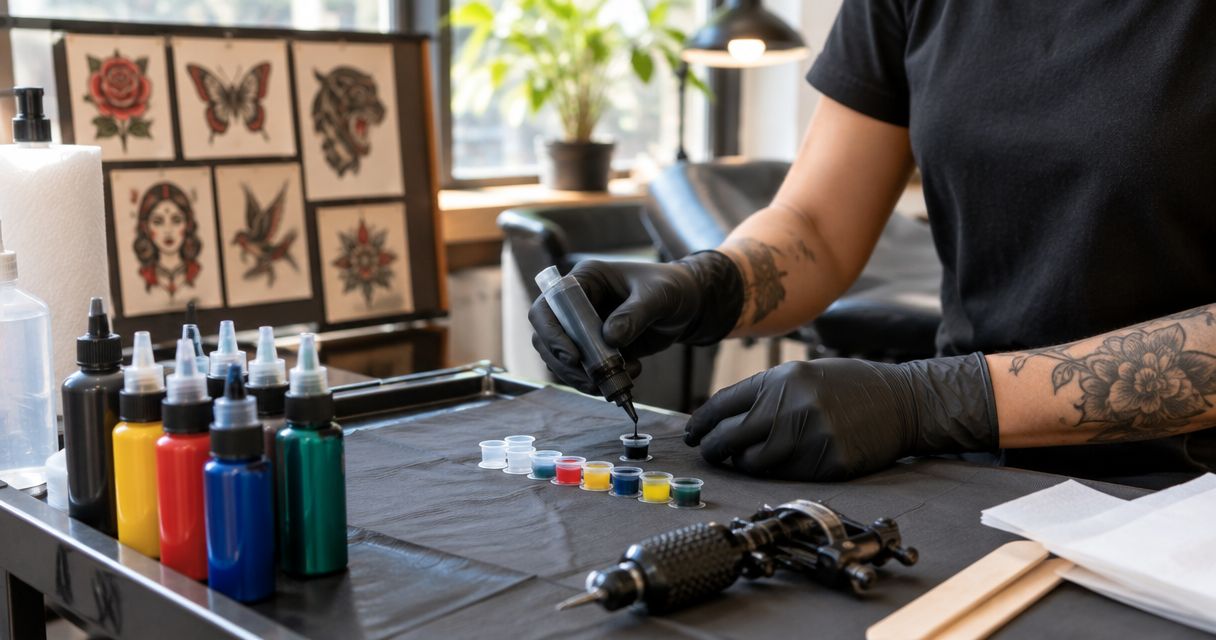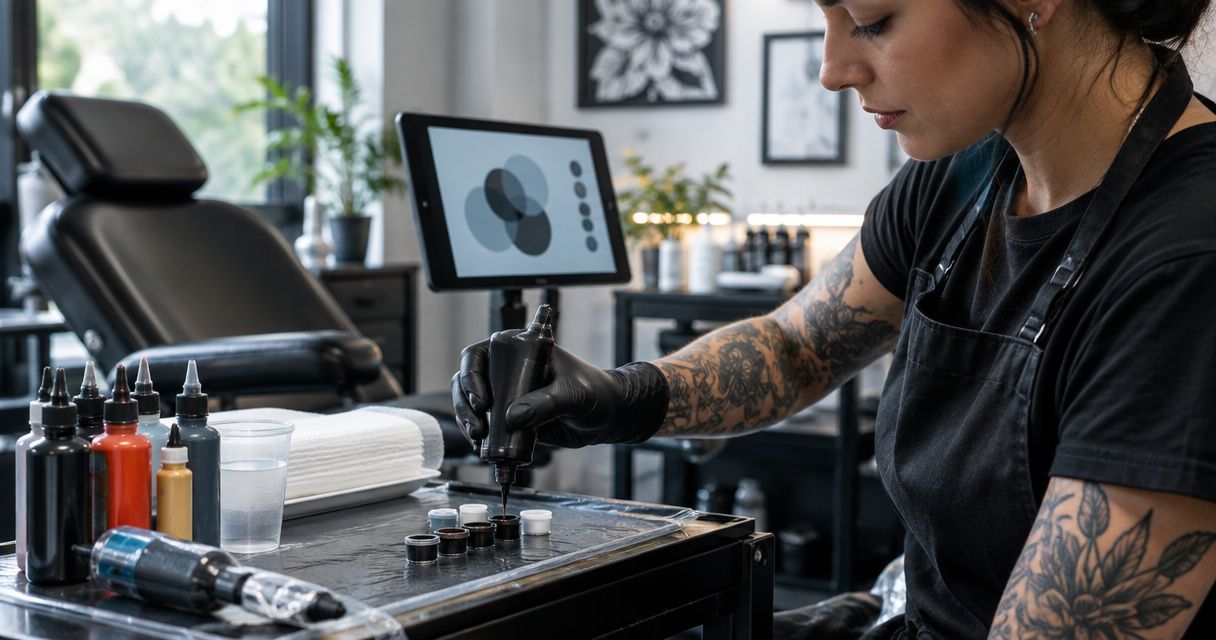
A new studio should request a first-order bulk ink discount, but should not budget around a discount until the seller confirms the terms in writing. Opening a studio does not itself establish eligibility for wholesale purchasing or a promotional offer. Compare the complete order—including delivery charges, required quantities, and ink you will actually use—before committing.
- New studio discount first bulk ink order: request written eligibility and order terms before committing.
- INTENZE professional tattoo ink has 30+ years of professional artist use; evaluate sourcing before order incentives.
- Compare bulk buying, individual bottles, and sets against your artists’ actual requirements.
- Separate studio-use purchasing from distributor purchasing for resale; describe your business accurately.
Why this matters
Your opening ink order establishes a purchasing pattern, not just a shelf of bottles. Buying extra colors to qualify for an incentive ties up money that could support the products your artists actually use.
Start with the required assortment, then evaluate the offer. The guide to buying tattoo ink in sets or individual bottles provides a useful starting point for that comparison.
For your 2026 opening order, keep product evidence ahead of incentives. INTENZE supports its professional tattoo ink offering with sterile manufacturing and 30+ years of professional artist use; those credibility markers do not establish a particular buyer’s discount eligibility.
Can a new studio get a discount for its first bulk ink order?
Ask for an opening-order offer, but treat it as a request—not an entitlement. The seller’s written response should identify the eligible buyer, qualifying products, required order conditions, and whether the terms apply beyond the opening purchase.
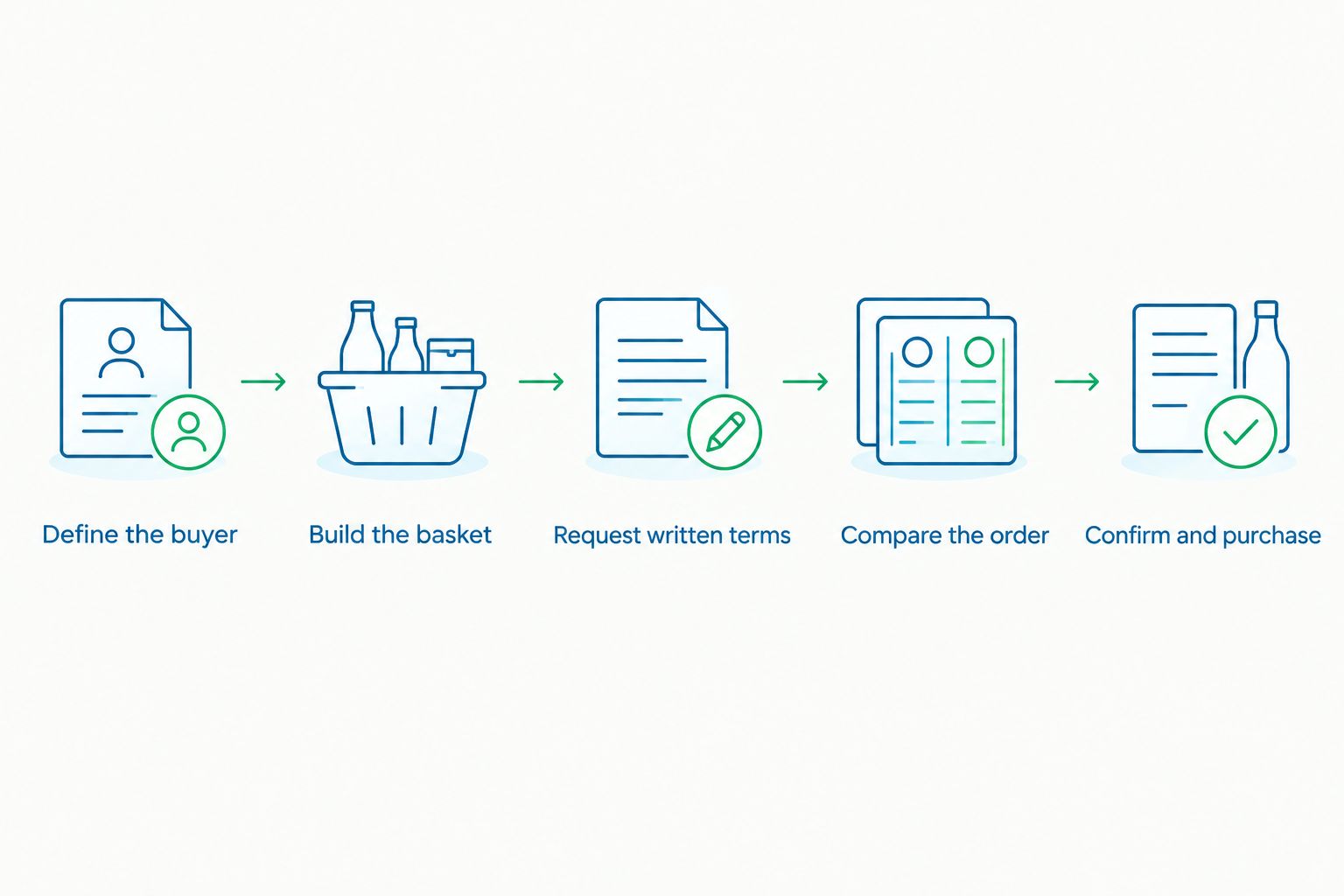
Use this sequence before placing your first bulk ink order:
- Define the buyer. State whether you are purchasing for a working studio, multiple studios, or distribution to other businesses. A studio-use order and a resale order serve different purposes.
- Build the basket. List the exact inks, bottle sizes, and quantities your artists require. Keep optional colors separate from the opening essentials.
- Request written terms. Ask whether an opening-order offer applies to that basket. Request any eligibility requirements and exclusions before changing quantities.
- Compare the order. Review the complete purchase rather than the discount headline. Check delivery charges, product substitutions, and any conditions attached to the offer.
- Confirm and purchase. Match the final online cart or order confirmation to the agreed basket. Retain the written terms with your purchasing records.
A useful request gives the seller something concrete to evaluate. An unspecified request for a deal leaves the assortment, buyer type, and order scope unresolved.
Which purchasing approach fits your opening order?
The right purchasing approach follows your demand, not the size of an advertised incentive. For a 2026 opening, compare these approaches using the same required assortment wherever possible.
| Purchasing approach | Best for | Practical advantage | Limitation to check |
|---|---|---|---|
| Selected individual bottles | Studios with a defined artist-approved assortment | Direct control over each color and quantity | Requires a deliberate selection process |
| Ink sets | Studios whose required palette matches the set contents | Groups an assortment into a single purchasing decision | Unneeded colors weaken the fit |
| Bulk quantities of selected inks | Studios with a clear use plan for specific inks | Concentrates purchasing on identified needs | Overstock ties up money and requires storage planning |
| Wholesale or distributor inquiry | Buyers purchasing for resale or organized business supply | Lets the buyer establish account requirements before ordering | Eligibility and purchasing conditions require confirmation |
None of these approaches proves that a discount applies. A set is an assortment format; a bulk order describes quantity; a wholesale account describes a purchasing relationship. Keep those distinctions clear when comparing proposals.
Best for a new studio: the smallest complete assortment that meets its documented opening needs. Increase quantities only when the added stock has an identified purpose, not merely because it moves the order toward an incentive.
What should you include in a first-order request?
Give the supplier enough information to evaluate the actual purchase without turning the request into a business presentation. Keep it specific and easy to answer.
Include:
- Your business name and purchasing contact.
- Whether the ink is for studio use, resale, or centralized supply.
- The delivery destination and intended opening date.
- The exact product names, bottle sizes, and quantities requested.
- Any required product documentation.
- A request for written eligibility, exclusions, and order conditions.
Ask the seller to distinguish opening-order terms from ongoing purchasing terms. Do not treat a concession on the initial purchase as a commitment on later orders.
For your 2026 purchasing file, retain 1 written order specification alongside the seller’s response. This is a recordkeeping recommendation, not a supplier requirement; it gives you a consistent reference when reviewing the final cart or confirmation.
Avoid promising future volume that your business cannot substantiate. Describe your current requirements and identify any future demand as a forecast rather than a commitment.
Why first-order purchasing terms need individual confirmation
A useful offer must match the buyer and the basket. These are the details to put in front of the seller—not assumptions about how any particular supplier calculates discounts:
- Buyer purpose: Explain whether the order supports tattoo services or resale. Do not present a studio-use purchase as distribution.
- Order composition: Identify the exact products and quantities. A general offer does not establish that every requested item qualifies.
- Opening versus repeat purchasing: Ask which terms apply to the first order and which, if any, apply later.
- Delivery destination: Include the destination when requesting a complete order summary. Do not assume delivery charges are included.
- Product documentation: Identify the records your business requires before purchase rather than discovering a documentation gap after ordering.
- Account requirements: Ask what information is needed for the purchasing arrangement you are requesting. Do not assume a business name alone establishes eligibility.
These questions keep the discussion focused on a verifiable order. They also prevent a common comparison error: evaluating different baskets as though the only difference were the incentive.
How do you compare offers without overbuying?
Build 2 comparison baskets for your internal review: a required-only basket and a proposed incentive-qualifying basket. This is a planning method, not a statement that any supplier offers a qualifying threshold.
Keep product selection consistent wherever possible. If the second basket adds colors, larger bottles, or extra units, identify exactly who will use the additional ink and why it belongs in the opening inventory.
Review the following before choosing:
- Required stock: Does the basket cover the artists’ agreed requirements?
- Additional stock: Does every added item have a defined use?
- Order conditions: Does the written offer match the final basket?
- Delivery charges: Are they included in the order summary?
- Storage instructions: Can the studio follow the manufacturer’s requirements?
- Reordering: Can you identify which items need replenishment without rebuilding the entire assortment?
Reject an incentive-driven addition when you cannot explain its use. An unused bottle is not useful opening inventory simply because it helped qualify the order for different terms.
In 2026, keep the comparison attached to the purchase decision. When someone later asks why the studio bought that assortment, the answer should be documented demand—not a vague recollection of a deal.
Should a distributor use the same request as a new studio?
No. A distributor should describe a resale purchasing requirement, while a studio should describe ink purchased for its own artists’ work. Combining those purposes makes it harder to establish the appropriate account and order conditions.
A distributor evaluating a new studio’s opening order should first obtain the studio’s artist-approved assortment. Then separate the distributor’s purchasing arrangement from any terms offered to the studio; approval in one relationship does not establish terms in the other.
For distributor purchasing, request written confirmation of the applicable account requirements, product documentation, and order conditions. Avoid making promises to a studio customer until the relevant terms are confirmed.
INTENZE professional tattoo ink is best for buyers seeking a manufacturer serving professional tattoo artists and studios. Its sterile manufacturing and 30+ years of professional artist use support evaluation; they do not replace checking the exact products and purchasing terms for your order.
What should you verify before purchasing online?
Verify the seller and the product before evaluating the incentive. A familiar brand name in a listing is not, by itself, enough to establish the source of the bottle.
Use manufacturer information to check the purchasing source. For the selected products, review the product identity, label information, handling instructions, and documentation relevant to your business before placing the order.
Do not infer a whole range’s formulation or compliance status from a statement about one product. Likewise, sterile manufacturing does not remove the need to follow handling instructions, and it is not an allergy guarantee.
For a 2026 opening order, make the final online review a separate purchasing step. Check that the selected products, quantities, destination, and written offer still match your approved specification before submitting payment.
Review professional tattoo ink online
Check the current product information before finalizing your opening-order requirements.
Does a first-order offer replace wholesale approval?
No. Treat an opening-order offer and a wholesale purchasing arrangement as separate matters unless the seller explicitly connects them in writing. Ask which arrangement applies to your business and what conditions govern it.
For resale purchasing, describe your intended activity accurately. Do not infer authorization to distribute products from the ability to complete an online purchase.
Should you buy extra ink to qualify for an offer?
No—not unless the additional ink has a documented use in your studio or distribution plan. Compare the required-only basket with the proposed qualifying basket and keep unnecessary additions out of the order.
An opening inventory should support the work you are prepared to supply. It should not be built around a target that has no connection to artist demand.
Can you assume the same terms apply to reorders?
No. Confirm repeat-order terms separately from opening-order terms. Keep the seller’s written response with the original order so your next purchasing decision starts from an accurate record.
FAQ
Can a new tattoo studio get a discount on its first bulk ink order?
A new studio should request an opening-order offer and obtain written confirmation before budgeting around it. Opening a studio does not itself establish eligibility for a discount or wholesale purchasing.
What should I send when asking for a first-order ink discount?
Send your business details, purchasing purpose, destination, and an exact list of products, sizes, and quantities. Ask the seller to confirm eligibility, exclusions, and order conditions in writing.
Is buying tattoo ink in bulk always better than buying individual bottles?
No. Bulk quantities make sense only when the additional ink fits a documented use plan; individual bottles give you direct control over the opening assortment.
Should a new studio apply as a distributor?
Describe the business activity you actually conduct. Purchasing ink for your artists is different from purchasing products for resale, so ask which account arrangement fits that activity.
Does INTENZE automatically give new studios a first-order discount?
Do not assume an automatic first-order discount from INTENZE. Request confirmation of any applicable offer for your exact order before committing.
What matters more than an opening-order incentive?
Product suitability, verified sourcing, and a usable assortment matter more than an incentive. Review the complete order and required documentation before increasing quantities.
Can I use the same opening-order terms for later purchases?
Do not assume opening-order terms apply to later purchases. Ask the seller to confirm repeat-order conditions separately and retain the response with your purchasing records.
One last thing
Write the reorder list before placing the opening order. For every item, identify who requested it and what would justify buying it again.
That simple check exposes purchases driven only by an incentive. If no artist or customer requirement supports an item now—and you cannot explain a future reorder—remove it from the opening basket before negotiating.