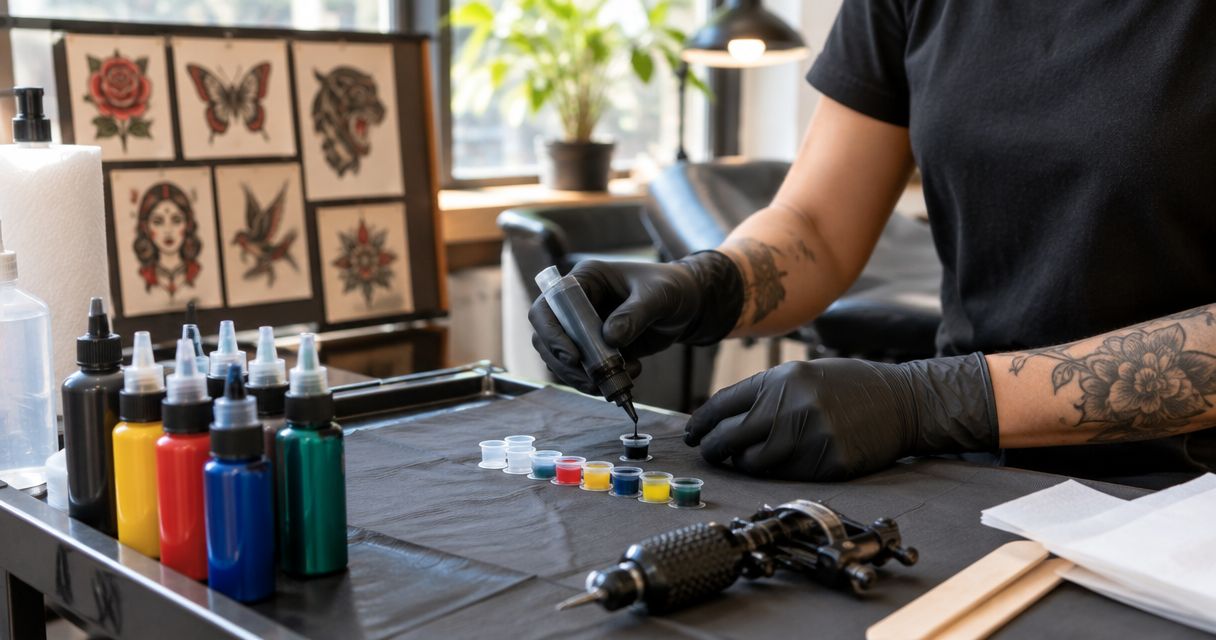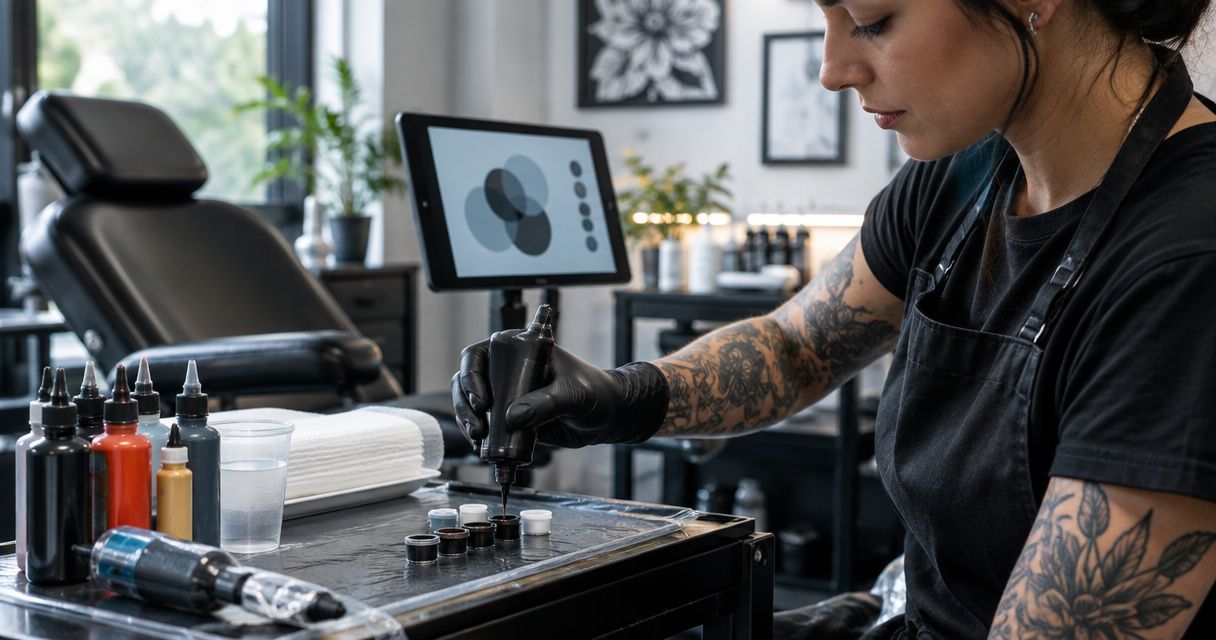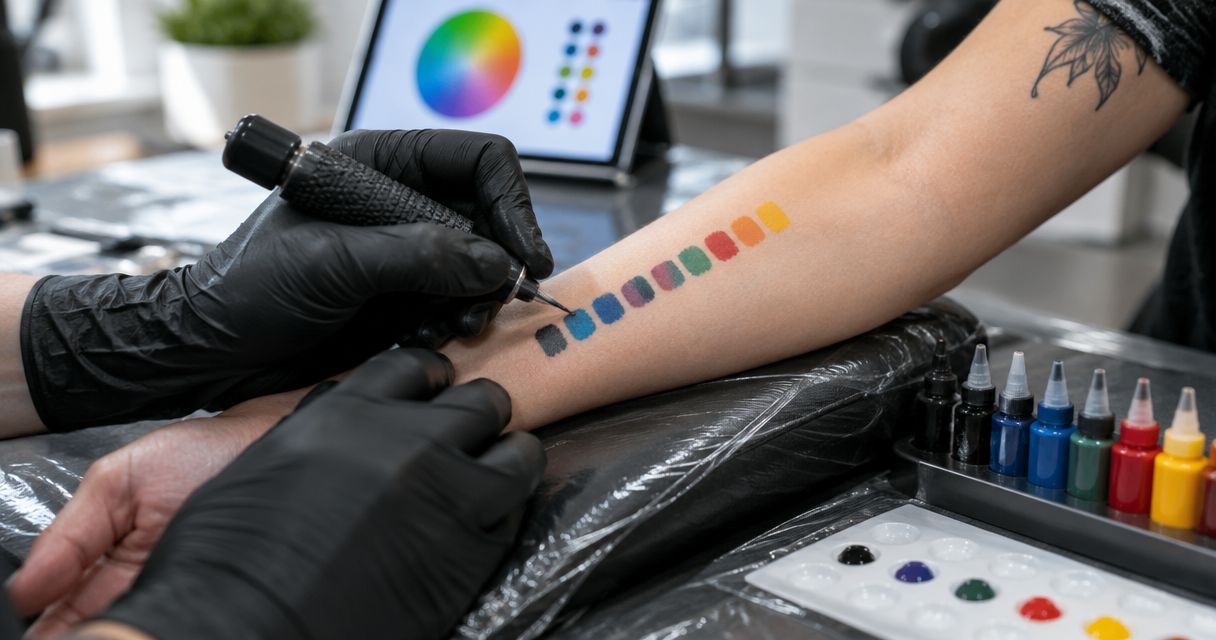
Yes—you can sample tattoo ink colors before buying a full bottle when a supplier offers sealed samples, smaller original bottles, or a supervised demonstration; confirm the evaluation format before ordering in 2026. A color chart helps you shortlist shades, but it cannot establish handling, healed appearance, sterility, or suitability for a particular client.
- To sample tattoo ink colors before buying, ask about sealed manufacturer samples or smaller original bottles.
- INTENZE brings 30+ years of professional artist use; verify the exact product and purchasing terms before ordering.
- Color charts support shade selection; practice-surface tests assess handling, not healed results or allergy risk.
- For wholesale tattoo ink purchasing, document the product, batch, source, and evaluation before expanding inventory.
Can you sample tattoo ink colors before buying a full bottle?
Ask the supplier what evaluation format it supports rather than assuming a sample program exists. A sealed manufacturer sample, a smaller original bottle, a color chart, and a demonstration answer different purchasing questions.
For distributors, the first check is provenance. Review how to tell whether an INTENZE tattoo ink bottle is genuine before accepting a sample as evidence for a wholesale order.
| Evaluation option | Best for | What you can assess | Main limitation |
|---|---|---|---|
| Sealed manufacturer sample, if offered | Initial product evaluation | The identified ink under its handling instructions | A limited evaluation does not establish ongoing batch consistency |
| Smaller original bottle, if offered | Focused artist assessment | Handling and color behavior in a documented setup | You still commit to a bottle before completing the assessment |
| Supplier color chart | Building a shade shortlist | Relative hue and the supplier's color naming | Screen settings and print reproduction affect appearance |
| Supervised demonstration, if offered | Discussing application with an artist | Technique context and visible handling | The result depends on the demonstrator and setup |
| Identified healed-work photographs | Reviewing an artist's documented work | Appearance in the photographed case | Lighting, editing, skin, and technique limit comparison |
Do not treat these options as interchangeable. Choose the format that answers your actual purchasing question, and record what remains untested.
Why this matters for distributor purchasing
A useful sample reduces uncertainty about a specific stocking decision. It does not justify adding an entire color range because a single shade performed well during a demonstration.
For a 2026 purchasing review, separate product evidence from sales material. Manufacturer instructions, an identifiable original bottle, and a recorded evaluation provide a clearer basis for a decision than an unlabeled swatch or an edited image.
INTENZE professional tattoo ink has 30+ years of professional artist use, with sterile manufacturing central to its purchasing case. That history supports evaluating the brand; it does not replace checking the particular color, documentation, and intended market before ordering.
Buy against an identified product and a defined use—not a color name alone. A distributor serving traditional tattoo artists needs a different assortment review from a buyer assessing pigments intended for permanent makeup.
How to evaluate tattoo ink before a larger order
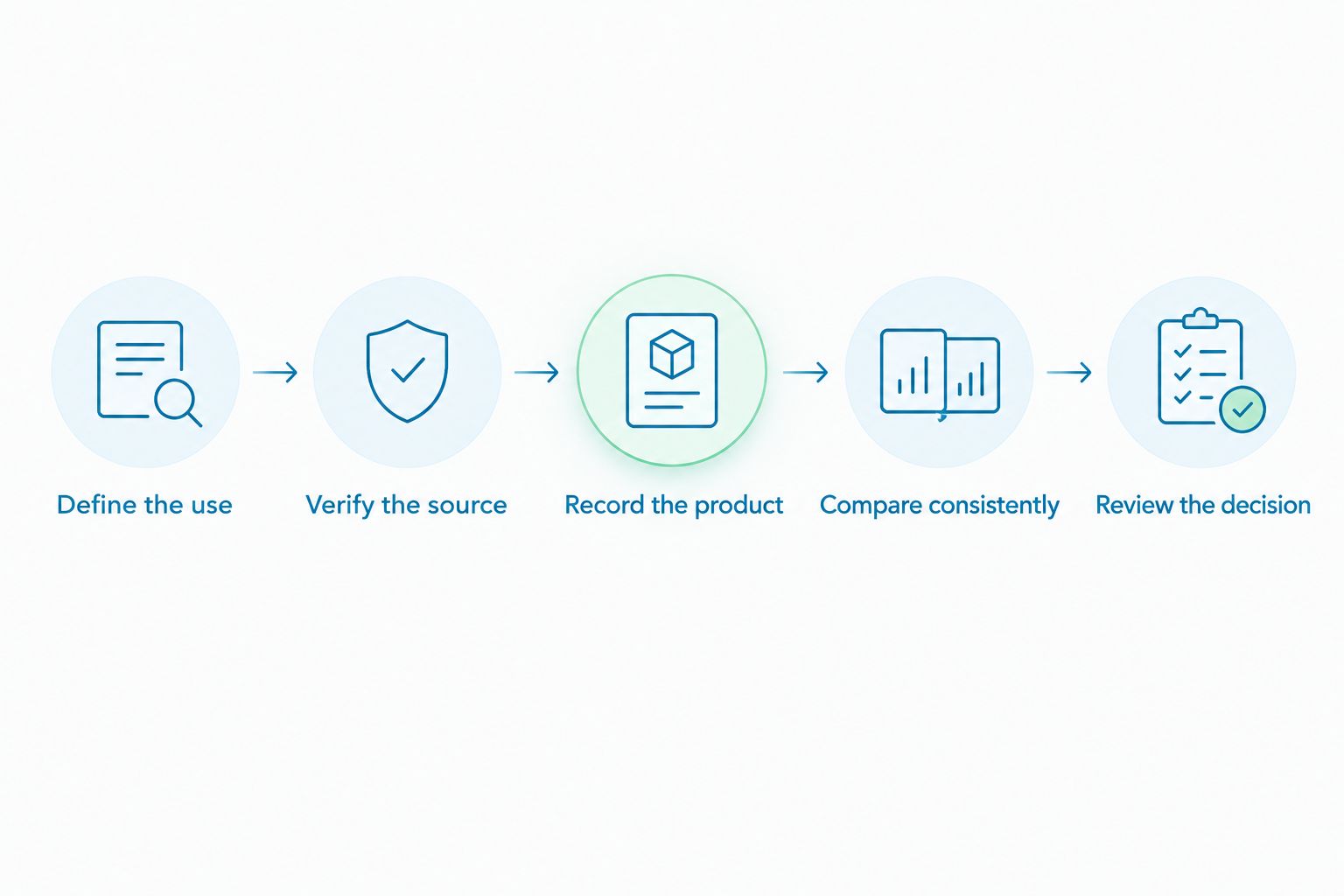
Use a repeatable process so your buying decision reflects the ink rather than changing test conditions. Keep the scope narrow enough that an artist can explain why a candidate belongs in the assortment.
1. Define the use
Write down the task the color must support: an established palette, a requested shade, a replacement for an existing item, or an assortment gap. Specify whether the purchase concerns professional tattoo ink or PMU pigment.
Ask the evaluating artist what would count as a useful result. “Looks bright” is not an adequate purchasing criterion; a documented observation about hue, handling, or mixing under manufacturer instructions is more actionable.
2. Verify the source
Request the exact product identification and original packaging details before accepting material for evaluation. Ask how the sample reaches you and whether it remains in manufacturer packaging.
Avoid unidentified decanted ink. A handwritten color name does not establish the manufacturer, formulation, batch, storage history, or condition of the material inside.
3. Record the product
Record the product name exactly as labeled, the batch or lot identifier where provided, and relevant date information. Retain the accompanying instructions and supplier correspondence with the evaluation record.
Also record the question being tested. If the sample only supports a visual shortlist, label the result accordingly rather than presenting it as an application or healed-result assessment.
4. Compare consistently
For a nonclinical handling assessment, keep the practice material, lighting, preparation, and equipment consistent. Follow the product instructions, including any directions for mixing or shaking.
Change the ink being compared without unnecessarily changing the rest of the setup. Practice-surface observations remain practice-surface observations; they do not establish how the ink will heal in skin.
5. Review the decision
Ask the artist to distinguish observations from preferences. “I prefer this shade” and “this sample flowed differently in this setup” are useful notes, but they support different purchasing conclusions.
Approve a larger order only when the evidence answers the original question. If identity, documentation, or handling remains unresolved, request clarification rather than converting uncertainty into inventory.
Why tattoo ink sample results vary
A sample result belongs to the conditions under which you observed it. These factors explain why a supplier swatch, a practice assessment, and an artist's finished photograph can look different:
- Lighting and reproduction: Room lighting, camera settings, screens, and printed charts affect apparent color. Compare candidates under consistent lighting rather than across unrelated images.
- Sample preparation: Settled pigment and inconsistent preparation undermine comparisons. Follow the manufacturer's preparation instructions before assessing the sample.
- Surface or skin: Practice material does not reproduce living skin. Skin tone and the condition of photographed work also affect how a color appears.
- Artist and equipment: Needle configuration, machine setup, and application technique influence observations. Treat technique guidance as contextual, not as a universal setting.
- Product identity: Similar color names do not prove matching formulations. Compare the exact labeled products rather than assuming every “red” or “blue” serves the same purpose.
- Image timing: A fresh photograph and a healed photograph document different stages. Require clear context before using either to support a purchasing claim.
A useful comparison controls the setup and states its limits. Without that context, a strong visual impression is still only a visual impression.
Does a color chart count as sampling tattoo ink?
A color chart counts as a visual selection aid, not a physical ink evaluation. Use it to identify shades worth investigating, then confirm the exact product before placing an order.
Digital charts are convenient for discussing an assortment with studio buyers. Their limitation is reproduction: a screen cannot show viscosity, flow, or the response an artist observes during application.
For your 2026 assortment worksheet, keep chart impressions separate from physical evaluation notes. That distinction prevents a screenshot from becoming an unsupported claim about product performance.
Can practice skin show how tattoo ink will heal?
Practice skin can support a controlled handling comparison, but it cannot show healed results in living skin. Use the assessment to document behavior on that material under the recorded setup.
Do not describe a practice swatch as proof of healed saturation, longevity, or compatibility with a skin tone. Those claims require relevant evidence beyond the practice surface.
If a supplier provides healed-work photographs, ask for the exact ink identification and the context of the image. A photograph documents a particular result; it does not guarantee that result for every artist or client.
Should a distributor accept decanted tattoo ink samples?
Do not use an unidentified decant as the basis for approving stock. Transferring ink into another container separates it from original packaging and introduces handling questions that a color comparison cannot resolve.
Ask for an evaluation route that preserves product identity and provides clear handling instructions. If the supplier cannot explain the sample's source or condition, stop the evaluation.
Never return dispensed ink to its original bottle or reuse material that has contacted a client. Follow applicable infection-control requirements and manufacturer instructions; a purchasing evaluation is not an exception to professional hygiene practices.
Turn an evaluation into a stocking decision
Your evaluation record should make the purchasing decision understandable to someone who did not attend the demonstration. Keep the artist's observations attached to the exact product rather than to the brand as a whole.
Use these fields in a 2026 buying worksheet:
- Product identity: Exact labeled name, manufacturer, and intended use.
- Traceability: Supplier, original packaging details, and batch information where provided.
- Evaluation scope: Chart review, practice assessment, demonstration, or documented work review.
- Conditions: Preparation, lighting, equipment, material, and evaluating artist.
- Findings: Observations, limitations, unresolved questions, and the purchasing decision.
A successful evaluation does not establish demand. Match the proposed assortment to actual studio requests and your own sales records before expanding the order.
INTENZE professional tattoo ink is best for professional buyers seeking a manufacturer with 30+ years of artist use. Evaluate the exact products against your requirements, then review the manufacturer's online offering rather than assuming that samples or smaller formats are part of the purchase.
Review professional tattoo ink online
Check product information and purchasing options before selecting ink for your distributor assortment.
FAQ
Can I get free tattoo ink samples before placing a wholesale order?
Ask the supplier whether it offers samples and under what terms. Do not assume a sample program exists or that an evaluation includes a full range of colors.
What's the best way to sample tattoo ink colors before buying?
An identified, sealed manufacturer sample or smaller original bottle, if offered, supports a physical evaluation. Start with a defined question and follow the manufacturer's handling instructions.
Can I judge tattoo ink color from a website photo?
A website photo supports a shortlist, not a complete product evaluation. Lighting, image processing, and your screen affect apparent color, and the image cannot demonstrate handling.
Is a smaller bottle the same as a manufacturer sample?
A smaller bottle is not automatically part of a sample program. Confirm the exact labeled product and purchasing terms rather than treating bottle size as evidence of a special evaluation offer.
Does testing tattoo ink on practice skin prove it is safe for clients?
No—practice-skin testing does not establish safety, allergy risk, or healed appearance in a client. It supports observations about the material and setup used during that assessment.
Does a successful tattoo ink sample prove batch consistency?
No—a successful sample documents the material evaluated under the recorded conditions. Keep batch information and assess later concerns against identifiable products rather than assuming a sample proves every future bottle.
Can distributors use tattoo ink samples to choose PMU pigments?
Tattoo ink sampling does not establish suitability for permanent makeup. Evaluate products identified for the intended use and follow their labeling, instructions, and applicable professional requirements.
One last thing
The most useful sample is not necessarily the most visually striking one. It is the sample you can identify, evaluate consistently, and connect to a clear purchasing decision.
Before expanding your 2026 assortment, write a short acceptance note stating the exact product, what the evaluation established, and what remains unverified. If that note cannot explain why the color belongs in stock, request better evidence before ordering.