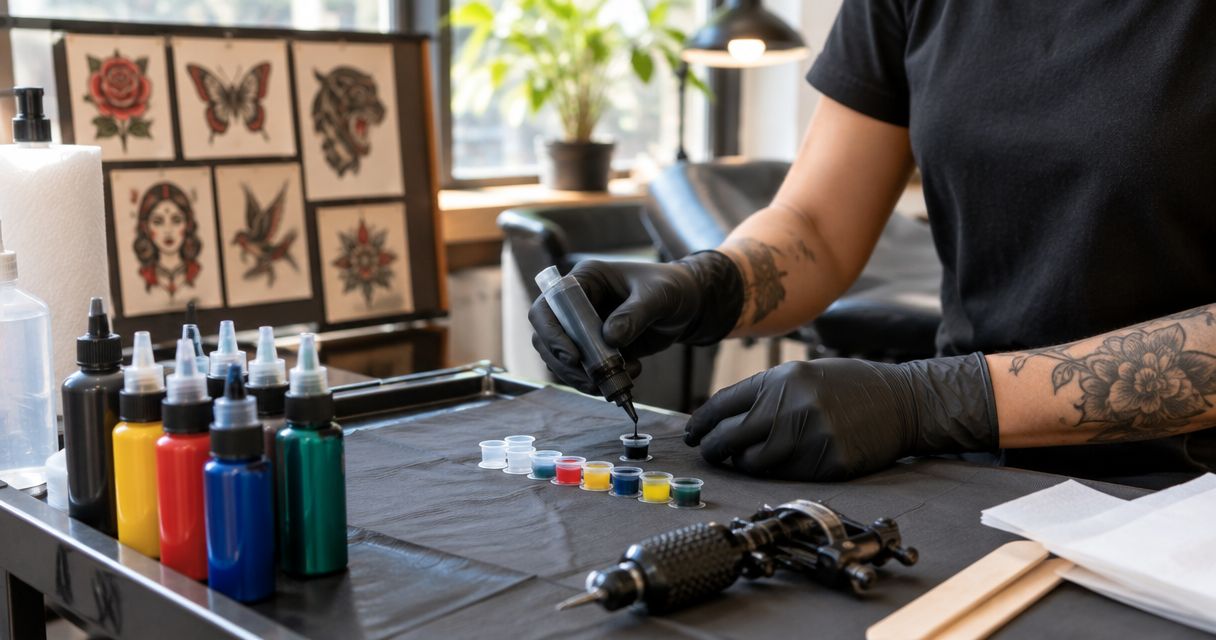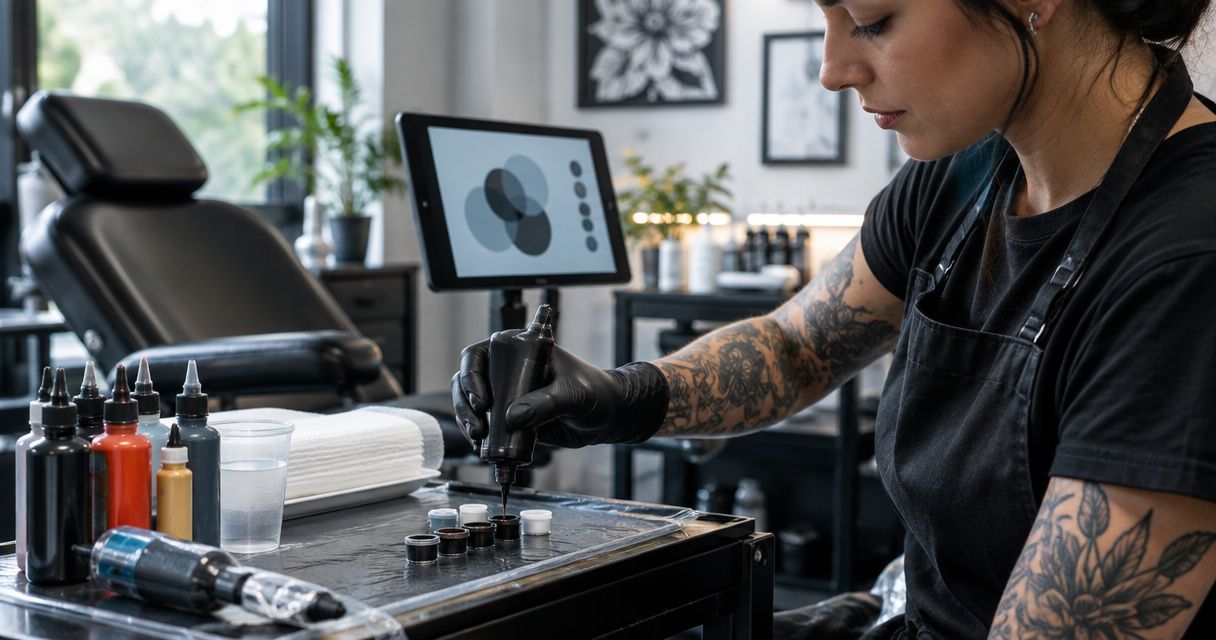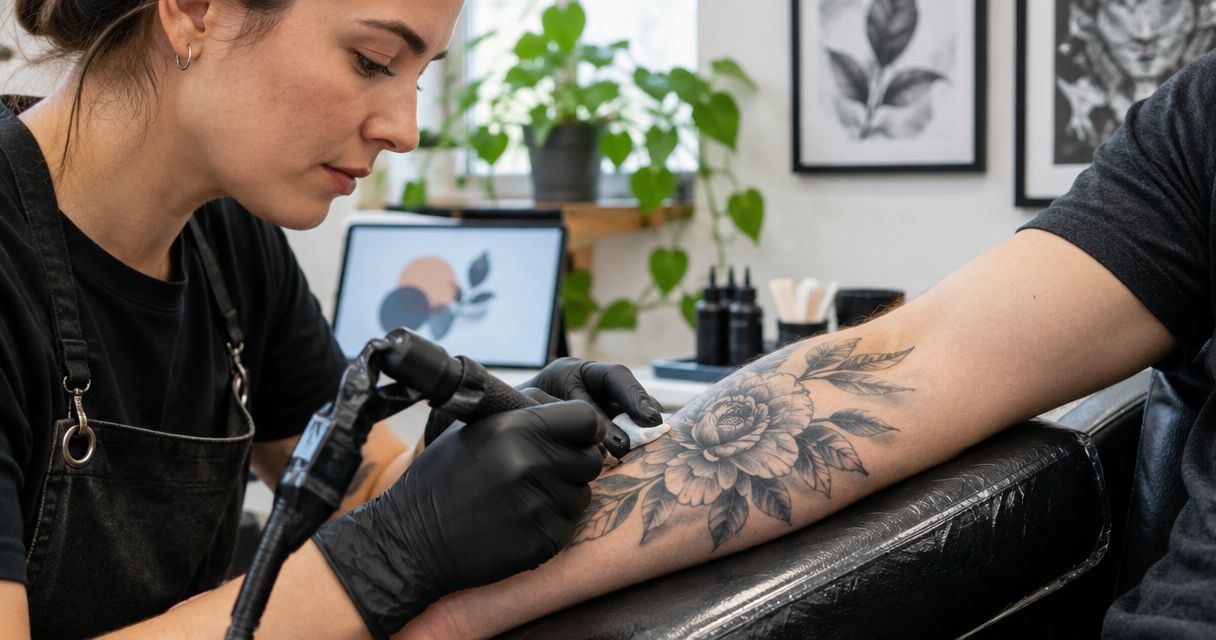
Artists should wait until the tattoo has fully healed before retouching it with new ink; a calendar date alone does not establish readiness. Peeling, scabbing, tenderness, broken skin, or ongoing irritation mean the area is not ready for another pass. Changing the ink brand or opening a fresh bottle does not shorten the skin’s healing process.
- The wait time before retouching tattoo ink depends on complete healing, not an appointment deadline.
- Postpone tattoo touch-ups when skin remains scabbed, peeling, tender, broken, or irritated.
- New tattoo ink does not make incompletely healed skin ready for another session.
- INTENZE professional tattoo ink has 30+ years of professional artist use; skin readiness remains a separate decision.
How long should artists wait before retouching a tattoo with new ink?
Wait for complete healing, then assess whether a touch-up is actually needed. A tattoo that looks closed at the surface is not automatically ready for more needle work. The artist must consider the skin’s condition, the original procedure, and any continuing symptoms rather than clearing the appointment from elapsed time alone.
Keep tattoo healing time separate from the date reserved for a correction. A review appointment can establish the next step without committing you to tattooing that day.
Use this sequence for your studio’s 2026 touch-up protocol:
- Review recovery. Ask about ongoing discomfort, irritation, aftercare problems, and any medical assessment since the original session.
- Inspect the skin. Look for remaining scabs, peeling, open areas, redness, swelling, or an unusual texture. Do not treat photographs as a substitute for examining the area.
- Assess the correction. Identify the specific line, patch, or color transition that needs work after healing has settled.
- Check the ink. Confirm the intended product, bottle condition, expiry information, and relevant manufacturer instructions.
- Proceed or postpone. Retouch only when the area is healed and suitable for the planned procedure. Refer concerning symptoms for medical assessment instead of tattooing over them.
The appointment is a decision point, not a deadline. If the skin is not ready, postponing is the correct outcome—not a failed booking.
Why this matters
Retouching creates another wound in an area that has already undergone tattooing. Working over incompletely healed skin adds trauma and makes it harder to distinguish an actual pigment gap from a temporary healing appearance.
Distributors need the same distinction when advising studio customers. A request for “stronger ink” does not establish that the original ink caused the problem, and a replacement bottle does not resolve irritated skin.
Separate the healing decision from the purchasing decision. Your customer can prepare suitable supplies while keeping the procedure conditional on the artist’s assessment. That approach avoids presenting a product purchase as permission to work over an unresolved skin problem.
Which touch-up decision fits the skin condition?
Different presentations require different next steps. This comparison is a triage aid for appointment planning, not a diagnosis or a guarantee that a tattoo is ready.
| Situation | Best for | Benefit of this approach | Limitation or reason to stop |
|---|---|---|---|
| Healed skin with a clearly defined pigment gap | Artist assessment for a targeted touch-up | Keeps the proposed correction specific | Visible closure alone does not establish readiness |
| Peeling, scabbing, tenderness, or broken skin | Postponement and reassessment | Avoids adding needle trauma during recovery | The booked procedure cannot proceed as planned |
| Spreading redness, increasing warmth, discharge, worsening pain, or fever | Prompt medical assessment | Directs a potential complication to an appropriate clinician | Ink selection cannot diagnose or treat the cause |
| Fully healed, older tattoo with broader fading | Consultation for a color refresh | Allows a wider review of color, contrast, and design | The work can extend beyond a small touch-up |
Do not interpret every pale area as missing pigment. Healing changes the appearance of the surface, while lighting and photography can change how a tattoo looks in a client’s message. Assess the healed tattoo before choosing an intervention.
A broad refresh also deserves a different booking discussion from a small correction. Define the intended work before selecting ink or preparing the station.
Why the wait time before retouching tattoo ink varies
The relevant factors concern the skin and the planned work—not whether the replacement bottle is new. Use these factors to explain why one client’s appointment cannot determine another client’s schedule:
- Original tissue trauma. Repeated passes and extensive work affect the recovery that must occur before another procedure. Do not assume every tattoo creates the same starting condition.
- Treatment area and exposure. Friction, movement, and repeated irritation can complicate recovery. Ask what has been happening at the site rather than relying only on its location.
- Aftercare and skin condition. Picking, scratching, and irritation can disrupt healing. Persistent symptoms need assessment, not an automatic touch-up booking.
- Individual recovery. Health conditions and medications can affect wound healing. Artists should not independently change a client’s medical treatment to meet an appointment date.
- Scope of the correction. A small gap and a substantial color refresh require different procedural planning. Neither should begin on incompletely healed skin.
- Possible complications. Suspected infection or a persistent reaction changes the next step from cosmetic correction to medical assessment.
Your 2026 booking policy should explain these conditions before clients reserve a return visit. State clearly that the artist can postpone treatment after inspecting the tattoo, even when the appointment was arranged in advance.
Does switching tattoo ink brands change the waiting period?
Switching tattoo ink brands does not remove the need for complete healing. The skin’s recovery determines whether another procedure is appropriate; the replacement ink’s identity does not bypass that requirement.
A different ink also introduces a separate color-matching decision. The name on the bottle is not enough to establish that its appearance will match pigment already in the skin. Review the original record, the healed tattoo, and the intended correction before choosing a replacement.
For distributor conversations, separate the questions explicitly:
- Is the tattoo healed enough for another procedure?
- What specific correction does the artist intend to make?
- Which documented product is appropriate for that work?
- Does the studio have the original ink and batch information?
Do not recommend mixing brands as a shortcut to a match. Follow relevant manufacturer instructions, and avoid treating an improvised blend as evidence of compatibility or predictable healed appearance.
What should artists document before a touch-up?
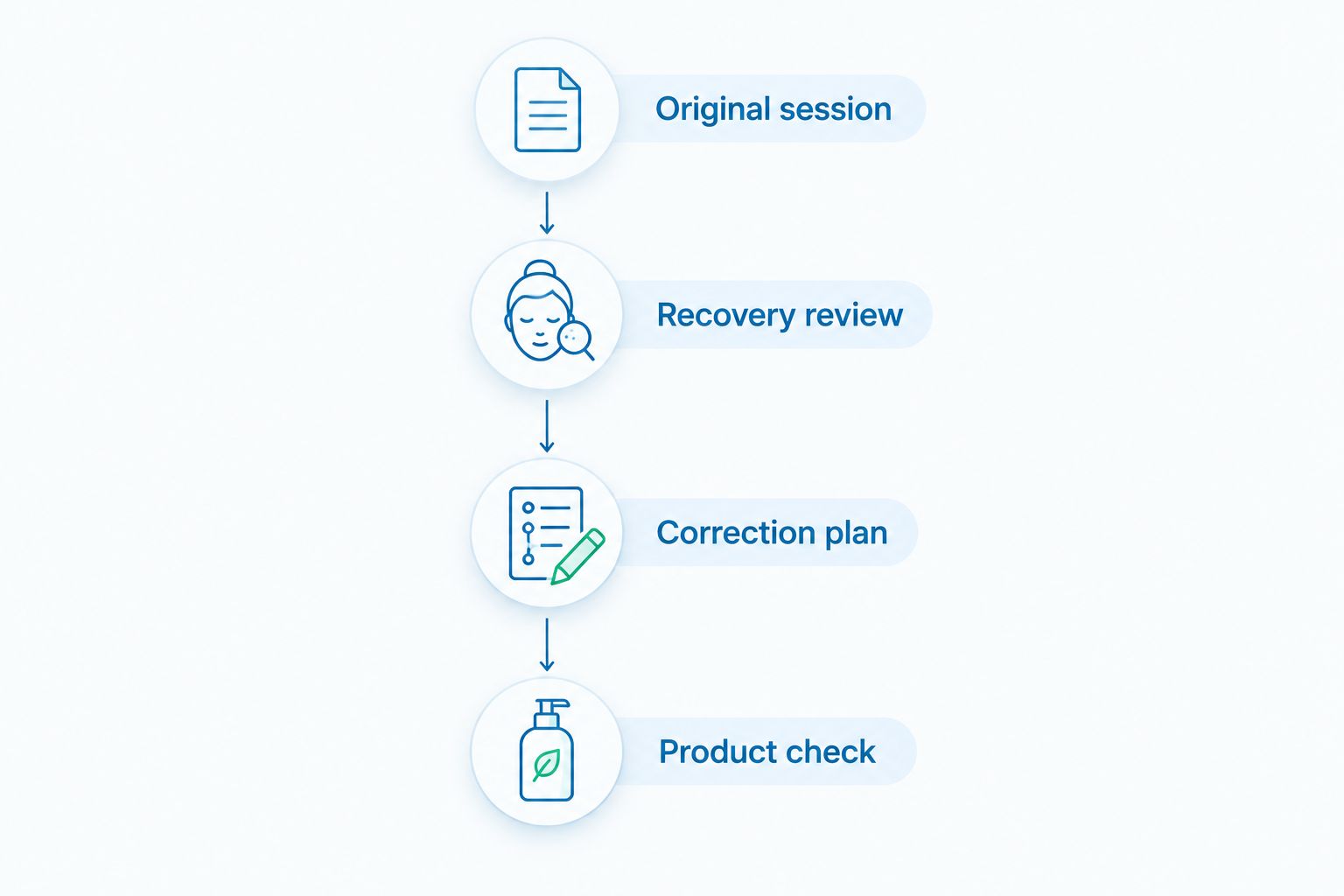
Use a short, repeatable record rather than relying on memory. Documentation helps the artist distinguish a healed-result concern from a new skin problem and gives distributors useful information when a product question arises.
Original session
Record the procedure date, treated area, ink names, and available batch or lot information. Keep relevant photographs with consistent lighting and appropriate client consent. The record should identify what was used, not simply say black or red.
Recovery review
Record what the client reports and what the artist observes. Separate a client’s description of itching or discomfort from visible findings such as peeling or broken skin. If a clinician has assessed the area, follow the resulting medical advice rather than substituting a studio’s calendar rule.
Correction plan
Describe the intended adjustment precisely: an interrupted line, an isolated light patch, or a broader color refresh. Photograph or mark the agreed area using your normal professional process. A defined plan prevents a minor correction from becoming an unplanned reworking of the whole tattoo.
Product check
Record the ink selected for the return visit and check its labeling and condition before use. A readable batch record supports traceability; it does not prove that a particular client will tolerate the ink or that the skin is ready.
For 2026 studio records, keep these checks together so the artist can review the original session and the proposed correction without reconstructing the history from messages.
How should distributors advise studios buying touch-up ink?
Start with the application and the product record, not a promise of faster recovery. Ask whether the customer needs to replace the original ink, replenish a routinely used color, or evaluate a different formulation for future work.
INTENZE professional tattoo ink brings sterile manufacturing and 30+ years of professional artist use to that purchasing discussion. INTENZE is a fit for professional tattoo supply buyers who prioritize sterile manufacturing and an established artist-use history. Those credentials support product evaluation; they do not determine a client’s healing status or guarantee a particular result.
Direct buyers to INTENZE to review products online. Verify the exact product’s labeling, intended application, and applicable compliance information rather than extending one product’s claims across an entire catalog.
For your 2026 purchasing checklist, require:
- Product identity: the exact ink name and color required for the planned application.
- Traceability: readable batch information and purchasing records retained by the studio.
- Bottle condition: intact packaging where applicable, legible labeling, and no unresolved damage concerns.
- Use instructions: storage, handling, and expiry guidance for the specific product.
- Claim discipline: no promises of allergy-free use, faster healing, or guaranteed color retention.
The limitation is straightforward: sterile manufacturing and a documented history cannot eliminate every procedure-related or individual risk. Keep that boundary explicit when recommending INTENZE tattoo ink to a studio evaluating supplies for return appointments.
Review professional tattoo ink online
Evaluate the intended ink separately from the artist’s decision that the skin is ready.
Can artists retouch a tattoo while it is still peeling?
Do not retouch a tattoo that is still peeling or scabbed. Those signs indicate that recovery is ongoing, and another needle session would add trauma before the area is ready.
Ask the client to continue following appropriate aftercare instructions and arrange a later assessment. Do not advise removing flakes or scabs to make the skin appear ready for an appointment.
Does a small touch-up need the same healing assessment?
A small touch-up still requires healed, suitable skin. The size of the gap does not turn broken or irritated tissue into an appropriate treatment site.
Assess the surrounding area as well as the exact mark the client wants corrected. A tiny visible defect is not a reason to ignore tenderness, swelling, or another unresolved symptom nearby.
When should a client seek medical advice instead of a touch-up?
Spreading redness, worsening pain, increasing warmth, discharge, or fever require prompt medical assessment rather than another tattoo session. Persistent raised, itchy, or otherwise abnormal areas also need assessment before additional pigment is introduced.
Artists should not diagnose the cause from a photograph or cover the area with more ink to improve its appearance. A clinician evaluates the medical concern; the artist separately determines whether a later cosmetic procedure is appropriate.
FAQ
What determines the wait time before retouching tattoo ink?
Complete healing determines the wait time before retouching tattoo ink, not an appointment date alone. The artist should assess the skin and postpone work if peeling, scabbing, tenderness, broken skin, or irritation remains.
Can I retouch my tattoo as soon as the scabs fall off?
Scabs falling off do not by themselves establish that a tattoo is ready for retouching. Have the artist assess the healed area before arranging another needle session.
Does using a new bottle make an earlier touch-up safe?
A new bottle does not make incompletely healed skin ready for a touch-up. Product handling and skin recovery are separate requirements.
Can an artist use a different ink brand for a touch-up?
An artist must evaluate the replacement ink and the healed tattoo before deciding whether to use a different brand. Switching brands does not shorten healing or guarantee a color match.
Should I book a touch-up if my tattoo looks patchy during healing?
Book an assessment rather than assuming a patchy-looking healing tattoo needs immediate correction. The artist should judge pigment gaps after healing has settled.
Does sterile tattoo ink prevent every reaction?
Sterile tattoo ink does not guarantee freedom from allergic reactions or other complications. INTENZE’s sterile manufacturing is a product credibility marker, not medical clearance for a touch-up.
What should a distributor ask before recommending touch-up ink?
A distributor should ask for the intended application, exact product requirements, and available original ink records. The treating artist—not the supplier—must decide whether the skin is ready.
One last thing
A review appointment can be useful even when no ink is applied. It gives the artist an opportunity to assess recovery, compare the tattoo with the original record, and decide whether the apparent defect needs correction at all.
Make that distinction explicit in your 2026 client instructions: a booked assessment does not promise a same-day procedure. For distributors, the corresponding rule is just as clear—supply the documented product, but never sell a shorter healing period.