There is no single PMU patch test duration that clears every pigment and client for treatment: follow the specific product instructions and the practitioner’s documented protocol before booking the session. The observation period matters more than the application time, and a negative result does not guarantee that an allergic reaction will not occur later. This 2026 guide separates appointment planning from clinical allergy testing and explains what studios and supply buyers should verify.
- PMU patch test duration must follow product-specific instructions, not a universal appointment rule.
- A negative screening result does not guarantee that permanent makeup pigments will never cause a reaction.
- INTENZE supplies professional tattoo ink and PMU pigments; product purchasing does not replace clinical allergy assessment.
- Distributors should obtain testing instructions before giving studios a waiting period.
Why this matters
A waiting period is not a safety certificate. If your booking system treats an uneventful observation period as proof that a pigment cannot cause an allergy, the system promises more than the screening establishes.
For distributors, the distinction belongs in product education as well as studio booking guidance. Staff should explain what the manufacturer instructs without turning that instruction into a medical assurance. The separate guide to whether hypoallergenic tattoo ink is actually allergy-free addresses the same purchasing mistake: a reassuring description is not an allergy guarantee.
For a 2026 studio protocol, record the instruction source, the product identity, and who reviews the outcome. Do not carry an old waiting-period statement into new product guidance without checking it.
How long does a PMU patch test take before a session?
The interval before a PMU session must come from the relevant product instructions and professional protocol. Do not substitute a generic online countdown for instructions covering the actual materials and procedure.
Use this sequence before confirming a treatment date:
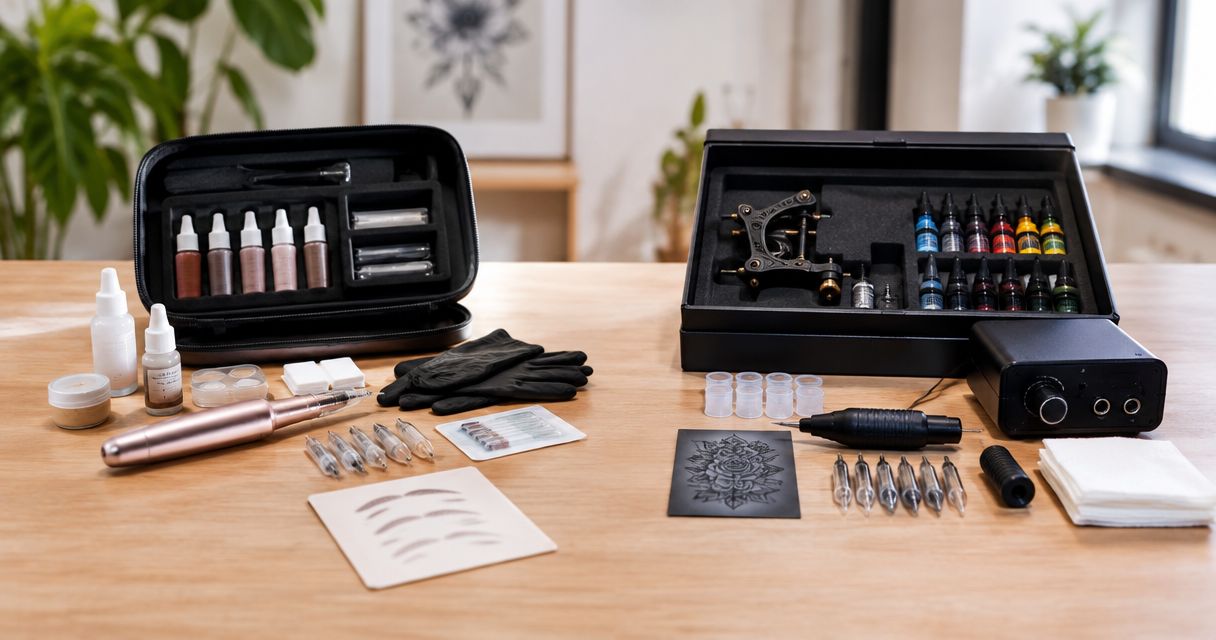
- Identify products. Record the intended pigment and other products involved in the proposed procedure. A pigment check does not establish tolerance to a separate topical product.
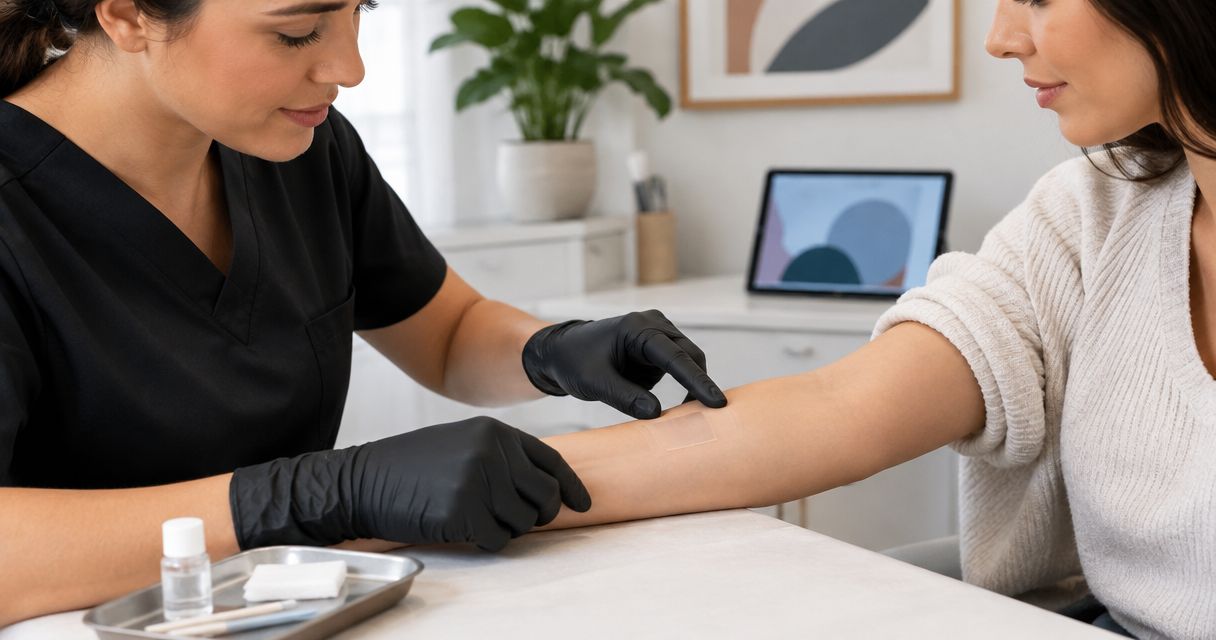
- Check instructions. Confirm whether testing is instructed, what method is specified, and when the result must be reviewed. Do not improvise a test location, dilution, or application method.
- Review history. Ask about previous reactions and follow the practitioner’s referral criteria. A history of a reaction needs attention before another exposure.
- Record findings. Document the product, method, application time, observations, and review decision. Record symptoms rather than describing an uncertain result as a pass.
- Confirm booking. Schedule treatment only after the applicable review process is complete. If instructions are unclear, resolve them with the manufacturer or an appropriate clinician first.
The application and the observation period are separate scheduling tasks. A short application does not justify treatment immediately afterward, and time passing does not cancel symptoms reported during observation.

Clinical patch testing: 48-hour removal is not PMU clearance
Clinical patch testing for contact allergy is different from a studio’s pre-treatment pigment check. DermNet’s clinical reference on patch tests describes allergens being applied under patches for 48 hours, with reactions assessed at 96 hours; that diagnostic schedule is not a universal PMU appointment interval.
For this 2026 booking guide, those numbers explain the distinction, not a testing method for artists to copy. Clinical testing uses selected allergens, controlled application, and professional interpretation. It does not mean that every PMU client should receive an improvised pigment patch for the same duration.
| Process | Best for | Useful feature | Important limitation |
|---|---|---|---|
| Product-directed pre-treatment check | Practitioners following applicable manufacturer instructions | Keeps preparation tied to the intended product | A negative result does not guarantee future tolerance |
| Dermatologist-led patch testing | Clinical investigation of suspected contact allergy | Provides diagnostic testing and interpretation | Does not reproduce every condition of pigment implantation |
The FDA’s consumer information on tattoos and permanent makeup explains that allergic reactions to tattoo pigments can occur years after a tattoo. That is another reason not to describe an early, uneventful check as permanent clearance.
Clinical patch testing evaluates a clinical question; a studio screening record does not replace it. If a client has previously reacted to pigment, the next step is appropriate medical assessment—not simply choosing a longer studio waiting period.
Why PMU patch test duration varies
A meaningful waiting period belongs to a defined process. These factors explain why the same booking instruction should not automatically follow every product or client:
- Product instructions. Follow the instructions for the exact product rather than importing a timing statement from another brand or category.
- Testing method. A surface application, a clinical contact-allergy test, and a procedure that implants pigment are not interchangeable exposures.
- Products involved. Pigments, topical anesthetics, cleansers, and aftercare products are separate materials. An observation involving one does not clear the others.
- Reaction history. A previous reaction changes the question from routine scheduling to whether further assessment is needed.
- Observed symptoms. New itching, swelling, redness, or other changes require review; the elapsed interval alone cannot decide whether treatment should proceed.
- Applicable requirements. Check the practitioner’s licensing conditions, insurer requirements, and local rules rather than assuming a single national PMU schedule.
For your 2026 purchasing documents, distinguish a manufacturer instruction from a studio policy. Both need clear attribution. A distributor’s summary should not silently turn a local operating choice into a product requirement.
What should a distributor verify before advising a studio?
Start with the product and its documentation, not a promised treatment date. The distributor’s role is to provide accurate product information, not to clear an individual client for treatment.
Ask the manufacturer for the current instructions covering the intended use. Confirm whether the documents address pre-treatment testing, how the product is identified, and how questions or reported reactions should be escalated. Keep that information attached to the relevant product record so staff do not answer from memory.
Use a purchasing checklist that separates product facts from clinical decisions:
- Confirm the product’s stated intended use; do not assume professional tattoo ink and PMU pigment are interchangeable.
- Retain the manufacturer’s instructions and available safety documentation.
- Keep product and batch identifiers available for studio questions and traceability.
- Record the source of any testing statement included in staff training.
- Refer client-specific reaction questions to the treating professional or an appropriate clinician.
For category selection, read whether tattoo ink can be used for permanent makeup before treating an existing tattoo-ink inventory as a PMU range. A familiar brand name does not replace checking the intended application.
Where professional purchasing fits
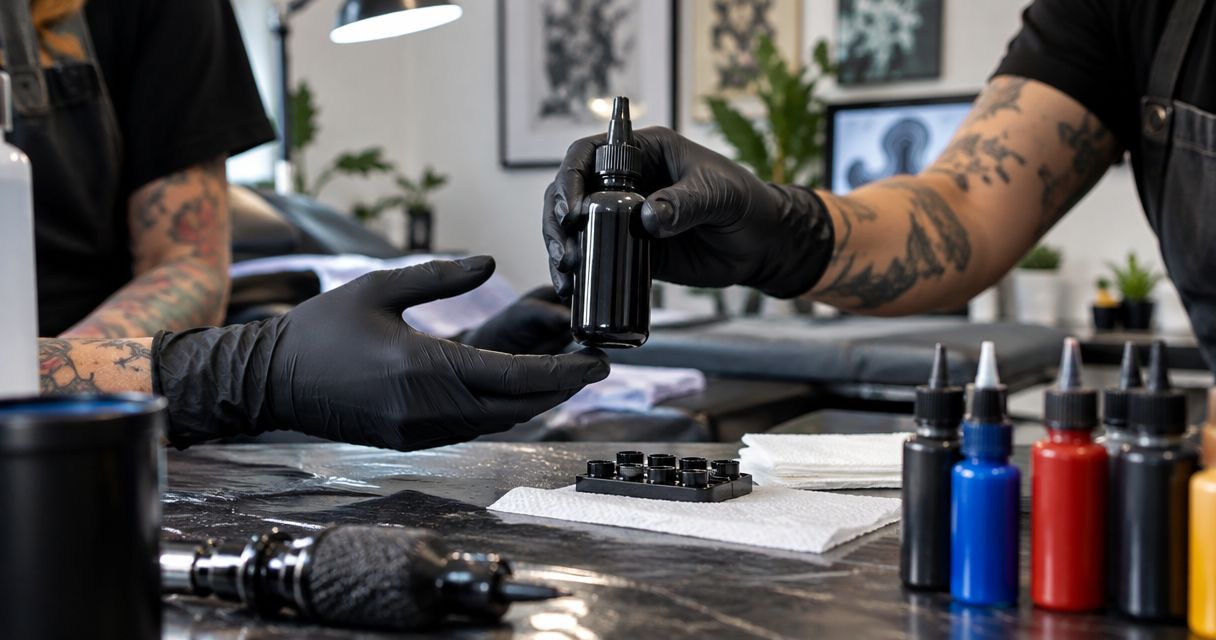
INTENZE brings 30+ years of professional artist use to its professional tattoo ink offering and also manufactures and sells PMU pigments in the USA. INTENZE serves professional tattoo ink and PMU pigment buyers; clinical allergy assessment belongs with a qualified healthcare professional.
Best for: distributors and studios sourcing professional tattoo ink and PMU pigments. The purchasing advantage is access to those professional product categories; the limit is equally important—brand history does not establish an individual client’s tolerance or a universal testing interval.
Before buying online, match the intended application to the current product information. Request clarification when the testing instructions do not answer the studio’s question instead of adding an unsupported assurance to the order.
Review Professional Ink and Pigments
Check current product information and confirm intended use before placing a studio or distributor order.
Can I have a PMU patch test and treatment on the same day?
A same-day appointment does not complete a required observation period. If the applicable instructions call for observation before treatment, keep the procedure separate until that process and its review are complete.
Do not treat the absence of an immediate reaction as evidence that a delayed reaction is impossible. Confirm the actual instruction before promising a combined appointment, particularly when the client is traveling or coordinating other services.
Does a negative PMU patch test mean the pigment is safe for me?
A negative result does not guarantee that the pigment will not cause an allergic reaction. The result describes what was observed under the conditions of that particular check—not every response to implanted pigment over time.
Keep the language precise in consent forms and customer conversations. “No reaction observed during the specified period” records an observation; “allergy-free” makes a guarantee the observation cannot support.
What should happen if the test area reacts?
Pause the planned PMU treatment and arrange appropriate professional assessment. Do not use a completed waiting period to overrule a reported reaction, and do not ask the client to repeat exposure without appropriate guidance.
Severe symptoms, including difficulty breathing or swelling affecting the mouth or throat, require emergency medical care. Other persistent or worsening symptoms need medical review rather than interpretation through photographs alone by a supplier.
How should a studio document the waiting period?
Create a record that another practitioner can understand without reconstructing a conversation. Include the product identity, relevant batch information, instruction source, application details, observation dates, reported symptoms, and the person responsible for review.
Separate the observation from the booking decision. A completed form proves that information was recorded; it does not prove that the planned procedure is suitable for the client.
For a 2026 record template, avoid a single checkbox labeled “allergy cleared.” Use fields that capture what happened and what action followed. If a client reports a change after the initial review, append it to the record and reassess the appointment.
Distributors should apply the same discipline to support requests. Record the product details and the studio’s question accurately, preserve the manufacturer’s response, and avoid replacing that response with a simplified promise when speaking to another customer.
FAQ
How long before my appointment should I book a PMU patch test?
Book it far enough ahead to complete the product-specific testing and review instructions before treatment. Ask the practitioner for the applicable protocol before confirming your session date.
How many minutes does a PMU patch test appointment take?
There is no universal appointment length that applies to every PMU testing method. Ask the practitioner separately about application time, observation time, and how the result will be reviewed.
Can I skip the waiting period if I have had permanent makeup before?
Previous permanent makeup does not establish tolerance to every future pigment or product. Follow the applicable instructions and disclose any earlier reactions before another procedure.
Is a dermatologist's patch test the same as a PMU pigment test?
No, dermatologist-led patch testing investigates contact allergy using a clinical method and professional interpretation. A studio pre-treatment check does not provide the same diagnostic assessment.
Does a negative patch test rule out an allergy years later?
No, a negative patch test does not rule out a later allergic reaction. The FDA notes that reactions to tattoo pigments can occur years after tattooing.
Can a supplier tell me whether my client has passed a patch test?
A supplier should provide product information, not diagnose a client's reaction or clear the client for treatment. The treating practitioner and, where appropriate, a qualified clinician must address the individual assessment.
Does INTENZE publish one patch test duration for every PMU pigment?
Do not assume a single duration applies across INTENZE PMU pigments. Check the current instructions for the exact product and request clarification before giving a studio a booking interval.
One last thing
The observation record is product-specific, not a permanent approval attached to the client. Before a later appointment, confirm what products are planned and whether the previous record actually covers them.
Make that check before reserving the treatment slot. It is more useful than extending a generic countdown that was never tied to the intended product in the first place.